



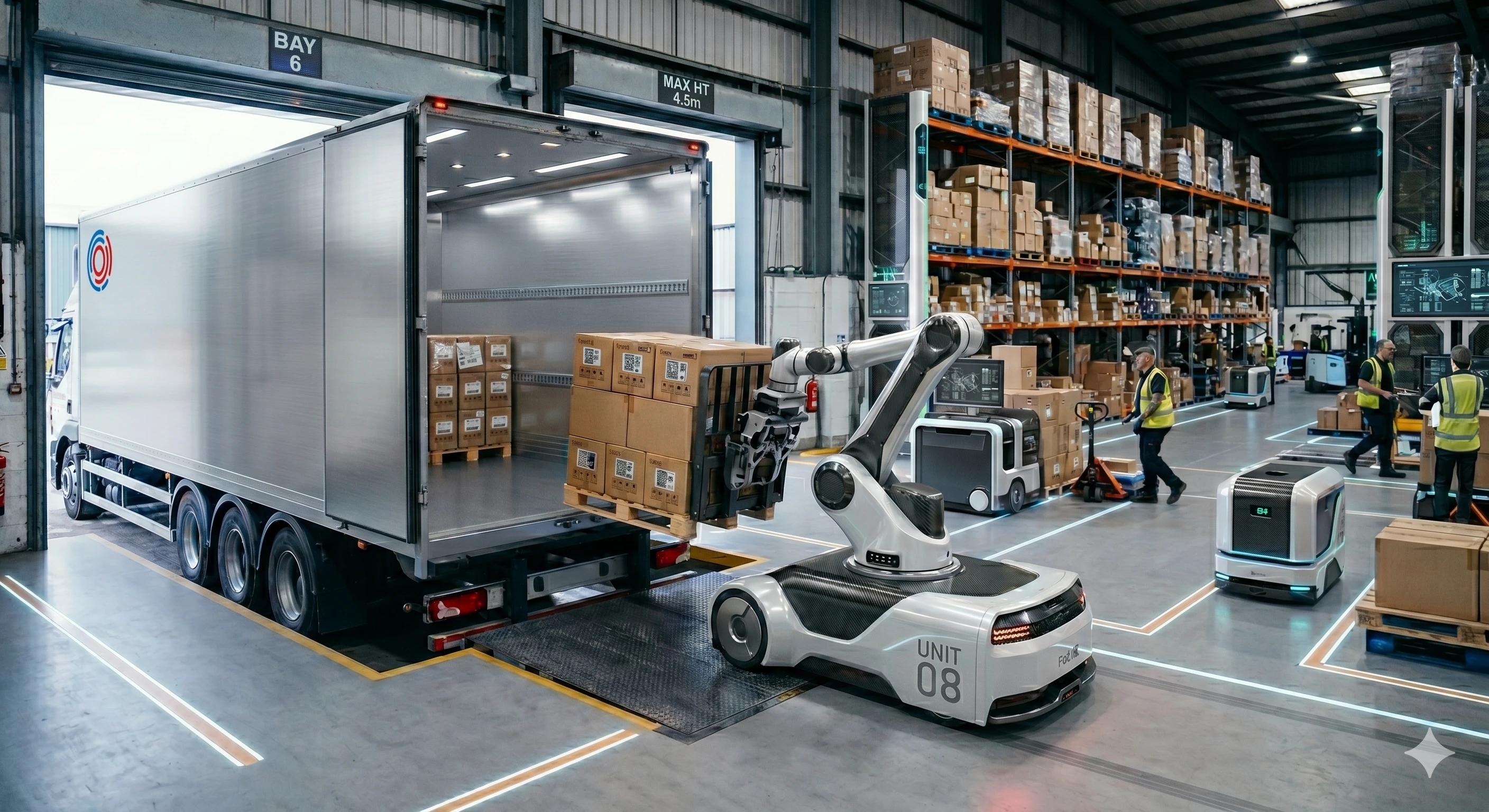
Warehouses have become considerably more demanding to run in the last five years. The same four walls now have to handle outbound parcels for e-commerce, returns coming back the other way, kitting and co-packing for personalised SKUs, occasional cross-docking and the routine pallet inbound and outbound. The operations manager who used to be measured on pick accuracy is now measured on a dashboard. This piece sets out what warehouse best practice actually looks like in 2025, working from the ground up.
Space, layout and the cubic that most warehouses forget
The first discipline of best practice is using the space you have. Most warehouses pay rent on cubic feet but design layout for square feet. The difference is significant. A facility with eight-metre clear height that runs racking to only four metres has effectively halved the asset it is paying for.
Three layout decisions account for most of the avoidable inefficiency in UK warehouses. The first is racking depth and aisle width: high-density double-deep or push-back racking with narrow aisles trades pickability for cube utilisation, and only makes sense when the throughput profile justifies it. The second is slotting, the discipline of placing high-velocity SKUs closer to despatch and slow-movers in the cheaper deep corners. ABC analysis is straightforward; what most warehouses miss is the cadence. Re-slot quarterly, not annually, because SKU velocity drifts faster than ops teams update the WMS.
The third is the overall shape. U-shaped layouts give a tight inbound-to-outbound loop and suit operations with quick turnaround and dual-purpose docks. I-shaped layouts (linear flow from inbound at one end to outbound at the other) suit higher-volume operations with predictable flow but consume more length. L-shaped layouts give the cleanest separation between inbound and outbound when those processes need to run independently. The right choice is the one that fits the operation's throughput profile, not the one that looks neatest on the floor plan.
“If a business doesn’t have a Chief Supply Chain Officer at the boardroom table, then it probably has an underperforming supply chain or an underutilised supply chain.”
Rob Field, Development Director at Advanced People Strategies

WMS, automation and the technology stack that actually pays back
The technology stack has moved from a competitive advantage to a baseline expectation. A modern Warehouse Management System (WMS) is now table stakes for any operation above small-business scale. The decisions that matter are no longer whether to use a WMS but how deeply to integrate it with adjacent systems and how much automation to layer on top.
The integration layer is the most under-invested part of most WMS deployments. A WMS that does not talk cleanly to the buyer's ERP, the carrier's TMS and the inbound supplier's despatch advice creates manual reconciliation work that absorbs the productivity gains the WMS itself was meant to deliver. The discipline is to design integration from the start, not retrofit it later.
Automation decisions split into two layers. The hardware layer (conveyor, sortation, AS/RS, AMR fleets) carries large capital costs and only pays back at sustained high throughput. For a UK operation running 5,000 to 20,000 picks a day, the maths for a full automation rollout often does not work; the maths for a targeted automation layer (a pick-to-light module, an AMR fleet for one zone) usually does. The software layer (slotting optimisation, pick-path optimisation, demand-driven labour scheduling) carries far smaller capital cost and tends to deliver faster payback. For most mid-market operations the order should be software first, then targeted hardware where the data shows the bottleneck.
The other consideration is whether to own the technology or run it through an outsourced operator. This is the same trade-off we explored in detail in should you invest in your own warehousing or outsource it, and the answer depends on whether warehouse performance is observable to the customer in a way that justifies the capital lock-up.


Paul Brooks
Supply Chain Veteran (40+ years)
Chain Reaction Podcasts
Breaking Bottlenecks, Building Resilience
Forty years in supply chain teaches you one thing: bottlenecks always exist, they just move. Paul shares how the best operators find and fix them before customers notice.
Safety, training and the operational culture beneath the spreadsheet
Warehouse safety is the area where the cost of cutting corners shows up fastest and most expensively. The Health and Safety Executive's reporting on the UK transport and storage sector shows it consistently runs above average for workplace injuries, with manual handling, forklift incidents and falls from height the most common causes. The financial cost of a serious incident is rarely just the injury itself. It is the regulatory consequences, the operational disruption and the insurance impact across following years.
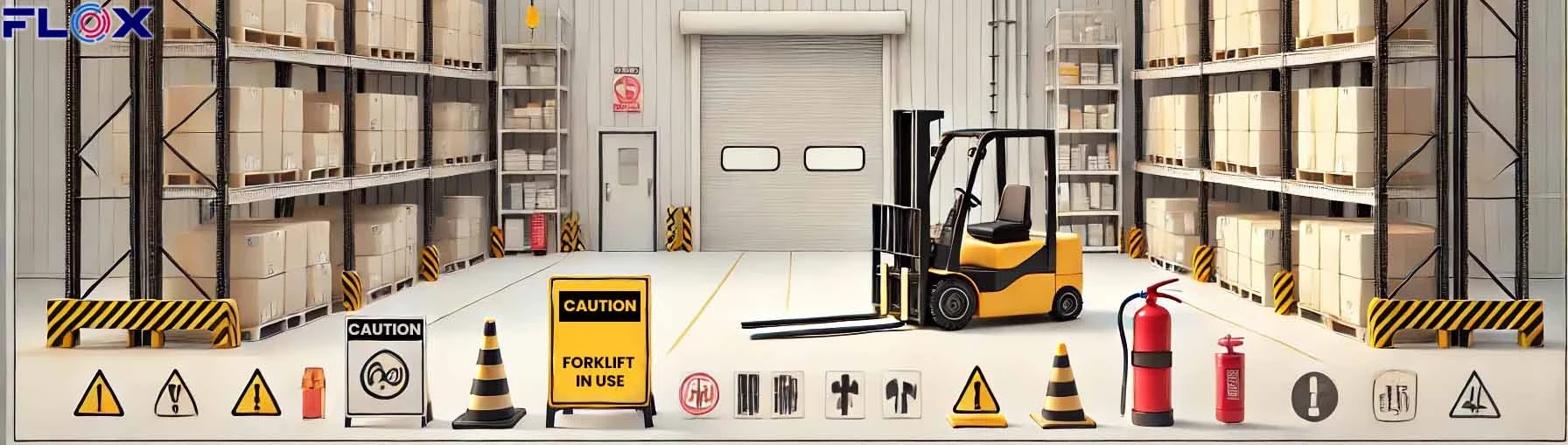
The disciplines that hold safety together are not exotic. Documented and rehearsed safety protocols. Properly maintained equipment. Clear signage and floor markings. Forklift and material-handling-equipment operators who have been properly trained and re-certified. The technology layer adds proximity sensors, pedestrian-detection systems on lift trucks and CCTV-based incident review, but the foundations are operational discipline, not gadgets.
Training is where best practice and ordinary practice diverge most clearly. Operations that document onboarding, schedule recurring refresher training and treat training time as productive time consistently outperform those that treat training as overhead. The productivity gap shows up in pick accuracy, return rates and, eventually, in customer churn. The cost gap is small relative to the operational benefit.
Where most warehouses leak efficiency in 2025
The classic best-practice list (layout, WMS, safety, training) has been written many times. What has changed in the last few years is where the marginal efficiency leak is now most likely to be. Three areas dominate.
The first is returns processing. The growth of e-commerce has made returns a structural cost line rather than an occasional inconvenience. Operations that bolt returns onto outbound flows lose throughput and create accuracy problems that propagate downstream. The discipline is to design returns as a first-class process: dedicated receiving, defined disposition workflows (resaleable, refurbish, scrap), and inventory updates that flow back into the WMS in real time. We covered the storage-side detail in bonded warehouses, a closer look and the rental-flexibility side in perfect warehouse rental near you.
The second is kitting and co-packing. Buyers are increasingly asking warehouses to add value before despatch: assemble subscription boxes, bundle promotional packs, add personalised inserts. Operations that absorb these as one-off favours under existing labour cost lose money on them. Operations that build dedicated value-added zones with proper costing and pricing make them a profit centre. The structural shift is from the warehouse as a storage facility to the warehouse as a small assembly operation, and best practice now means recognising that shift in the layout and the commercials.
The third is peak season overflow. Most UK warehouses operate at over-capacity for at least four weeks of the year. The traditional response (rent temporary space at premium rates two months before peak) is expensive and increasingly difficult as the wider market also tightens at the same time. Best practice is to plan overflow capacity through the year via flexible relationships with multiple providers, not as a last-minute scramble.

Explore storage and fulfilment solutions that give your business flexibility and the support it needs to grow.
How best practice changes when you operate inside a marketplace plus orchestration model
The implicit assumption behind a conventional best-practice guide is that the warehouse is one fixed facility, run by one fixed team, integrated with one fixed buyer system. That assumption is breaking down. More buyers are running warehouse operations across multiple providers, often coordinated through a marketplace and orchestration platform that holds the integration above the individual sites.
When that is the operating model, several elements of best practice shift. Slotting and layout decisions get made by the individual provider, but the buyer needs visibility of those decisions across the network because what is fast at one site might be slow at another. WMS integration becomes the orchestration layer's problem, not the buyer's, because the orchestration platform talks to many WMS instances simultaneously. Safety remains the local operator's responsibility but the data on incidents and near-misses can be aggregated across providers to identify systemic risks.
This is the operating model FLOX is built around. The marketplace layer connects buyers with warehouse providers across the UK and the orchestration layer runs the coordination above them: visibility of stock by location and duty status, exception management when something fails, financial flows that settle correctly across multiple providers. The best-practice question becomes less about getting one warehouse right and more about how the operating layer above several warehouses keeps each of them honest. For a buyer running this model, the operating discipline behind any single 3PL relationship still matters; we covered that side in how to get the most value from a 3PL.
For the warehouse manager working inside their four walls, the basics still apply. Use the cube, slot the stock, integrate the WMS, train the team, take safety seriously, design for returns and value-add. These do not change. What changes is what sits above them.
Subscribe to our newsletter.
Stay up to date with practical insights and useful logistics content
FAQs
Cube utilisation. Most warehouses pay rent on cubic feet but design layout for square feet, with racking that leaves significant clear height unused. A facility with eight metres of clear height running racking to four metres has effectively halved the asset it pays for. The fix is rarely a major refit. It is a layout review that pushes racking up the available height, combined with quarterly slotting reviews so the velocity bands stay aligned with the placement. The payback shows up directly in rent per pallet stored.