

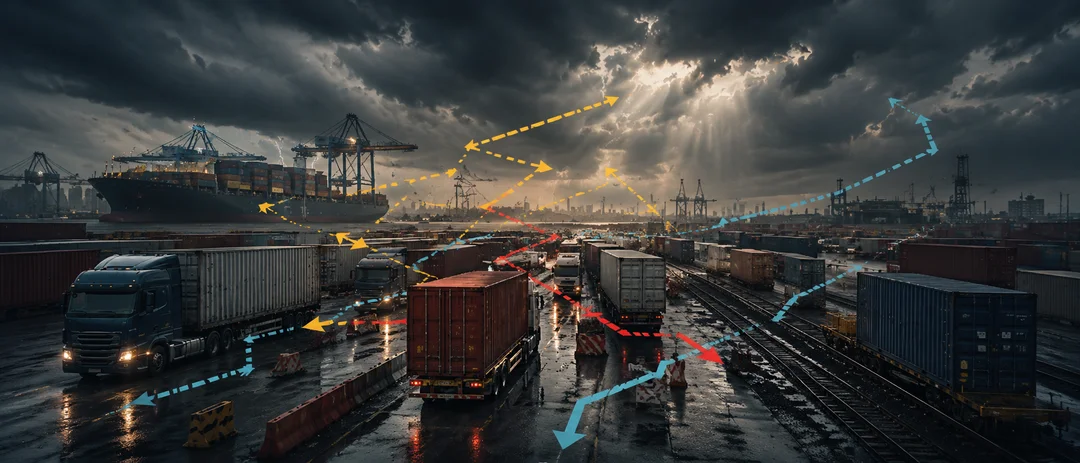
Trade rules have stopped behaving as stable infrastructure. A shipment that was profitable last quarter can be unprofitable this quarter for reasons no operator could have priced in. Tariffs rise, paperwork changes, lanes close, fuel prices step up. The headlines explain the politics. This piece explains what arrives at the loading dock when those headlines stop being abstract.
The cost of not knowing what the rules will be next quarter
Logistics planning assumes the rules of cross-border trade are roughly stable across the planning horizon. That assumption has weakened. Geopolitical tensions and the policy responses they trigger now reset operating conditions on a quarterly basis, sometimes faster. The result is that every cost line a logistics operator quotes is provisional, and every long-term supply contract carries a clause that was not needed five years ago.
The operational pain shows up in three places before it shows up in the management accounts. Carriers reprice surcharges. Customs brokers re-quote. Warehouse partners shorten the term on storage rates. None of these signals make the news, but together they tell a logistics operator that the planning horizon has shrunk again. The companies that have absorbed this shift treat that shortening horizon as a permanent feature, not a temporary inconvenience.
What this means in practice is that the operational discipline of running a logistics operation has changed. Less time spent optimising the steady-state network, more time spent stress-testing it against scenarios that, two years ago, would have looked alarmist. Less weight on the cheapest unit cost, more weight on the resilience of the chain. We covered the practical side of this shift in our piece on why backhaul and reverse loads are outdated: the old optimisation assumptions are now too brittle for the operating environment.
“Today’s logistics manager has almost become a stockbroker — guessing when they should buy”
Chris Clowes, COO of FLOX

Fuel prices, freight rates and the speed of the pass-through
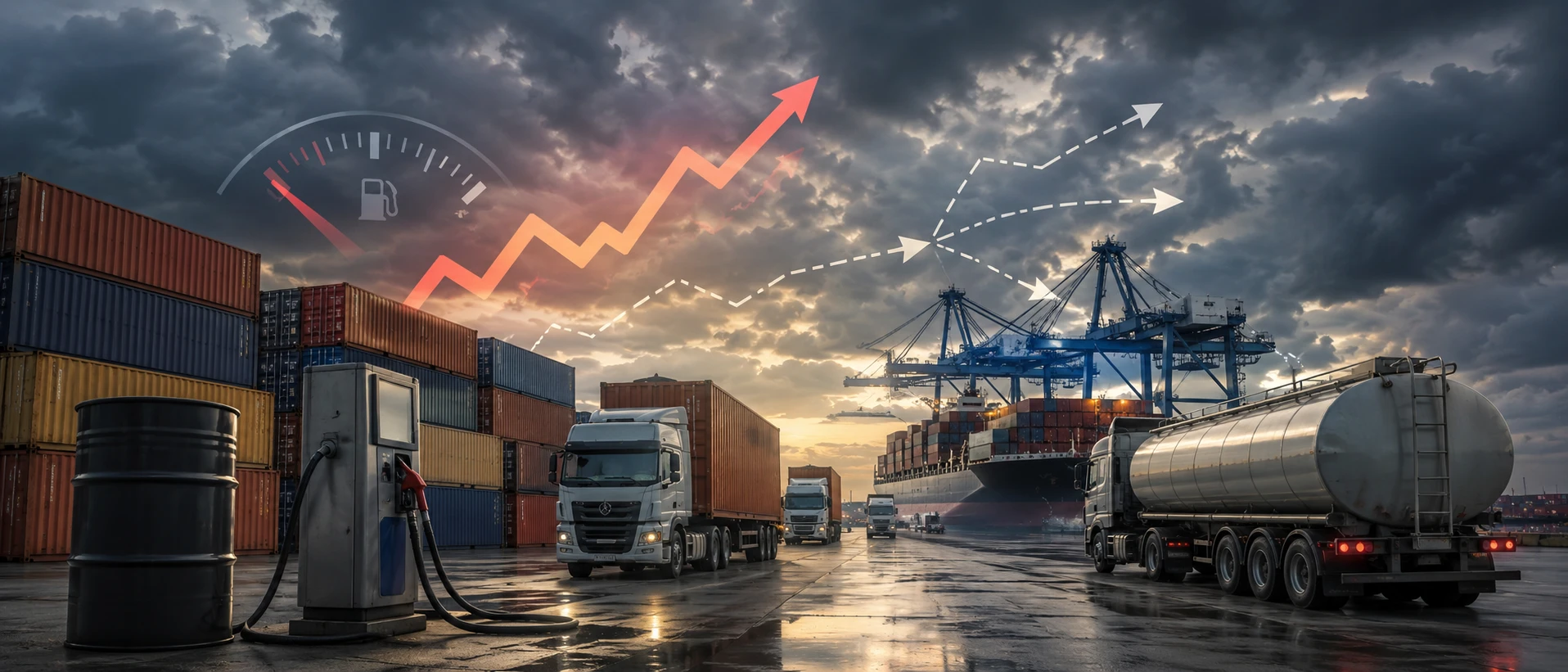
Of all the operational consequences of geopolitical uncertainty, fuel is the fastest. Tensions affecting energy supply or shipping routes feed into crude markets within days. Diesel prices at the pump usually move within weeks. Road haulage and freight forwarding contracts that include a fuel surcharge mechanism reprice on the next billing cycle. Contracts without a surcharge mechanism produce a margin shock in the same quarter.
The visible knock-on for buyers is a freight rate that rises before any tariff change has reached their goods. Air freight responds first, ocean freight follows. Less obvious is what happens when fuel volatility persists for several quarters: carriers stop quoting fixed-term rates at all, or quote them with a much wider band. A buyer that used to lock a six-month rate suddenly cannot, and the operational team starts spending time on procurement that used to be a once-a-year exercise.
The operators who have absorbed this best are the ones who treat fuel volatility as a real-time signal rather than an annual variable. That means surcharge mechanisms in every active contract, a regular cadence of carrier rate refreshes, and the ability to switch lanes or modes when the spread justifies it. It is more operational work than the old model demanded. It is also the only model that holds together when the operating environment moves on a quarterly clock.



Chris Clowes
COO of FLOX
Chain Reaction Podcasts
Tariffs, Chaos, and Tactical Supply Chains
When tariff announcements drop overnight, strategy goes out the window. Chris reveals how operators are switching from long-term planning to pure tactical survival mode.
Stockpiling and the warehouse capacity squeeze
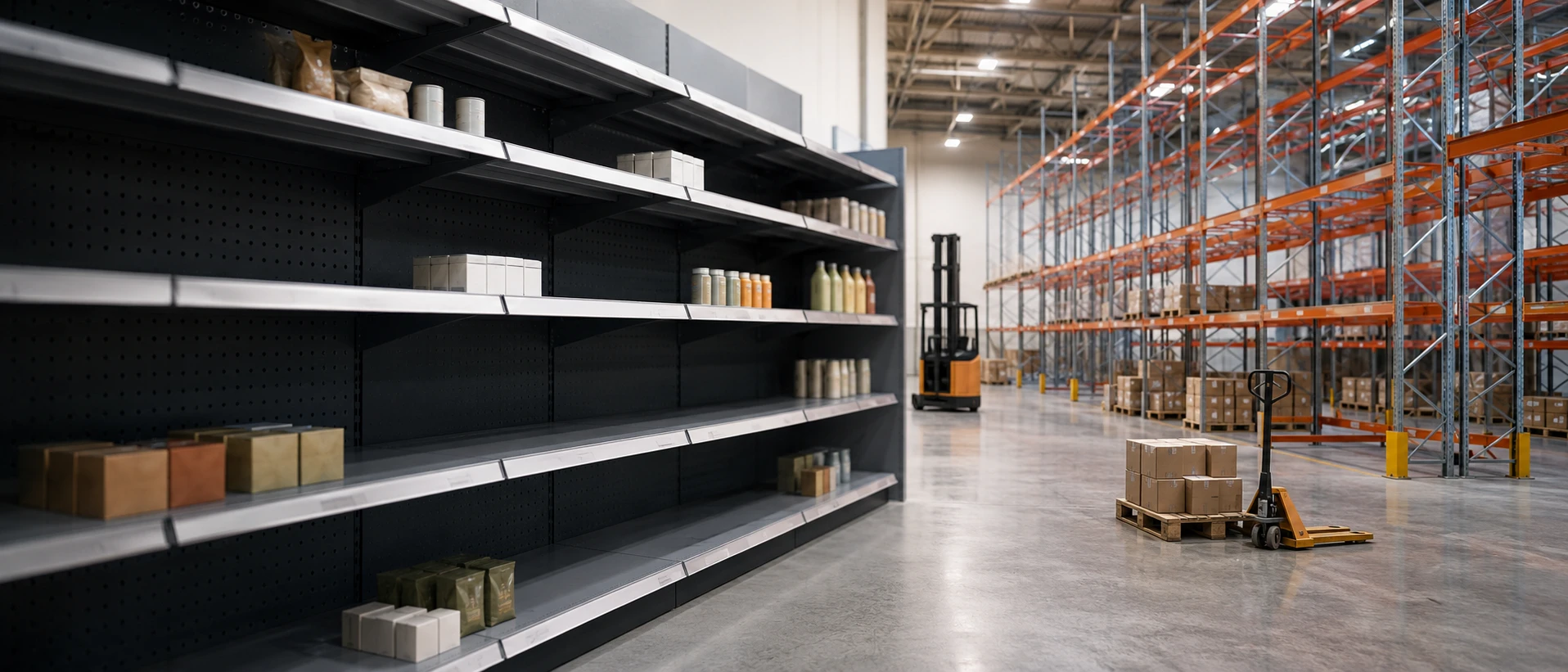
The second consequence is less mechanical than fuel and harder to see in the data. When buyers expect trade rules to tighten, they pull forward inventory. They book containers earlier, accept higher rates and ask their 3PLs to find storage. The stockpile reflex is rational at the level of the individual buyer. It is destructive at the level of the network.
The visible effects in the warehouse market follow a predictable sequence. First, available space tightens in the regions that handle imports. Second, daily rates rise and the minimum term on new agreements lengthens. Third, the lanes that move imported stock into regional warehouses run hot and the carriers that operate them push surcharges. By the time the buyer who triggered the stockpiling sees the storage bill, the operators they depend on have already absorbed three rounds of cost movement.
The discipline that works in this environment is not stockpiling harder. It is buying smaller, more frequent allocations of capacity from a wider set of providers, and treating any single facility as one of several options rather than a fixed home. The operational case for flexible warehouse locations is no longer a marginal optimisation. It is core to keeping a supply chain operating through policy shocks.
Customs friction and the paperwork that did not exist last year
The third consequence is administrative. Trade-policy shifts almost always come with new paperwork, new commodity code interpretations, new evidence requirements at the border. None of this is dramatic at a single shipment level. The cost is in the aggregate: customs brokers spend more time per declaration, error rates climb during the first six months of any rule change, and the buffer time that used to live between dispatch and arrival gets consumed by clearance.
For buyers running just-in-time inventory, the effect is sharper than the cost figures suggest. A two-day clearance delay on a single shipment lands as a stock-out at the customer end. For buyers with bonded operations, the effect is more about working capital: more goods are sitting in duty-suspended status for longer because clearance times have stretched. We saw the inside of this problem in our piece on bonded D2C alcohol logistics, where regulatory friction and operational friction overlap.
The operators who handle this layer well do three things. They keep their commodity code data clean and reviewed quarterly. They standardise their commercial documentation so that variants do not multiply. They build the relationship with the customs broker early, so that when a rule changes overnight, the broker can re-quote on a known baseline rather than re-baseline from scratch.
How operators are building supply chains that absorb the shocks
Put the three consequences together (fuel and freight rate volatility, capacity squeeze, customs friction) and a pattern appears. The supply chains that handle geopolitical uncertainty well are not the ones with the cheapest unit cost. They are the ones with the most operational optionality. More carriers under contract than the spreadsheet says are necessary. More warehouse providers than a single 3PL relationship would deliver. More visibility into where stock is, in what duty status, against which lane.
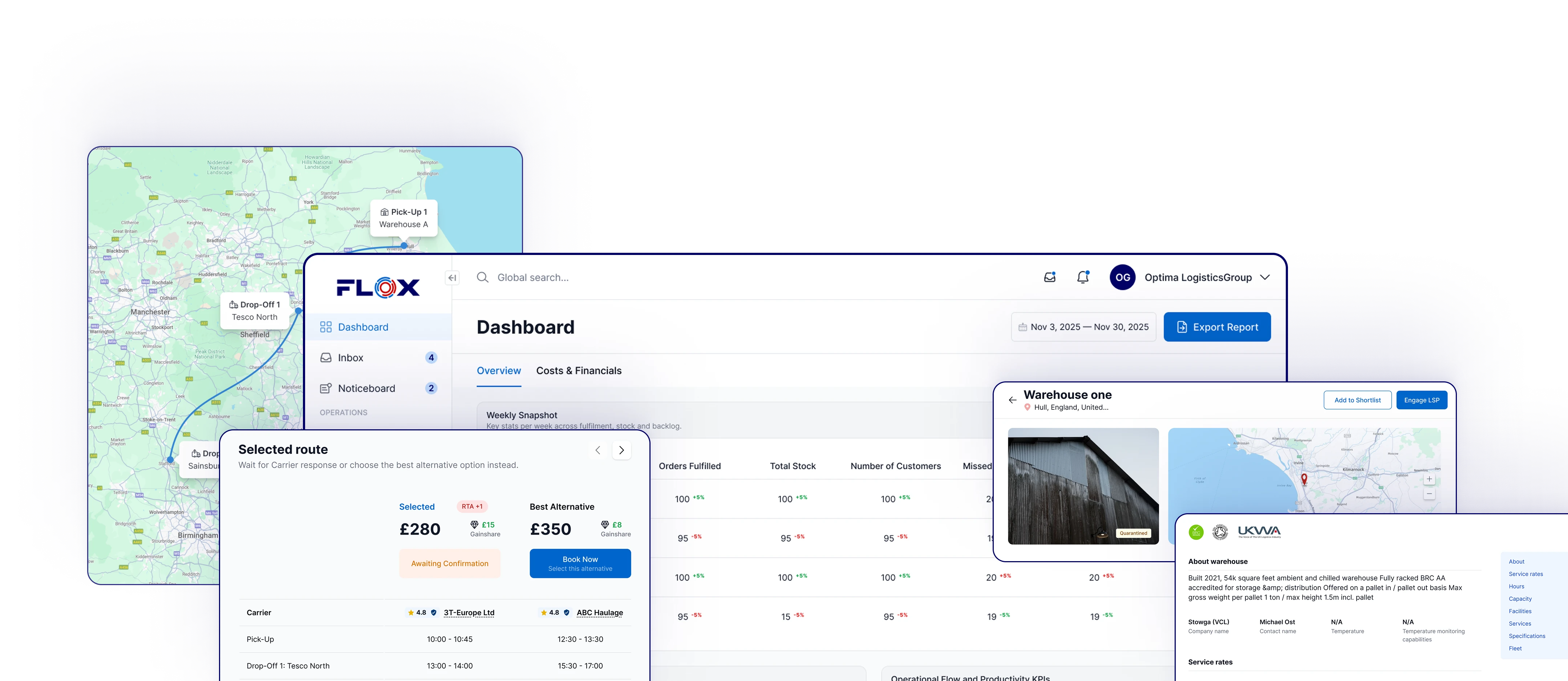
Optionality of that kind is hard to build inside a single 3PL relationship, and it is hard to build at all without a coordination layer above the individual providers. This is where the marketplace plus orchestration model FLOX is built on does its work. The marketplace layer surfaces capacity across warehouse providers, 3PLs and hauliers without requiring a buyer to maintain individual sales relationships with each one. The orchestration layer then runs the shipment across whichever combination of providers makes sense for that week's operating conditions: visibility, exception management, financial flows. The same buyer can run a different network this quarter to the one they ran last quarter, with the same operational discipline. The thinking behind making this work in real time is closer to what we covered in the impact of digital twins in logistics than to the old model of multi-year master service agreements.
This is not a forecast. It is what is already happening on the buyer side of the FLOX marketplace. The buyers that have absorbed this round of geopolitical uncertainty best are the ones who treat optionality as the operating standard, not the contingency plan.
Subscribe to our newsletter.
Stay up to date with practical insights and useful logistics content
FAQs
It is the operating condition where the rules of cross-border trade no longer stay stable across a normal planning horizon. Tariffs, customs requirements, lane availability and energy prices can change quarter to quarter rather than year to year. For a logistics operator, this means cost lines that used to be locked in commercial contracts are now provisional, and the planning discipline has to assume change rather than design around stability. It is less about any single event and more about the speed at which the rules now move.