

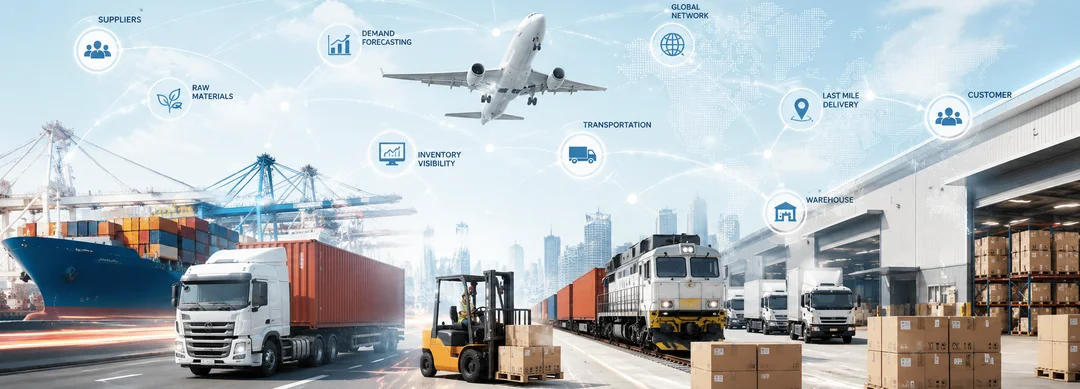
Speed has moved from a competitive differentiator to a baseline expectation in logistics. The shift did not happen overnight and it did not happen uniformly across sectors, but it has happened. Customers who once accepted three-to-five day delivery as standard now treat next-day as normal and same-day as a reasonable ambition. That shift in expectation has propagated backwards through every node in the supply chain, compressing planning windows, tightening capacity margins and adding cost at every stage. The pressure is real, it is structural and it is not going away.
The expectation that compressed every planning window
The growth of e-commerce changed customer expectations in a specific and measurable way: it made speed visible. When a buyer can see a promised delivery date at the point of purchase and track a parcel from despatch to doorstep, speed stops being an aspiration and becomes a contractual commitment. That commitment travels upstream.
A retailer promising next-day delivery to a customer needs their 3PL to pick and despatch same-day. The 3PL needs their warehouse to have stock available, correctly located and ready to pick on arrival of the order. The warehouse needs the inbound flow of goods to be reliable enough that stock is there when it needs to be. Each link in the chain is now working to a tighter deadline than it was five years ago, and each link has less margin to absorb a delay without it becoming visible to the end customer.
The effect on supply chain design is significant. Just-in-time inventory models that were built around cost minimisation have come under pressure from lead time minimisation. Safety stock assumptions have been revisited. The question has shifted from how much stock is cheapest to hold to how much stock is needed to guarantee fulfilment within the delivery promise. Those are different questions and they produce different answers, most of which involve holding more inventory in more locations and paying more for the privilege.
“If a business doesn’t have a Chief Supply Chain Officer at the boardroom table, then it probably has an underperforming supply chain or an underutilised supply chain.”
Rob Field, Development Director at Advanced People Strategies

Speed amplifies every risk in a multi-party chain
In a supply chain with significant slack, speed pressure is manageable. Delays can be absorbed. Capacity gaps can be covered. Exceptions can be resolved without the customer noticing. As that slack disappears, speed pressure becomes a risk amplifier across every party in the chain.
The HGV driver shortage in the UK illustrates this clearly. When capacity was abundant, a carrier who could not cover a collection could be replaced quickly. When capacity is tight, a missed collection cannot always be covered within the delivery window. The exception that used to be invisible to the customer now arrives as a failed delivery notification. Every tight node in the supply chain operates the same way: with slack, speed pressure is absorbed; without slack, it is transmitted directly to the customer experience.
Last-mile delivery concentrates this risk. The final leg of the delivery journey is the most expensive, the most difficult to standardise and the one most visible to the customer. Alternative delivery methods including click-and-collect, parcel lockers and consolidated delivery windows have reduced cost in some segments, but they have not resolved the fundamental tension between the speed the customer expects and the economics that make rapid delivery profitable. Operators who have absorbed this tension without damaging their margins are those who have found ways to plan the last mile with more data and fewer surprises, rather than simply running more vehicles faster.
For operators managing multiple providers and lanes, the risk profile is compounded. A delay at any single node can miss a connection and cascade into a multi-day slip. Resilient operations, those with the financial and operational capacity to absorb shocks, are better placed to manage this. The mechanics of building that resilience are covered in our piece on UK logistics business resilience.
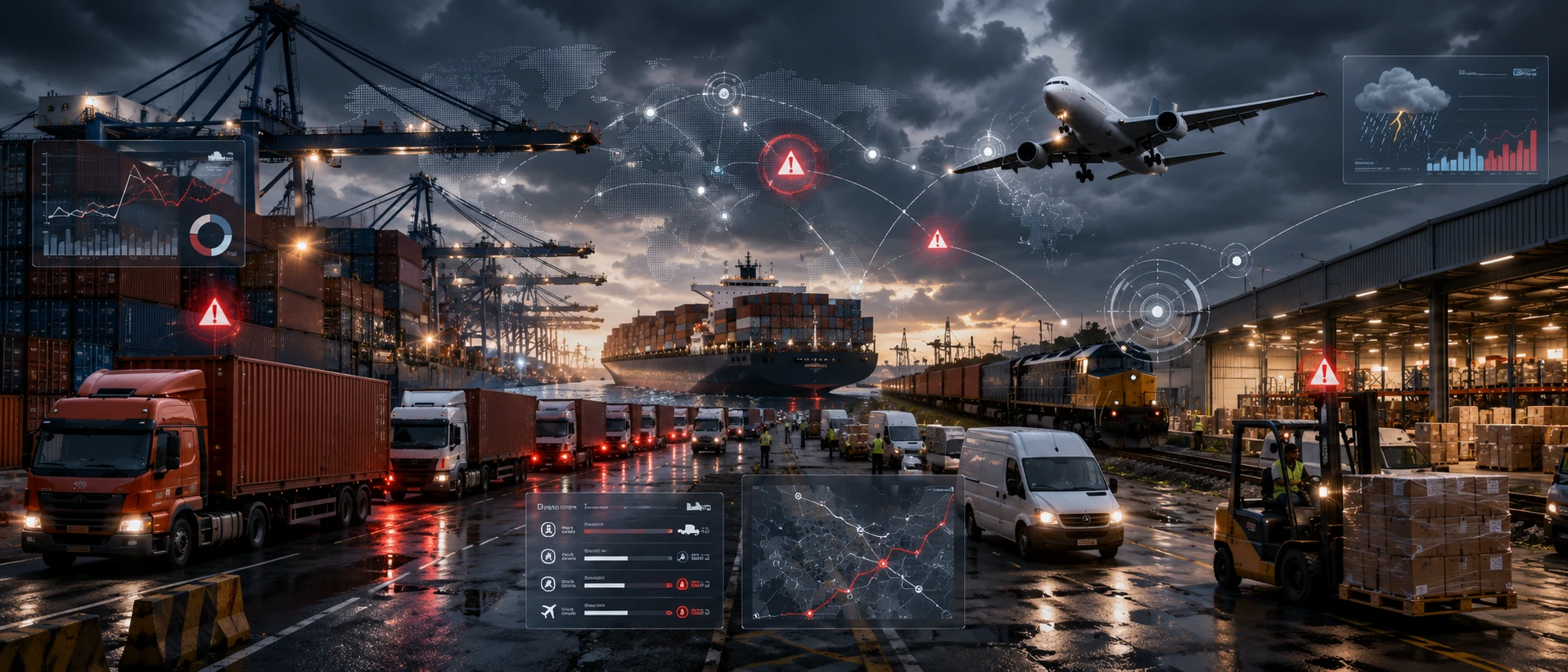
Technology accelerates data. It does not automatically accelerate decisions.
The logistics technology market has built significant capability around speed. Real-time tracking, predictive demand tools, automated routing and digital proof of delivery each reduce friction in a specific part of the supply chain. None of them, taken alone, resolves the underlying coordination problem.
The gap between data availability and decision speed is where cost accumulates. A 3PL can see in real time that a vehicle is running two hours late. What happens next depends on whether the right people at every affected node know this information simultaneously, whether they have the authority to act on it and whether the action they take is visible to all other parties. In most supply chains, the answer to at least one of those questions is no. The information arrives, a phone call is made, a decision is taken and by the time it reaches the warehouse or the customer, time has been lost.
Structured operating procedures that govern how exceptions are escalated, who has authority to act and what the correct sequence of decisions is reduce the time cost of each exception significantly. The difference between an operation that recovers from a delay in 30 minutes and one that takes three hours is usually not technology; it is clarity of process. The mechanics of building that clarity are covered in our piece on logistics standard operating procedures.
IoT sensors, connected tachographs and warehouse management systems generate more operational data than any supply chain operated five years ago. The organisations that convert that data into faster decisions are those who have addressed the human coordination layer alongside the technology layer. Data flow without decision authority is just noise arriving faster.


Dan Pass
Supply Chain & Logistics Lead at Ann Summers
Chain Reaction Podcasts
Collaborative Supply Chains Drive Resilience
Resilience isn't built in isolation. Dan reveals how genuine collaboration between supply chain partners — not just contracts — creates the flexibility to absorb disruption.
Globalisation adds complexity that local speed cannot absorb
A supply chain that spans continents moves slower at every border, regardless of how efficient the domestic last-mile is. Customs clearance, port dwell times, carrier handoffs between jurisdictions and documentation requirements all add latency that is beyond any single operator's control. When a buyer promises next-day delivery, they are betting that none of these latency points will fire in the wrong order.
Post-Brexit customs has added a specific and durable layer of complexity to UK-EU freight. What was a predictable transit corridor now includes documentation requirements, sanitary checks and periods of uncertainty that make precise lead time commitments harder to maintain. Operators who have absorbed this complexity have typically done so by holding more safety stock at domestic locations, using bonded or customs-controlled warehousing to defer duty liability, or building customs expertise in-house rather than treating it as an exceptional process.
The globalisation-speed tension does not resolve by moving faster at one end of the chain. It resolves by reducing the points of uncertainty throughout. That means better visibility of what is in transit, where it sits in the customs process and what the realistic arrival window is. The current state of the UK market is that most buyers have partial visibility into their international supply chain; full visibility is a project, not a standard feature. We cover the broader state of the UK logistics market in our piece on the UK logistics market state of play.
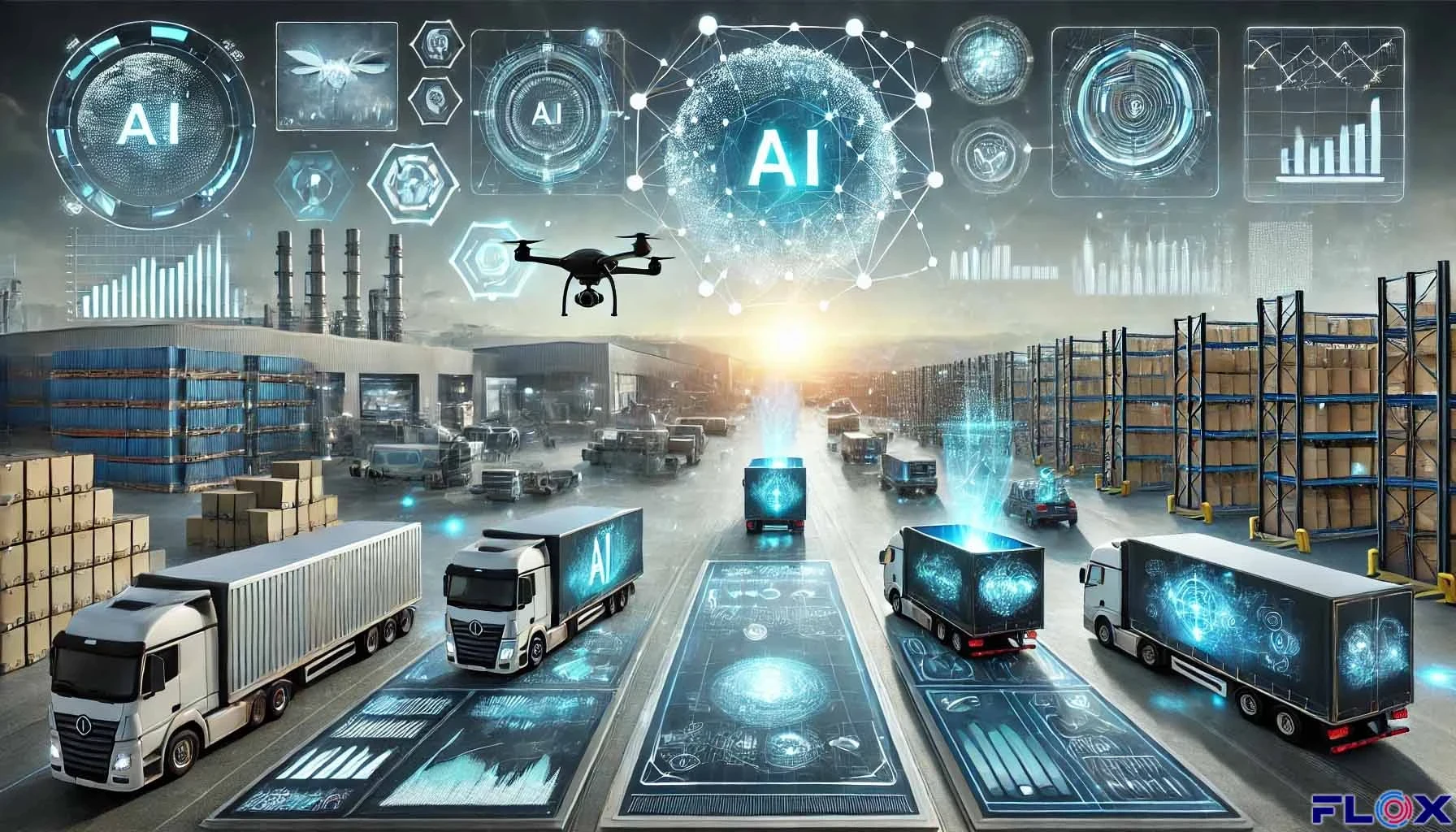
Sustainability and speed are in direct tension
The fastest way to move freight is almost never the most sustainable way. Air freight is faster than road. Express dedicated vehicles are faster than consolidated loads. Both carry a higher emissions cost per unit moved than slower, planned alternatives.
When speed is the binding constraint, sustainability suffers. A shipment that misses a consolidated load runs as a single dedicated vehicle because the next consolidated departure is tomorrow and the delivery window is today. Empty running, partial loads and modal upgrades from road to air happen precisely when supply chains are under speed pressure. The carbon cost of urgency is real and, as Scope 3 reporting requirements reach further into supply chains, it is becoming a visible line item rather than an invisible operational decision.
The resolution is not to accept the trade-off. It is to reduce the frequency of urgent moves through better planning. A supply chain with good visibility of incoming goods, accurate demand signals and enough network coordination to consolidate loads before they become urgent runs fewer exceptions. Fewer exceptions mean fewer emergency movements. Fewer emergency movements mean lower emissions. The coordination layer that reduces exception frequency is also the layer that reduces the sustainability cost of speed pressure.

Explore storage and fulfilment solutions that give your business flexibility and the support it needs to grow.
Meeting speed pressure without losing operational control
Speed pressure will not reduce. Customer expectations in e-commerce and B2B procurement have moved in one direction for twenty years and there is no structural reason to expect a reversal. The question for logistics operators, buyers and providers is how to meet those expectations without accepting that cost, resilience and sustainability must be sacrificed in the process.
The answer is coordination depth. A supply chain where every party has real-time visibility of the same operational picture can move faster with fewer exceptions than one where speed is pursued through individual effort and bilateral communication. When a warehouse knows about a capacity change at the carrier before it becomes a collection failure, it can plan differently. When a buyer knows that an inbound shipment has cleared customs ahead of schedule, they can bring forward a downstream process. When financial flows are part of the operational record rather than a downstream reconciliation, disputes do not slow the next shipment.
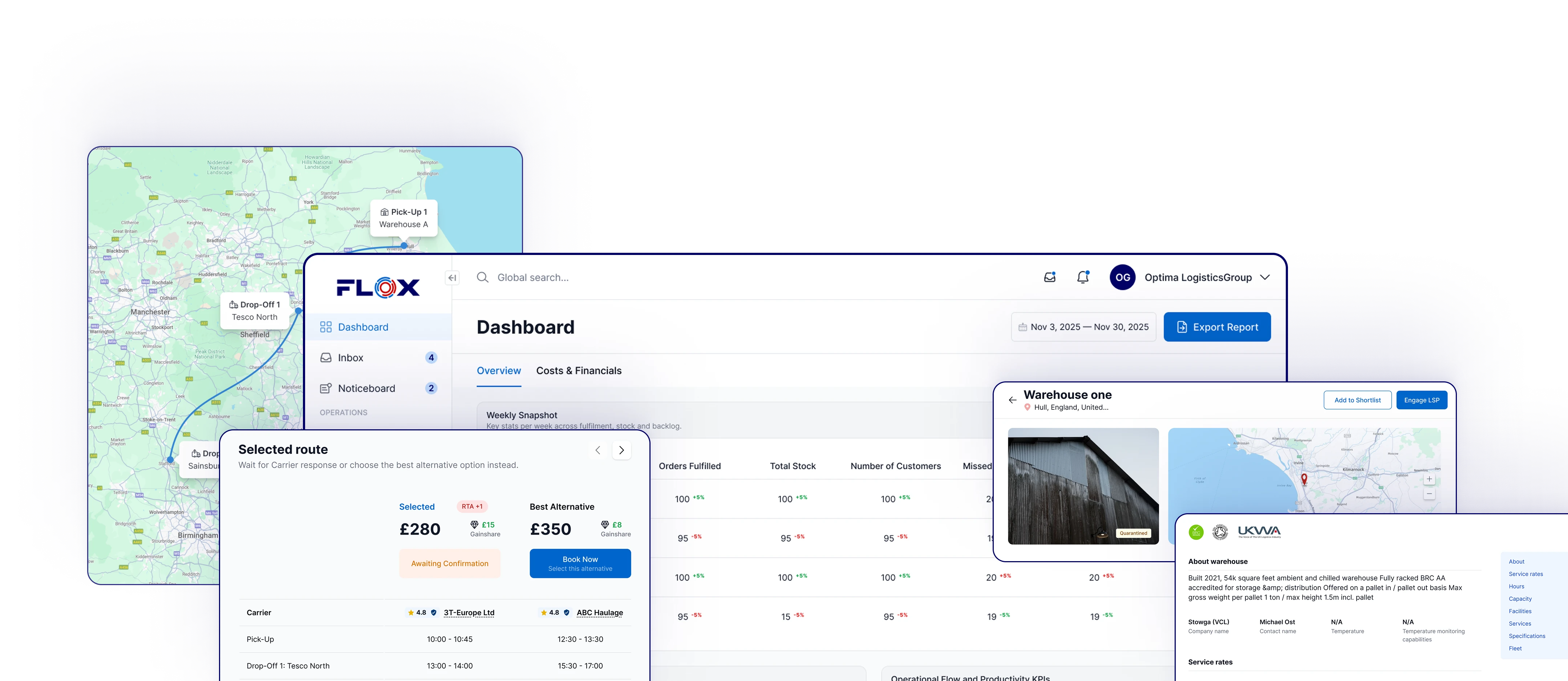
FLOX addresses this as a marketplace and orchestration platform. The marketplace layer connects buyers, warehouse providers, 3PLs and hauliers, making capacity visible and transactable across the network. The orchestration layer coordinates execution, exceptions and financial flows across every party in every shipment. The speed imperative is met not by running harder, but by removing the coordination gaps where time is lost. A marketplace without orchestration produces faster spot bookings; an orchestration platform without marketplace access limits the network to parties already connected. Both layers together are what allows a supply chain to absorb speed pressure without passing the cost and risk downstream to the next node.
Subscribe to our newsletter.
Stay up to date with practical insights and useful logistics content
FAQs
Supply chain speed pressure refers to the operational strain created by customer expectations of fast delivery, particularly next-day or same-day fulfilment. This expectation, driven primarily by e-commerce growth, propagates backwards through every node in the supply chain, compressing planning windows and reducing the margin for error at each handoff. Operators who designed their networks around cost efficiency are now redesigning them around lead time reliability, which requires different inventory strategies, capacity relationships and coordination tools than those built for a slower, more predictable fulfilment environment.