


Most warehouse and logistics operations run on institutional knowledge. The experienced team member who knows the right way to handle a goods-in dispute. The supervisor who remembers how exceptions were dealt with last peak season. The operations manager who carries the real process in their head rather than any document. It works, until it does not.
Standard Operating Procedures (SOPs) exist to solve exactly this problem. They capture how work is supposed to happen, give new people a starting point and create a shared reference when things go wrong. Done well, they reduce variation, speed up onboarding and make exceptions easier to spot because there is a baseline to compare against.
Done badly, they become a filing exercise. Documents that do not match how work actually gets done, held in a folder nobody opens. The difference between those two outcomes is mostly not about the documentation itself. It is about how SOPs are designed, maintained and enforced across the operation.
What a logistics SOP actually is
An SOP is a documented description of how a specific task or process should be carried out. In a logistics or warehousing context, this covers everything from how goods are received and checked on the dock, to how pick lists are generated, how damage is recorded, how returns are processed and how handovers between shifts happen.
A working SOP has four components. First, a clear statement of what the procedure covers and who it applies to. Second, the step-by-step process, written in enough detail that someone unfamiliar with the task can follow it without interpretation. Third, any standards or thresholds that define a correct outcome, for example a maximum tolerable discrepancy on an inbound count. Fourth, the escalation path when something falls outside normal parameters.
What it is not is a policy statement. "All staff must handle goods with care" is not an SOP. "When receiving a pallet, check for visible damage before signing the delivery note. If damage is found, photograph the affected items, note the pallet number and reference, and do not sign until a supervisor has been informed" is an SOP.
The distinction matters because policy tells people what matters, while procedure tells them what to do. Both are necessary but they serve different functions. An operation that conflates the two tends to have documents that are too vague to be useful when things go wrong.
“There’s no magic wand to anything. Inventory is the magic wand.”
Keiran Hewkin, Co-Founder and CEO of Swyft Home

Why logistics SOPs break down in practice
Most operations have some form of documented procedures. The problem is not usually an absence of documentation but a gap between the documented process and how work actually happens. Four failure patterns come up repeatedly.
The first is the version problem. SOPs get created, then operations change and the documents do not keep pace. Staff follow the old procedure because it is what they know, or they follow neither and improvise. Either way, the document has lost its function.
The second is the granularity problem. Procedures written at too high a level leave too much to interpretation. "Ensure goods are stored correctly" does not tell a warehouse operative what "correctly" means for a specific product category, temperature range or handling instruction.
The third is the ownership problem. Without a named person or team responsible for maintaining an SOP, it tends to drift. Nobody is accountable for updating it when a process changes, auditing it against actual behaviour or addressing discrepancies. It exists but it is nobody's job to keep it alive.
The fourth is the adoption problem. New procedures introduced after an incident or audit often get trained in once, then quietly abandoned under the pressure of daily volume. Without reinforcement and accountability, the new procedure exists on paper while the old behaviour persists on the floor.
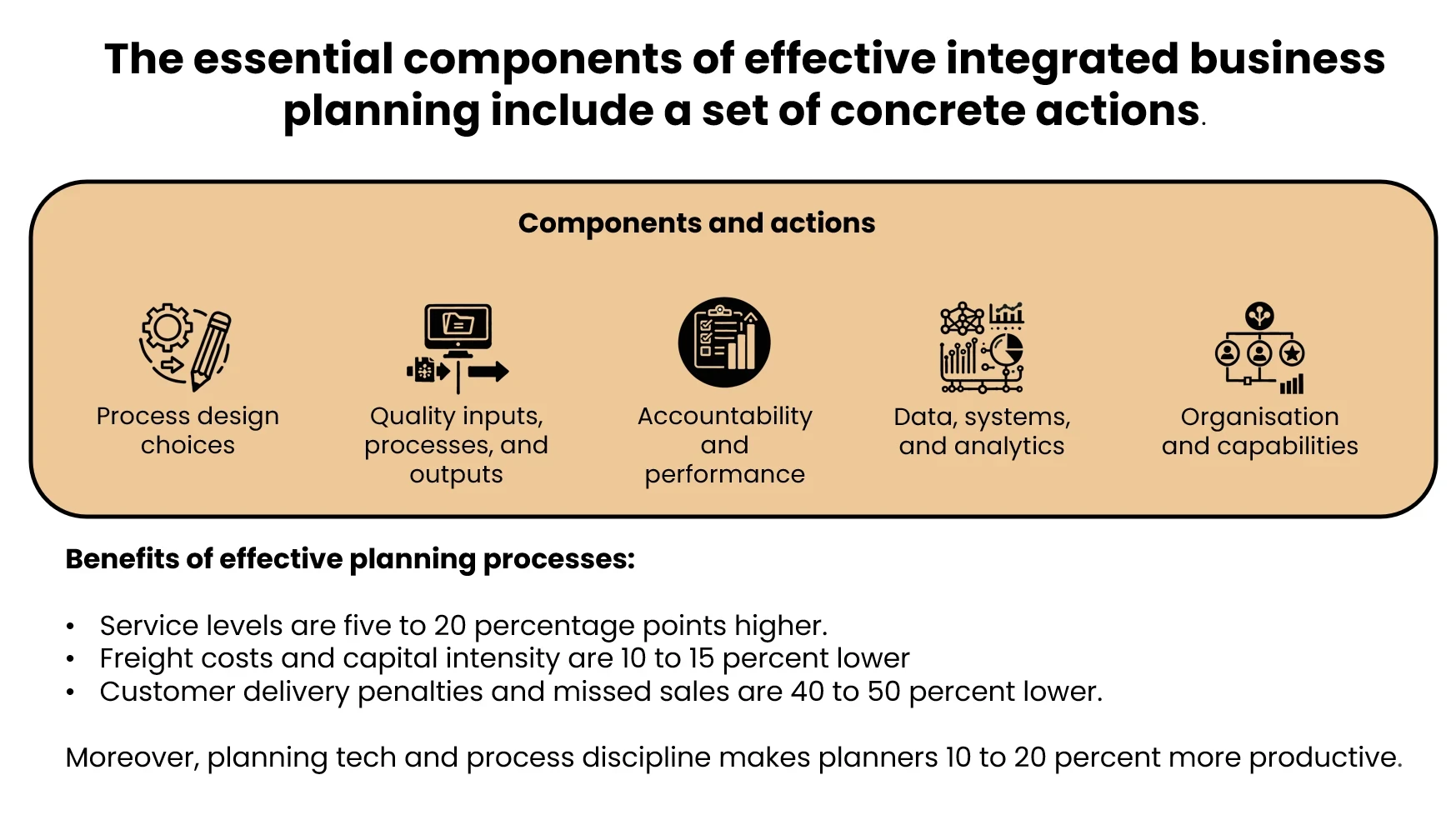
The five components of a robust logistics SOP
Building an SOP that actually works in a logistics environment requires more than writing things down. Five elements distinguish procedures that get used from those that gather dust.
Business-backed design. The procedure needs to reflect how the operation actually runs, not how it was designed to run three years ago. Before writing or rewriting an SOP, map the current process by watching how it is actually executed. Discrepancies between the ideal process and the observed one are worth understanding before they are codified.
Quality of inputs and outputs. Each step should have a clear input (what triggers it) and a clear output (what the result should be). If either is undefined, the step becomes ambiguous in execution. Ambiguity in a procedure is how ad-hoc interpretations become habit.
Accountability and performance management. Each SOP should name who owns the process and who is accountable for the outcome. Performance metrics, even simple ones, help teams understand whether the procedure is working. Operations that track adherence alongside output metrics tend to identify drift earlier.
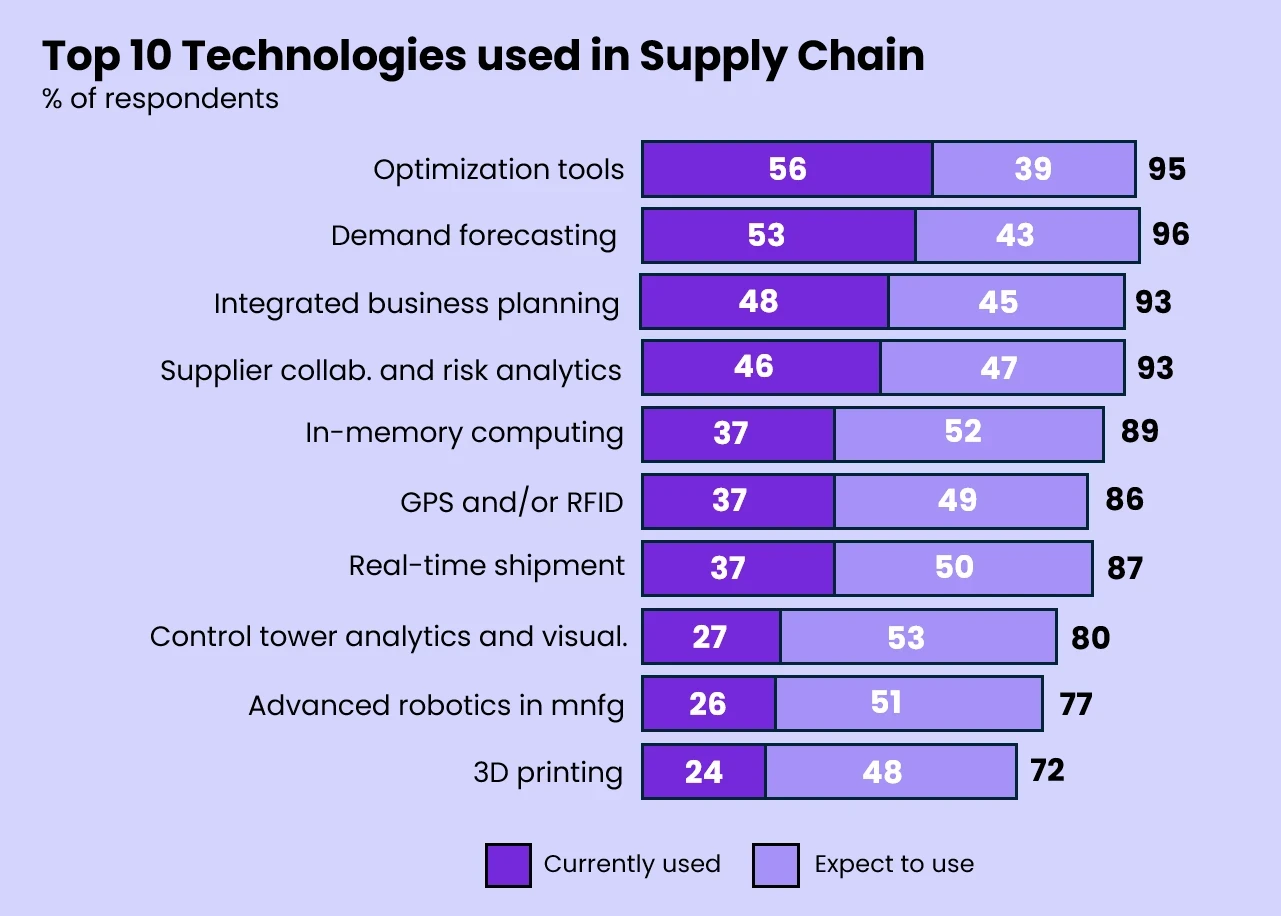
Effective use of data and technology. Warehouse Management Systems (WMS), transport management platforms and operational data make it possible to test whether SOPs are being followed and whether they are producing the right outcomes. Data helps distinguish a process failure from a one-off error.
Specialised organisational roles. In larger operations, a dedicated process or continuous improvement function often owns SOP governance. In smaller ones, operations leads need to carve out time for this work rather than treating it as a by-product of daily management. Without dedicated ownership the framework erodes.
Near-shoring and supply chain disruption are forcing SOP rethinks
Geopolitical disruption and near-shoring trends are forcing many operations to rethink their procedures from scratch. Bringing production or distribution closer to end markets means establishing new facilities, new partner relationships and new operational rhythms, each of which requires its own set of working procedures.
Near-shoring is not a quick fix. The supply chain challenges it creates in the short term, including running parallel networks, managing higher unit costs and integrating new suppliers, require clear operational processes to avoid confusion. Without robust SOPs governing how new operations interact with existing ones, near-shoring can introduce as much instability as it removes.
For businesses in this position, the implication is that SOP development cannot wait until the new operation is running smoothly. Procedures need to be built out before go-live, tested in parallel operation and revised quickly based on what they miss. The organisations that handle network transitions well tend to approach procedure development with the same rigour they apply to facility design or systems implementation.
Supply chain events like port disruptions and capacity shortages have the same forcing function. An operation that relies on institutional knowledge rather than documented procedures is poorly positioned to adapt quickly when circumstances change. You can read more about building operational flexibility in our piece on improving supply chain agility to handle disruption.


Keiran Hewkin
Co-Founder & CEO of Swyft Home
Chain Reaction Podcasts
Inventory Is the Magic Wand: Swyft's Delivery First Model
Next-day sofa delivery sounds impossible — and it was, until Keiran redesigned the entire supply chain around inventory, modularity, and a delivery-first mindset.
Where AI and technology fit into SOP management
AI and process automation tools are starting to change how SOPs are written, distributed and enforced. Three areas are worth attention.
The first is process mining. Software that analyses event logs from WMS, ERP and transport management systems can identify how processes are actually running, not how they are documented to run. This closes the gap between the written procedure and observed behaviour, which is one of the most common failure points in SOP management. Operations that have deployed process mining tools often discover that their documented procedures and their actual workflows diverge significantly within 12 months of the last SOP review.
The second is natural-language generation. AI writing tools can draft procedure text from structured workflow data, which reduces the time cost of keeping SOPs current. The risk is that AI-generated procedures need expert review before they go live. Text that reads fluently can still miss important operational context that only experienced staff would catch.
The third is digital checklists and compliance tooling. Replacing paper-based processes with digital workflows makes adherence trackable in real time, flags deviations as they happen rather than after the fact and creates an audit trail that supports quality management.
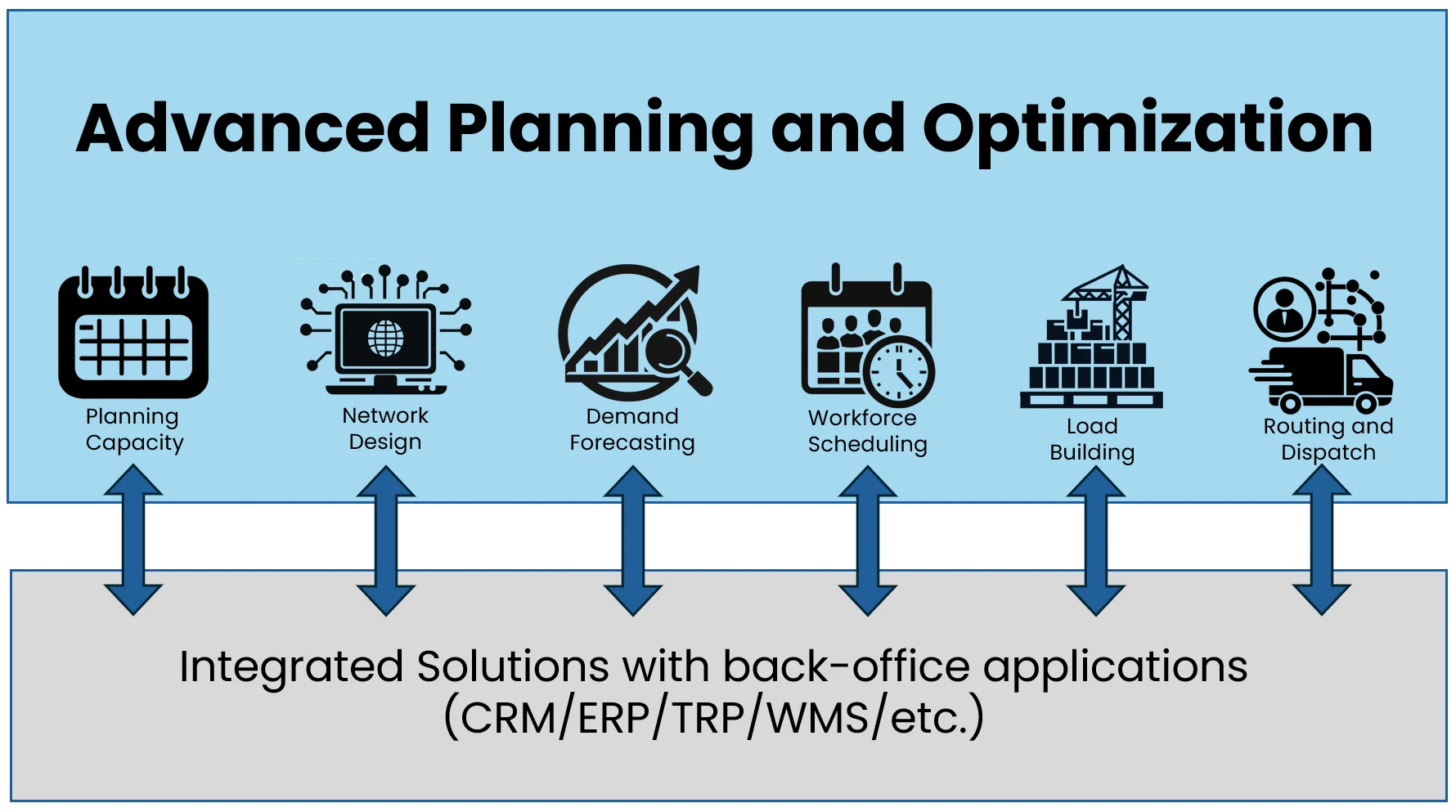
The challenge with all of these tools is integration. Logistics operations typically run on multiple systems that do not share data easily. Procedures that span WMS, transport systems and financial platforms require either manual coordination or genuine system integration to be effective. The broader impact of AI on supply chain planning and execution is real but realising it requires operations that can accept and act on the data these tools produce.
Making SOPs work across teams and external partners
Single-site operations face enough challenges keeping procedures consistent across shifts and departments. Multi-site and multi-partner operations face a harder problem: procedures that need to work across teams with different systems, different management structures and potentially different commercial relationships.
You cannot mandate your internal procedure on a partner who operates under their own management. What you can do is agree on outcomes and interface standards. An SOP governing how a 3PL reports exceptions to you does not need to describe their internal process. It does need to specify what you need to receive, in what format and by when.
This is where the distinction between internal SOPs and interface agreements becomes useful. Internal SOPs govern how your own operation works. Interface agreements govern how information and accountability flow between you and your partners. Conflating the two leads to documents that are either too prescriptive (and resented by partners) or too vague (and useless in practice).
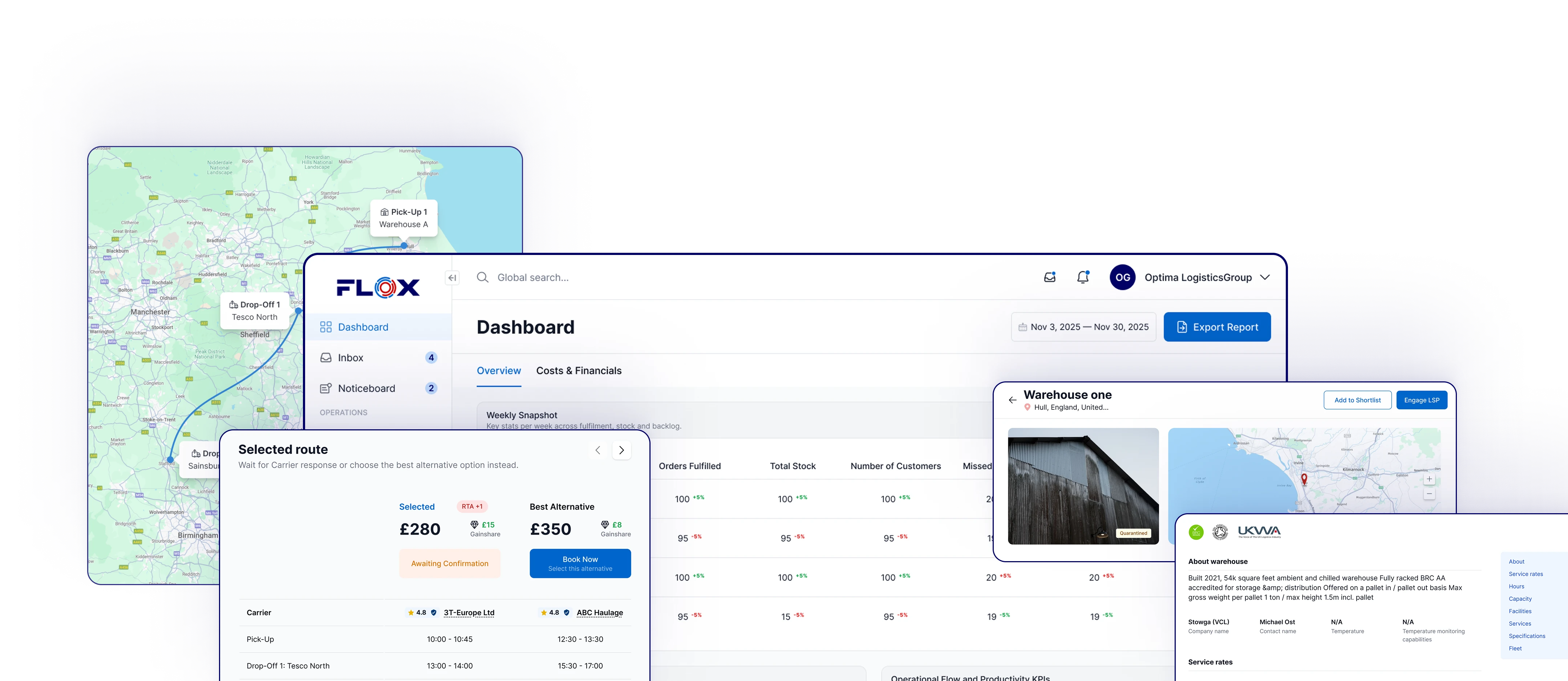
Technology that creates a shared visibility layer across multiple parties makes interface governance significantly easier. When buyer, warehouse and carrier can all see the same operational status, many of the information-flow procedures that would otherwise need documentation become unnecessary. Well-designed multi-party platforms reduce operational friction even when the underlying procedures have not changed, because they remove the ambiguity of who knows what and when. The use of digital twins in logistics is one example of how simulation and shared data can support better process design.

Ask anything to learn how FLOX works and helps buyers and sellers of logistics run more efficient and profitable operations.
Subscribe to our newsletter.
Stay up to date with practical insights and useful logistics content
FAQs
An SOP describes a process at the level of what needs to happen and why, covering a complete workflow or activity. A work instruction is more granular, describing exactly how a specific task is performed, often including equipment settings, precise measurements or step-by-step sequences. In practice, an SOP will reference work instructions for specific steps. Both are necessary: the SOP provides context and accountability, the work instruction provides operational detail.