

Table of Contents
Choosing a logistics partner for peak season is one of the highest-stakes sourcing decisions a growing brand makes and most get the evaluation criteria wrong. The instinct is to benchmark on rate cards and then check whether the provider has space. Both matter, but neither is the question that determines whether your peak actually works.
The decisions that hurt are not the ones made imperfectly. They are the ones made late, with partial data, when there is no longer time to switch or escalate. By the time a brand realises its provider cannot absorb a volume surge, reroute around a constraint or give a straight answer about where stock sits, it is too late to do anything except manage the damage.
For brands that are still scaling, this is compounded. You do not yet have the leverage to extract priority service from a large, overcapacity operation. You are not small enough to be a named account at a boutique provider. You sit in the middle and that is where execution gaps live.
This post works through the five things growing brands most consistently underestimate when selecting a logistics partner for peak and what to pressure-test instead.
Key takeaways
• Rate and capacity availability are necessary but not sufficient criteria when choosing a logistics partner for peak season; the decisions that hurt most are the ones made too late to act on.
• A provider's stated capacity means little without clarity on how they allocate it under pressure and growing brands are rarely first in the queue when allocation decisions are made.
• Visibility only matters if it supports action: a dashboard that shows a problem 48 hours too late is not an operational tool.
• Escalation speed and pre-agreed exception protocols matter more at peak than any nominal SLA, because SLAs describe normal conditions, not the ones that actually occur in November and December.
• Matching a partner to your current operation is less important than matching them to where your volume and complexity sit in six months.
“It’s really more of a blended assessment and analysis than just looking at that bottom line or that purchase order cost.”
Emma Stone, VP of Global Operations at Hurdle

Capacity availability is the wrong first question
The standard opening question to a prospective logistics partner is some version of: "Do you have space and resource available for our peak window?" The answer is almost always yes, at the point of pitching. That answer is worth very little.
What the question actually needs to unpack is how the provider allocates scarce capacity when multiple clients hit their volume spikes simultaneously. In a genuinely constrained environment, a provider with 20 clients heading into peak is making allocation decisions. The question is not whether they have capacity in aggregate. It is where your volume sits in the priority order when they have to choose.
Growing brands sit at a structural disadvantage here. They are not the largest account, which means they are not the one a provider protects when things get tight. They are also not insignificant enough to be unceremoniously deprioritised without reputational cost. They sit in a grey zone where the allocation decision gets made informally, at operational level, without anyone explicitly telling you it has happened.
The right question is: "Show me what happened to a mid-size client's throughput in the last two peak periods when you hit a capacity ceiling." If that data is not forthcoming or the answer describes a scenario that never happens, treat that as signal.

What does visibility actually do for you when something goes wrong?
Visibility is the most oversold capability in logistics technology. Every provider and every platform offers dashboards, tracking, reporting. The question that separates operational visibility from decorative visibility is: what action does it support, at what latency and who acts on it?
A dashboard that shows stock levels or shipment status after a 24-hour data lag is not an operational tool at peak. It is a retrospective record. If the lag between an exception occurring and that exception appearing in your visibility layer is longer than the window you have to respond, the visibility serves no practical function.
Digital twins and real-time simulation represent the sharper end of what operational visibility can do: modelling the downstream consequences of a constraint before they materialise, not after. Most brands at growth stage are not yet working with that level of sophistication, but the underlying principle applies at every level. Visibility only matters if it shortens the time between a problem occurring and a decision being made.
When evaluating a provider, ask what the typical latency is between a fulfilment exception and it appearing in your reporting. Ask what triggers an alert rather than a passive data update. Ask who, on the provider's side, is responsible for acting on that alert without waiting for you to escalate. The answers reveal whether their visibility architecture is built for their operations team or for their sales deck.
SLAs describe normal conditions, not peak ones
Service level agreements are negotiated and documented under normal operating assumptions. They describe what a provider will do when capacity is not constrained, when their workforce is at standard levels and when volumes are predictable. Peak is the opposite of all three.
This does not mean SLAs are useless. It means you cannot use an SLA as a proxy for what your experience will actually be in the six weeks that matter most. The relevant metric is not whether a provider has a well-written SLA. It is whether they have documented exception protocols, pre-agreed escalation paths and specific named accountability for resolving issues outside normal parameters.
Ask whether the provider has a peak-specific operating plan. Ask whether it covers the scenarios that are most likely to occur: a volume spike that exceeds the forecast by 30%, a carrier delay that cascades into an inventory backlog, a returns surge in the days following peak. A provider who has genuinely run peak operations at scale will have faced all of these and will be able to describe, specifically, how they handled them.
For a practical framework on what peak readiness actually looks like from an operator's perspective, the operator's playbook for peak periods covers the preparation cycle and the decision points that most brands leave too late.


Oisin Hanrahan
Founder & CEO of Keychain
Chain Reaction Podcasts
How Brands Build Products Without Factories
The era of owning factories to own a brand is ending. Oisin explains how third-party manufacturing and AI are rewriting the rules for consumer products.
The integration question brands skip until it is too late
A logistics partner is not a standalone service. It connects to your order management system, your inventory layer, your returns process and, increasingly, your customer-facing communications. The integration between those systems is where execution failures live and it is where growing brands consistently underinvest in due diligence.
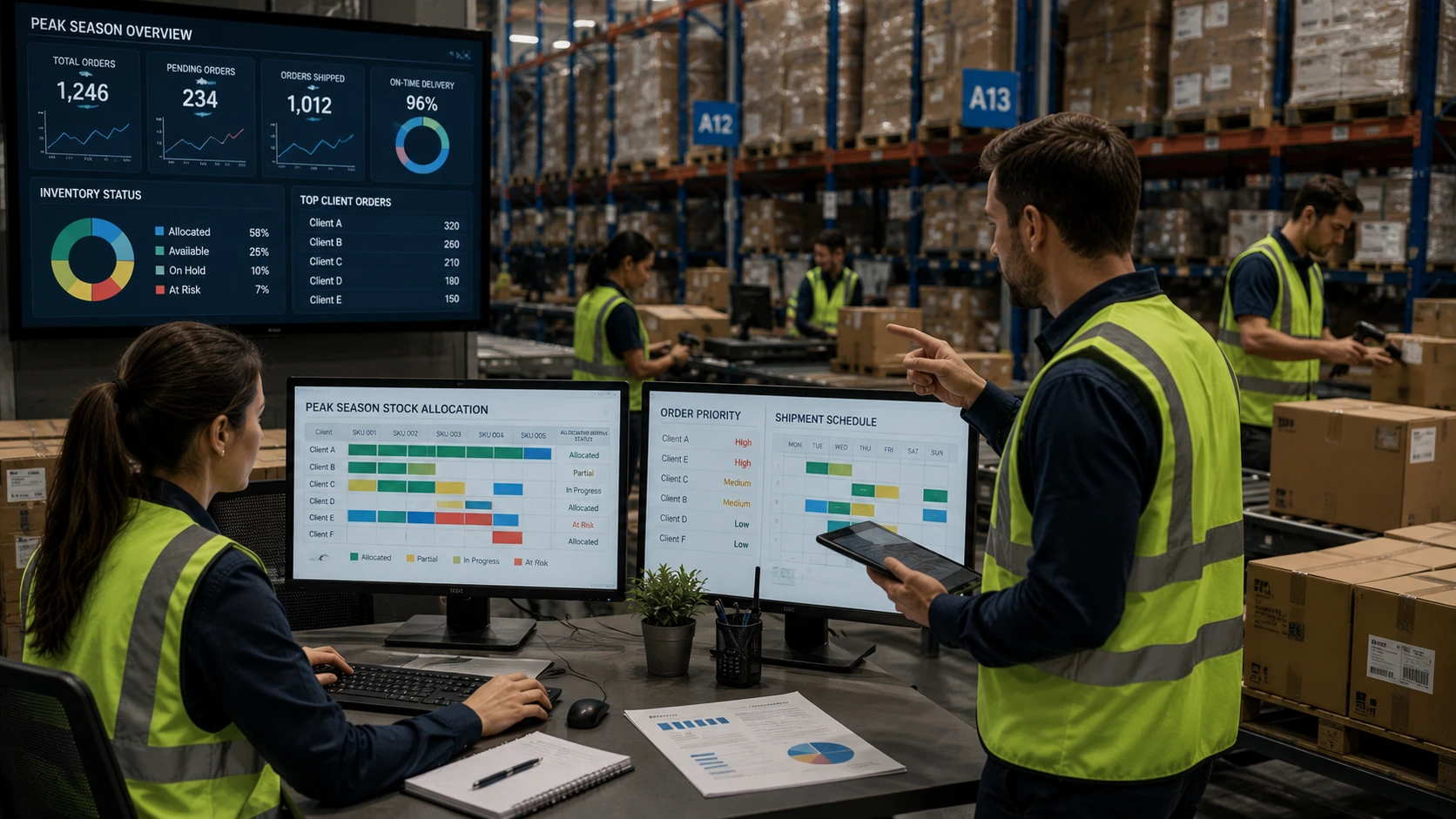
The practical risk is not that the integration does not exist. Most providers have a list of integrations. The risk is the latency and reliability of data exchange under load. Inventory data that syncs accurately at normal volume can introduce lag or errors when order throughput spikes. A discrepancy between your system's inventory count and the provider's count, surfaced during peak, creates a decision problem that neither side can resolve quickly.
What to test before you sign
Before committing to a provider for peak, run a real data exchange test against your live system, not a sandbox. Check what happens to sync frequency when volumes increase. Establish whose system of record takes precedence when there is a discrepancy and make sure that protocol is documented, not assumed.
The integration question also extends to how the provider handles returns. Returns in the period immediately following peak can be as operationally demanding as the peak itself. A provider whose reverse logistics process is manual or poorly integrated with your stock availability layer will create a secondary capacity problem just as you are trying to normalise operations.
Choosing the right operational model, including how warehousing and fulfilment infrastructure connects to your wider supply chain, is covered in more detail in this guide to warehousing and fulfilment models for shippers.
Matching the partner to where your operation is going, not where it is now
Growing brands often select a logistics partner against current volume, current SKU range and current geographic scope. By the time peak arrives, one or more of those parameters has changed. The partner was evaluated against a profile that no longer exists.
This is a structural problem with point-in-time procurement. The evaluation captures a snapshot, but the contract and the operational relationship run across a period during which the brand's complexity increases. If the provider was selected because they were a good fit for the operation as it was, they may not be a good fit for the operation as it will be at the point peak actually hits.
The practical implication is to evaluate providers against a forward-looking operational profile. What will your volume look like at the upper end of your peak forecast? What new product categories or routes to market are you likely to add in the next two quarters? If your growth depends on adding a new sales channel or geographic region before peak, the provider needs to be evaluated against that version of your operation, not the current one.
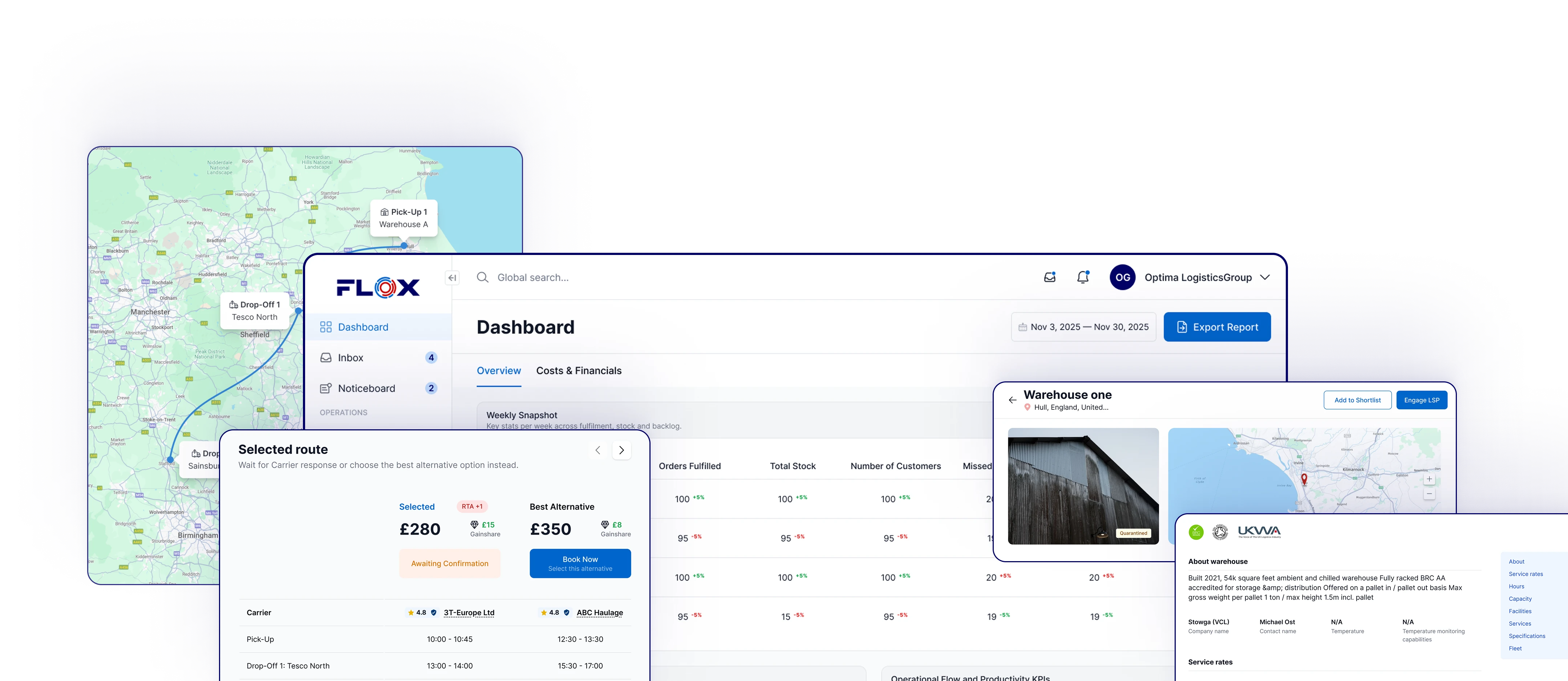
This is one of the reasons why accessing a range of providers through a multi-party marketplace with orchestration capability matters: it allows the sourcing decision to be made against options that fit your operational trajectory, not just your present state. How FLOX works for buyers explains the mechanic of matching and orchestration across that provider set.
The broader point is that logistics partner selection is a supply chain management decision, not a procurement transaction. It has consequences that run well beyond the contracted rate. For brands that are still building their supply chain operating model, the fundamentals of supply chain management for operators provides a grounding in the decisions that compound over time.

Explore storage and fulfilment solutions that give your business flexibility and the support it needs to grow.
What a better evaluation actually looks like
The brands that navigate peak well are not the ones that found the cheapest capable provider. They are the ones that stress-tested the right variables in advance and built operating agreements around what actually happens at peak, not what the contract assumes will happen.
That means asking harder questions earlier. It means requiring specific evidence of past peak performance rather than accepting general capability claims. It means testing integrations under realistic load before the contract is signed. It means documenting escalation paths and exception protocols with named accountability, not leaving them to be figured out under pressure.
It also means accepting that the right logistics partner is not the one with the most impressive client list or the most comprehensive rate card. It is the one whose operational model, technology architecture and escalation culture fit the specific demands of your peak window, at the scale you will actually be running.
The decisions that shape your peak outcome are mostly made in the months before peak begins. By the time the volume arrives, the capacity is allocated, the integrations are live or they are not and the escalation paths work or they do not. Speed and trust in those earlier decisions consistently beat the theoretical elegance of a perfectly negotiated contract.
Subscribe to our newsletter.
Stay up to date with practical insights and useful logistics content
FAQs
The evaluation should begin at least three to four months before the peak window, not because procurement takes that long but because integration testing, operational planning and exception protocol alignment all take time. Decisions made under time pressure in the weeks before peak reduce the options available and increase the risk of a poor fit.