

Table of Contents
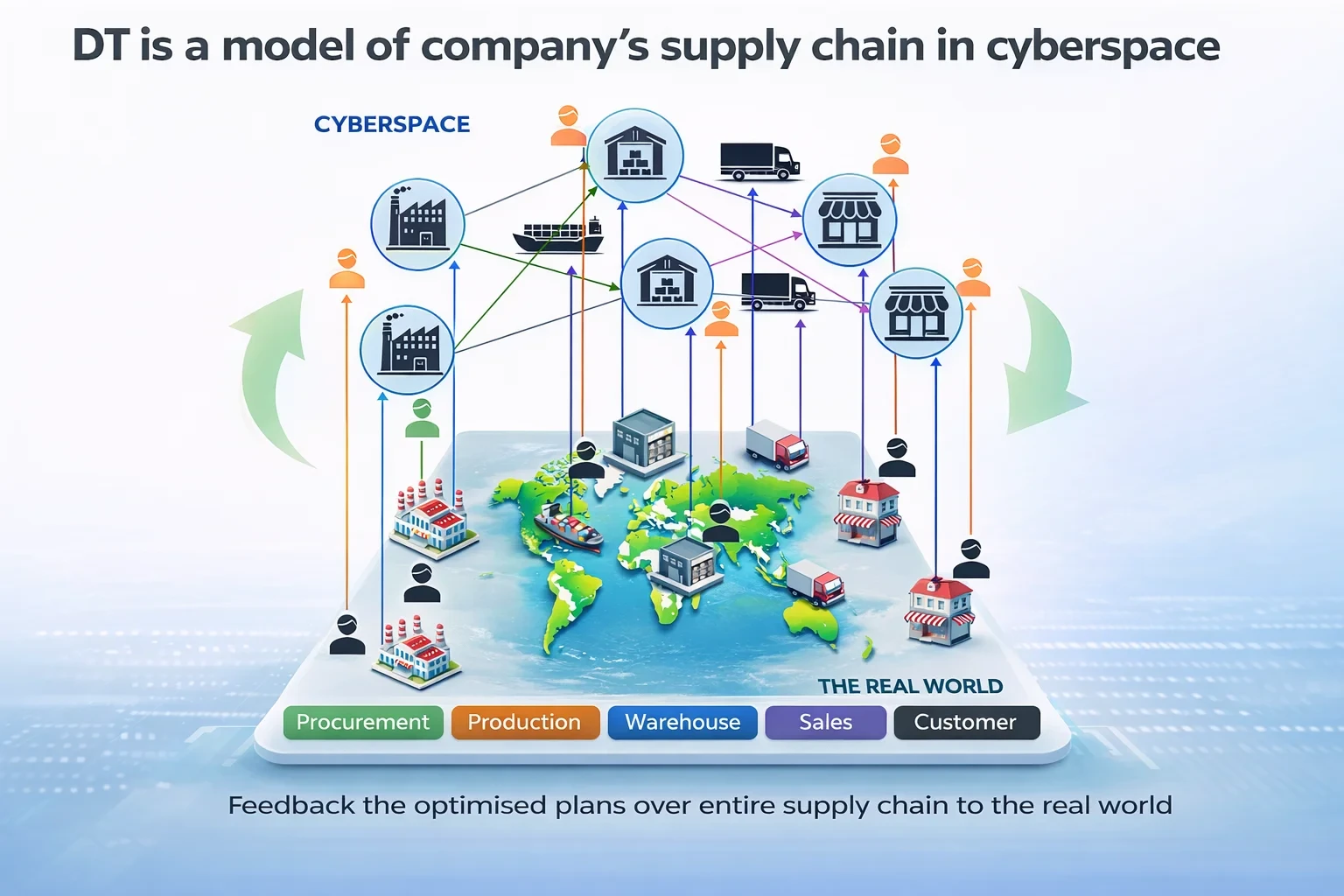
Digital twin technology is changing how logistics operators plan, execute and optimise their supply chains. By creating dynamic virtual replicas of physical assets such as warehouses, transport networks and entire supply chain ecosystems, organisations can simulate scenarios, predict failures and make data-driven decisions in real time.
What Is a Digital Twin?
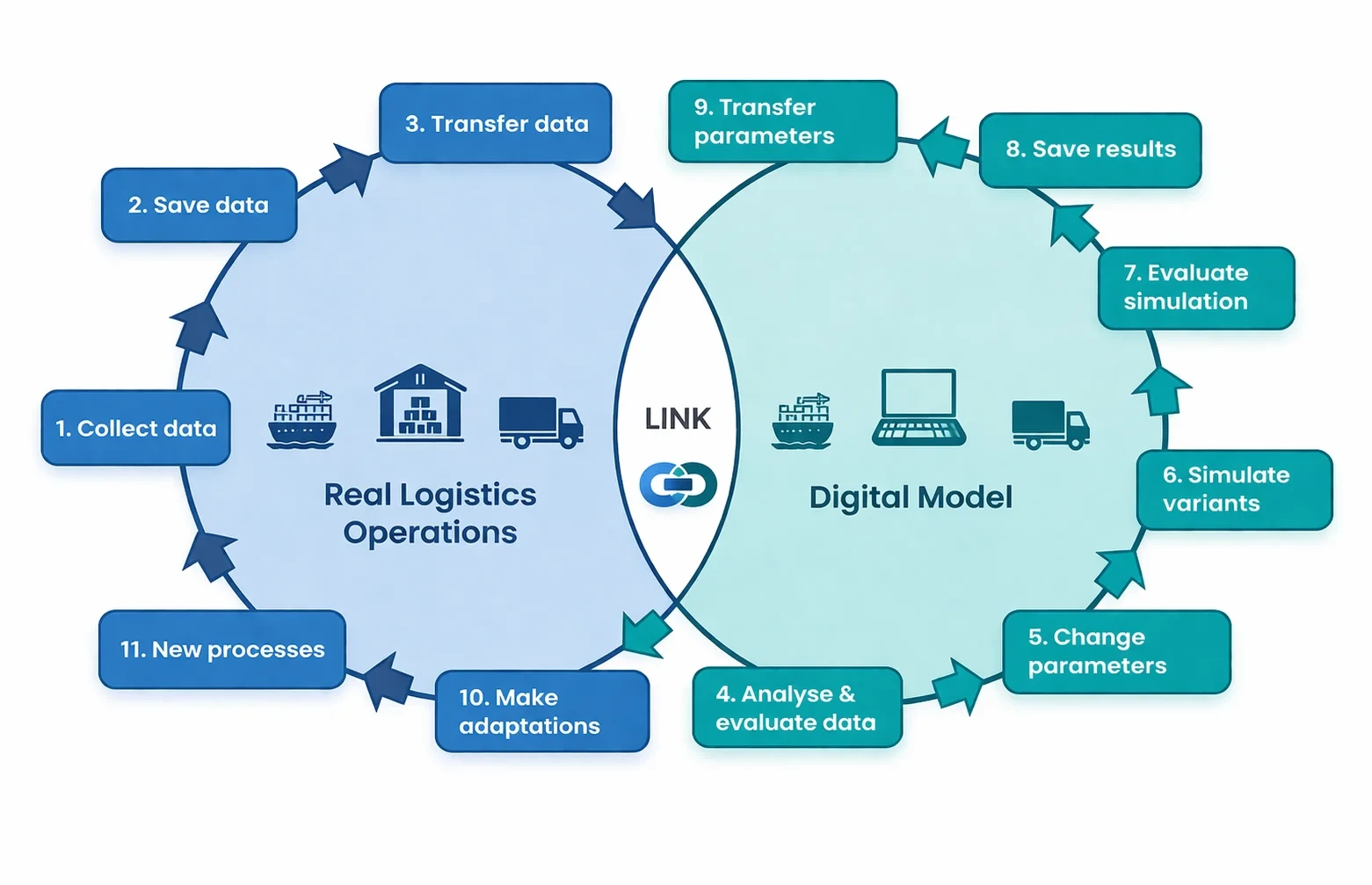
A digital twin is a virtual representation of a physical object, system or process that continuously synchronises with real-world data. Unlike a static model or one-off simulation, a digital twin is dynamic: it ingests live data from IoT sensors, warehouse management systems (WMS), transport management systems (TMS) and ERP platforms to mirror the current state of the physical entity it represents.
The concept was first proposed by Michael Grieves at the University of Michigan in 2002 and later formalised with John Vickers at NASA. Since then, it has expanded into manufacturing, healthcare, energy and, increasingly, logistics and supply chain management.
The technology exists on a maturity spectrum: descriptive twins show what happened; diagnostic twins explain why; predictive twins forecast what will happen; prescriptive twins recommend what to do; autonomous twins act on their own. Most logistics organisations today operate between the descriptive and predictive stages. Progressing further depends on the quality of data integration across multiple parties, the capability that multi-party orchestration platforms like FLOX are designed to enable.
The Digital Twin Maturity Spectrum
Not all digital twins deliver the same level of value. In practice, they sit on a maturity spectrum:
- Descriptive twin - creates a shared view of operations and shows what has happened or what is happening now.
- Diagnostic twin - helps explain why something happened by linking events across systems, sites or partners.
- Predictive twin - uses historical and live data to forecast likely outcomes such as congestion, delays, failures or stock issues.
- Prescriptive twin - recommends the best response by comparing scenarios and identifying the most effective trade-offs.
- Autonomous twin - supports closed-loop action, where approved responses can be triggered automatically when conditions are met.
Most logistics organisations are still building towards the predictive and prescriptive stages. The further a business moves along this spectrum, the more important data quality, process discipline and multi-party integration become.
Beyond 3D: What a Digital Twin Really Does
A digital twin is often mistaken for a 3D model. Visualisation can be part of it, but the real value lies in how it behaves and what it helps people do.
- It brings together data from multiple systems so operational teams can work from a single, current version of reality.
- It tracks changes over time, which means it can reveal trends, bottlenecks, recurring exceptions and early warning signs.
- It makes scenario testing practical, so teams can explore the impact of layout changes, route changes, supplier shifts or volume spikes before acting.
- It supports prediction, helping operators anticipate likely delays, maintenance issues, capacity constraints and service risks.
- It improves decision quality by showing the operational and financial consequences of different options, not just the immediate effect.
- It enables continuous learning because the model can be refined as more data is captured and more outcomes are observed.
- It can support automation when rules, thresholds and workflows are mature enough for the system to trigger approved responses.
In other words, the digital twin is not valuable because it looks realistic. It is valuable because it helps operators understand, test, predict and improve the real operation.
“AI effectively is a lens, not a brain. The best compliment FLOX gets is silence, because it means the system is doing its job and customers can focus on theirs.”
Wajahat Akram, CTO of FLOX.is

The Technology Stack: How a Supply Chain Digital Twin Is Built
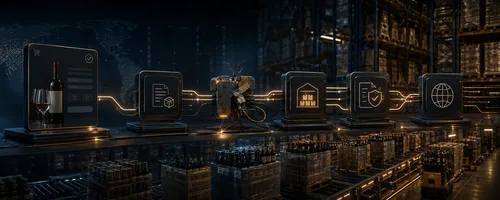
A supply chain digital twin is an integrated architecture comprising six layers:
- Physical Layer - warehouses, vehicles, goods, equipment.
- Data Layer - IoT sensors, RFID tags, GPS trackers and barcode scanners collecting real-time data.
- Integration Layer - connectors to ERP, WMS, TMS and multi-party platforms like FLOX that aggregate data across organisations.
- Modelling Layer - virtual replicas of warehouse layouts, transport networks and inventory flows.
- Analytics Layer - AI and machine learning for pattern recognition, forecasting and anomaly detection.
- Visualisation Layer - dashboards, 3D environments, alerts and reporting interfaces.
AI and ML process the vast data volumes from IoT devices to generate insights and optimise processes. Cloud computing provides the power and storage to keep the twin current, while high-speed networks like 5G enable real-time data transmission between the physical and digital worlds.
Critically, the integration layer determines the ceiling of what a digital twin can achieve. A twin that only sees one warehouse or one transport provider has limited predictive value. Multi-party platforms that aggregate data across warehouse providers, 3PLs, hauliers and buyers create the cross-network visibility that makes a digital twin genuinely useful.
Key Applications of Digital Twins in Logistics
Real-time tracking and monitoring - digital twins create a counterpart for each shipment, enabling companies to monitor location, temperature and other parameters in real time. This enhances visibility and supports compliance, particularly for sensitive goods such as pharmaceuticals and perishables.
Predictive maintenance - by analysing sensor data from vehicles and warehouse equipment, businesses anticipate failures before they occur, reducing downtime and costs.
Warehouse design and space optimisation - virtual models let managers simulate configurations before making physical changes. Operators can test how picking routes interact with inbound receiving, how racking configurations affect replenishment cycles and how seasonal volume changes impact throughput.
Inventory and workforce management - real-time stock monitoring via barcode, RFID, and WMS integration helps forecast demand and prevent stockouts. Workforce allocation improves by analysing productivity metrics and peak activity periods.
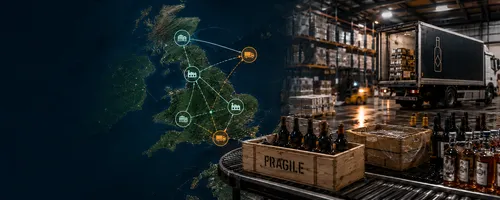
Fleet management and route optimisation - simulating routing scenarios against live traffic, weather and demand data identifies the most cost-effective delivery strategies.
Supply chain resilience - simulating disruptions (natural disasters, geopolitical instability, port congestion) before they materialise enables pre-positioned inventory and rerouted shipments.
Cost management - modelling trade-offs between transport costs, storage costs and service levels enables quantitative decision-making rather than relying on rules of thumb.
Sustainability - digital twins can model and optimise logistics processes to reduce carbon footprints, optimise resource use and support decarbonisation goals. We explore this topic in more depth in our dedicated article on sustainability in logistics.
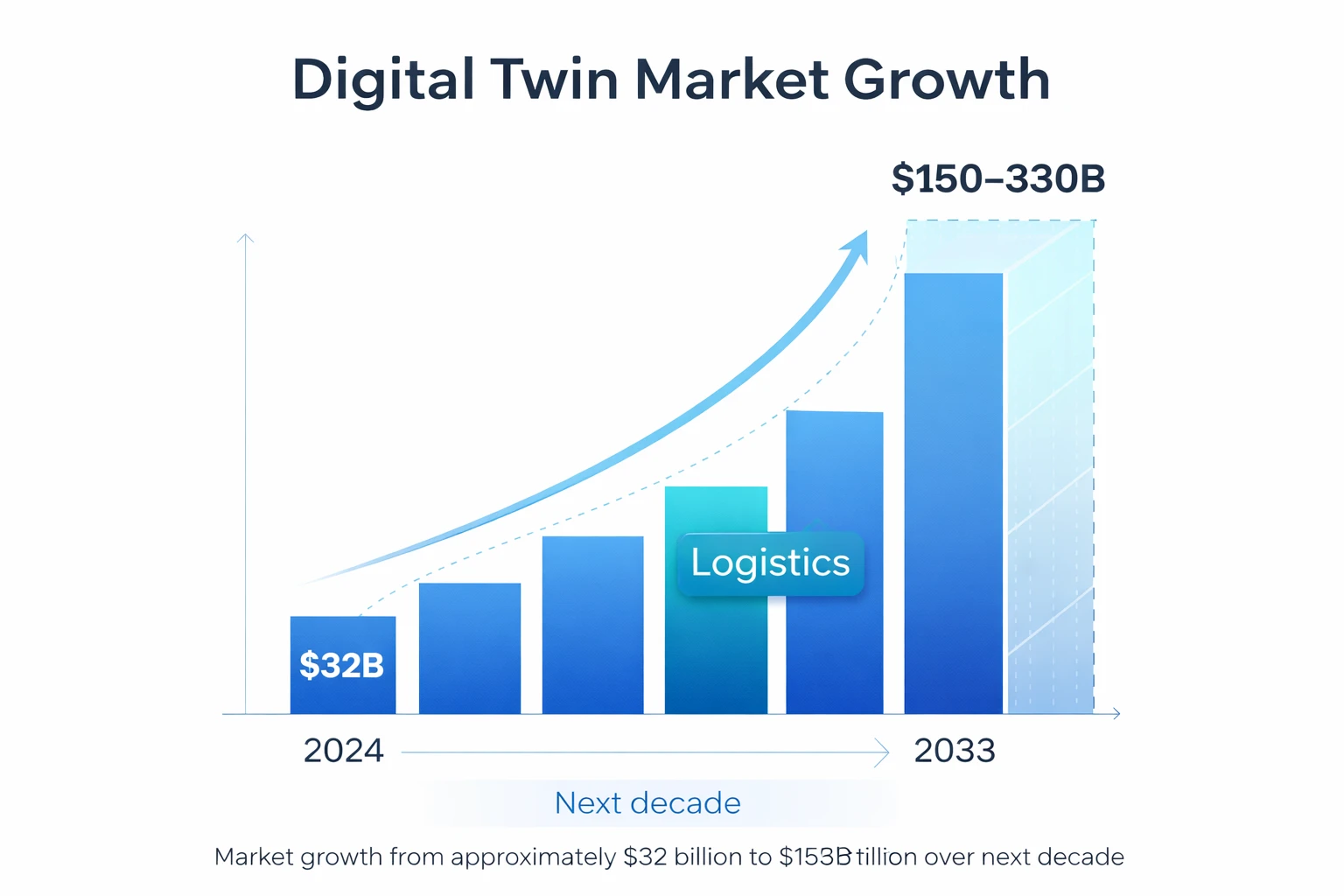
Digital Twin Market Growth: Key Statistics
Recent market estimates show strong growth in both the broader digital twin market and its logistics applications:
- DHL reports that the global digital twin market was valued at about US$12.8 billion in 2024, with projections pointing to roughly US$240.3 billion by 2035.
- Research and Markets notes that the digital twin in logistics market was valued at US$3.34 billion in 2025 and projects growth to US$6.95 billion by 2029.
- The Business Research Company estimates the logistics segment will rise from US$4.02 billion in 2026 at a compound annual growth rate of just over 20% in the near term.
- Recent DHL analysis also points to a shift from isolated use cases towards more connected, end-to-end logistics applications as adoption matures.
The exact numbers vary between analysts because market definitions differ. Even so, the direction is consistent: digital twins are moving from specialist deployments towards wider operational use.
Self-Healing Supply Chains: The Next Frontier
A self-healing supply chain uses real-time digital twin data combined with AI to detect, assess and resolve disruptions automatically. When an anomaly occurs (a port strike, vehicle breakdown or demand surge), AI evaluates the impact using the twin's simulation capabilities and executes pre-approved responses: rerouting shipments, adjusting inventory allocation or switching suppliers before service levels are affected.
This aligns with the 'shift-left' approach gaining traction across the industry: integrating logistics considerations into earlier stages of planning rather than treating them as a downstream execution problem.
The prerequisite is multi-party data integration. A digital twin cannot self-heal across a supply chain it cannot see. Single-company twins have limited value when disruptions originate from partners or shared infrastructure. That is why platforms connecting multiple logistics parties into a shared operational view are essential.


Bram Vanschoenwinkel
Chief Product Officer at Customaite
Chain Reaction Podcasts
Automating Logistics with Intelligence
Automation without intelligence just moves problems faster. Bram explains how AI changes the game when it's embedded in logistics decisions, not bolted on afterwards.
Critical Success Factors for Implementing Digital Twins
Digital twin projects tend to succeed when a few fundamentals are handled well from the start:
- Clear business use case - begin with a real operational problem such as poor slotting, missed service windows, low asset utilisation or weak exception response.
- Reliable data quality - the twin only becomes useful when the underlying data is accurate enough, timely enough and consistent enough to support decisions.
- Strong integration and interoperability - the model must connect with the systems that actually run the operation, including partner systems where relevant.
- Practical operating model - ownership, decision rights and workflow changes need to be clear so the twin becomes part of daily operations rather than a side project.
- Scalable architecture - early pilots should be designed so they can expand across more sites, partners and use cases without major rework.
- Security and governance - access control, data permissions, commercial sensitivity and auditability matter even more when multiple parties are connected.
- Measured value - define baseline KPIs early and track whether the twin is improving service, cost, resilience, utilisation or speed of response.
In most cases, the hardest part is not the modelling itself. It is aligning data, processes and decision-making across the people and systems involved.

Explore storage and fulfilment solutions that give your business flexibility and the support it needs to grow.
Getting Started: For Businesses of Any Size
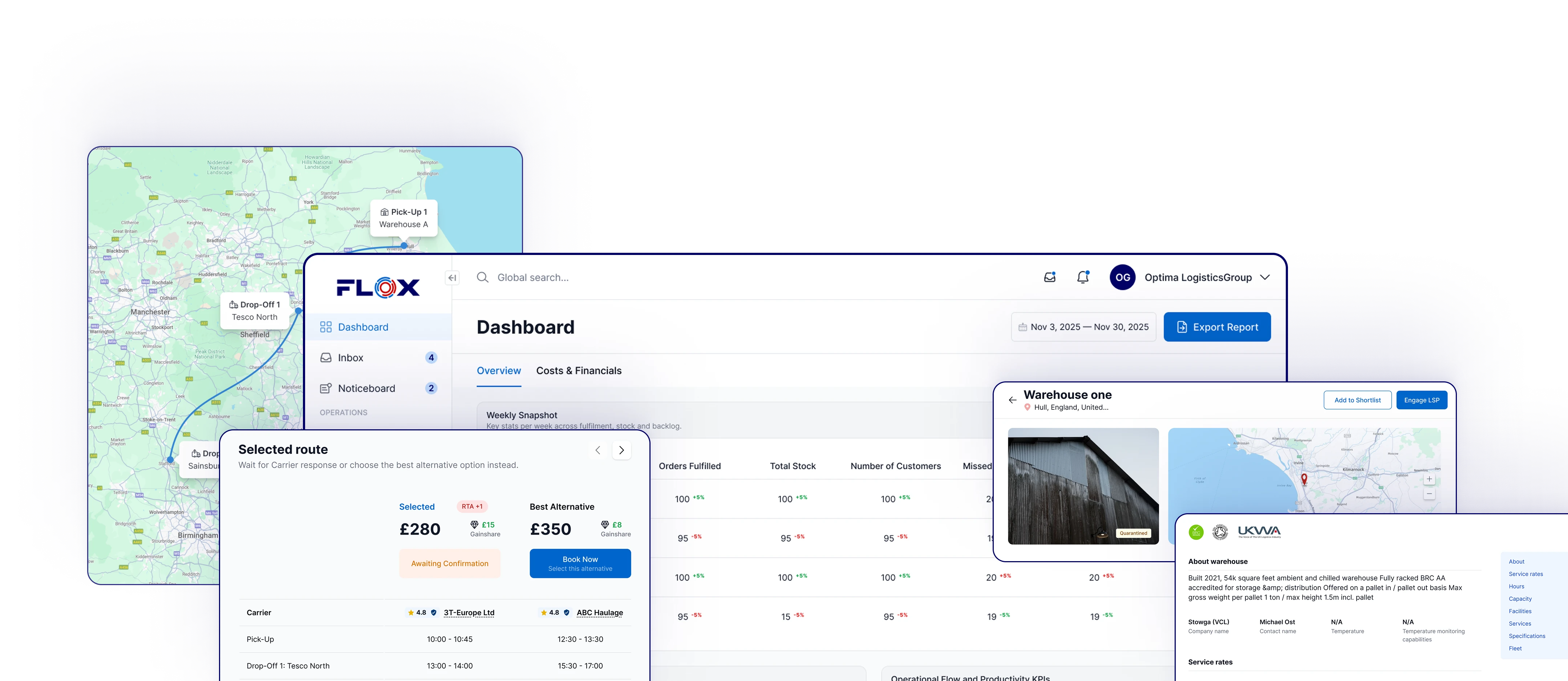
The practical starting point for most businesses is not a full-scale IoT-equipped twin. It is a lightweight twin: a data-integration layer that aggregates existing WMS, TMS and ERP data into a unified operational dashboard. This provides cross-system visibility and is functionally the first layer of a digital twin architecture.
From there, layer in scenario simulation: what if I rearrange my warehouse layout? What if my main haulier cancels? What is the cost impact of shifting delivery frequency? These questions can be answered with data aggregation and relatively simple modelling, without IoT sensor investment.
Cloud-based Digital-Twin-as-a-Service platforms are reducing capital requirements significantly. The implementation path is straightforward: digitise one warehouse or one transport lane, measure baseline KPIs, build the twin, simulate improvements, demonstrate ROI, then scale.
Success depends on data quality across all sources, integration and interoperability with partner systems, a workforce that combines logistics expertise with data literacy, scalability to accommodate growth, and security to protect multi-party operational data.
Multi-party logistics platforms like FLOX already perform the foundational work: aggregating data across warehouse providers, 3PLs and hauliers without requiring each partner to overhaul their own systems. This data integration is the prerequisite for any meaningful digital twin deployment.
Subscribe to our newsletter.
Stay up to date with practical insights and useful logistics content
FAQs
A digital twin in logistics is a dynamic virtual representation of a real logistics asset, process or network that stays connected to operational data. It can represent a warehouse, a fleet, a transport lane, an inventory flow or a wider supply chain. The point is not just to visualise the operation, but to understand it better, test changes safely and make decisions with stronger evidence.
Unlike a static dashboard, a digital twin links structure, behaviour and data. It helps teams see what is happening, why it is happening, what is likely to happen next and which response is most practical. That is why it is increasingly used for planning, exception management, resilience and performance improvement.