


The seasonal peak is the part of the supply chain calendar where good planning gets rewarded and weak planning gets exposed. Black Friday, Christmas, Easter, the summer holidays and Chinese New Year each pull on the same set of operational levers in roughly the same order every year. This piece walks through where the pressure actually lands, and the operating disciplines that hold the chain together when volume doubles inside six weeks.
Why seasonal peaks break supply chains in the same way every year
The pattern is predictable. Demand begins to climb six to eight weeks ahead of the headline event. Production lead times tighten first. Container shipping capacity tightens next. Warehouse rates rise and the minimum-term on temporary space stretches. Carriers run hot, last-mile delivery slots compress, and labour costs climb to attract the temporary workforce the despatch operation needs. By the week of peak, the unit economics of every shipment have moved against the buyer.
What is interesting is not that this happens. It is that the pattern is well known and the chain still breaks in the same places every year. The cause is usually that planning treats the peak as a single event rather than a chain of dependencies. A buyer who locks container capacity in August but forgets to extend their temporary warehouse contract in September is solving one problem and creating another. A retailer who hires temporary labour in November but has not invested in the onboarding to make them productive in week one wastes most of the wage bill.
The operators who absorb this best treat the peak as a sequenced operational programme that starts in spring, not in October. Their plans hold capacity options across multiple providers, not just confirmed bookings with the incumbent. We covered the wider implication of this shift, that the old optimisation defaults no longer fit the operating reality, in our piece on why backhaul and reverse loads are outdated.
“It’s not a divorced partnership … it’s got to be a homogenous relationship between us (providers) and the brands themselves.”
Joshua Hegarty, Founder and CEO of Cloud9 Fulfillment

Manufacturing and the global holiday calendar
The first link in the chain is the factory floor, and the global manufacturing calendar has two structural slowdowns that every buyer needs to plan around. In Europe, August routinely sees factories running at reduced capacity or shutting outright as workforces take statutory leave. In Asia, Chinese New Year (late January or early February) typically removes one to two weeks of production as workers travel home, with a longer ramp-down before and a slower ramp-up after.
Neither event is news, but both still catch buyers out. The August shutdown matters most for buyers stocking up for the Christmas peak: the lead time for production placed in late summer needs to allow for the closure window, the post-closure backlog and the shipping leg that follows. Chinese New Year matters most for buyers replenishing after the Christmas peak: the production ordered in October and November to refill empty UK shelves in February only arrives on time if the order is placed before the New Year shutdown begins, not during it.
Two disciplines hold this together. Multi-source supplier strategy, so that a single factory shutting for two weeks is a managed problem rather than a stock-out. And forecast discipline that treats the global holiday calendar as a fixed input, not a planning surprise. The forecasting maturity gap between buyers who do this well and buyers who do not is one of the most direct contributors to peak-season pain. We wrote about the operational discipline behind better forecasting in hitting the Excel spreadsheet wall.

Container shipping under pressure
Container shipping is where seasonal demand meets a network that does not flex easily. As Black Friday and Christmas approach, demand for container space on the major lanes climbs sharply. Spot freight rates rise. The minimum-term on new bookings lengthens. Vessels approach the major ports with longer queue times because the terminals are running at capacity. Buyers who book late find themselves rolled to the next sailing, with all the downstream consequences that creates.
Two additional shocks made the 2024 peak particularly disruptive, and both are worth understanding because the underlying mechanisms are not going away. The ILA strike on the US East Coast and Gulf Coast ports in October 2024 removed major terminal capacity for several days during a critical pre-peak window. The downstream effect on inland transport and warehouse intake was felt for weeks afterward. Separately, security incidents in the Red Sea from late 2023 onward pushed a growing share of Europe-Asia container traffic onto the longer Cape of Good Hope route, adding around 10 to 14 days to typical sailing times and increasing the working capital tied up in goods in transit.
The operators who handled these shocks best had two things in place. Relationships with more than one freight forwarder, so that when the primary route closed they could book the alternative without renegotiating from scratch. And inventory plans that already budgeted for an extra two weeks of stock in transit, so that an unexpected reroute did not become a stock-out. The wider context for treating trade-route volatility as a permanent operating condition is in our piece on the operational cost of trade-policy uncertainty.


Joshua Hegarty
Founder and CEO of Cloud9 Fulfillment
Chain Reaction Podcasts
Poker Pro Turned Logistics CEO: What E-Commerce Gets Wrong About Fulfillment
Professional poker taught Joshua to read situations, manage risk, and stay calm under pressure — skills that transferred directly to running a fast-growing fulfilment operation.
Warehousing and last mile when volume doubles
Once the container reaches the destination port, the next pressure point is the warehouse. Peak inventory levels climb to the point where main distribution centres run at capacity, and buyers turn to temporary or overflow space to absorb the rest. This is rational, but the temporary space is rarely close to the main hub, which creates a coordination problem at exactly the moment when coordination capacity is thin. Stockouts in peak season are more often a problem of stock being in the wrong location than a problem of stock not existing. The operational case for a more flexible warehouse footprint is sharpest in peak weeks.
Last-mile delivery is the other half of the warehouse pressure story. The volume of B2C orders flowing out of regional warehouses climbs sharply through November and December. Delivery slots compress, surcharges appear and carriers reserve capacity for their largest customers. E-commerce buyers find themselves competing for the same capacity that food, pharmaceutical and parcel-only operators are using, with the customer service consequence landing entirely on the brand and not on the carrier.
The discipline that holds this together is dual-sourcing carrier capacity well before the peak, holding back a percentage of orders for premium delivery for the customers most likely to churn over a missed window, and making the visibility data inside the supply chain operational rather than reporting-only. Carriers know within two days when a lane is starting to run hot. Buyers using that signal can shift orders to alternative routes before the warehouse team notices the slowdown.
Labour, technology and the new operating model
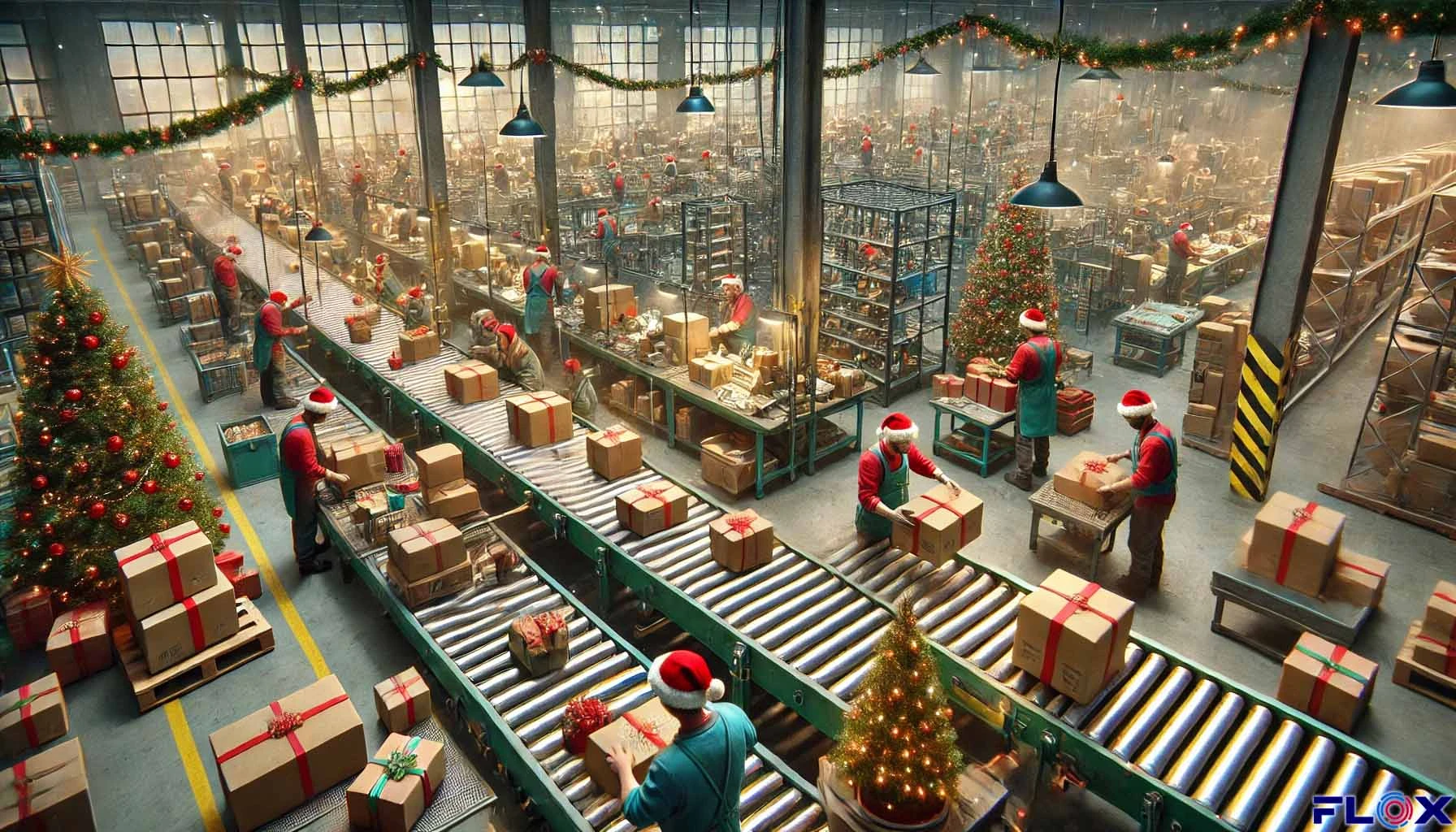
The final link is labour. Peak season demands a temporary workforce that can be three or four times the size of the steady-state team. Hiring, onboarding, training and managing that surge is one of the largest operational risks in the calendar. Untrained temporary workers slow the line, increase pick error rates and create the conditions for customer complaints that survive the season. The cost of getting this wrong is rarely a single peak-week problem. It shows up as elevated return rates and unhappy customers for the following quarter.
The technology layer that makes this manageable has matured. Workforce management systems that publish shift schedules, track productivity by station and identify bottlenecks in real time are now table stakes for any operation running through a major peak. The operators who get the most out of these systems are the ones who treat them as decision support, not reporting. The shift supervisor needs to be able to redeploy a team across lines in the same hour, not wait for the weekly review.
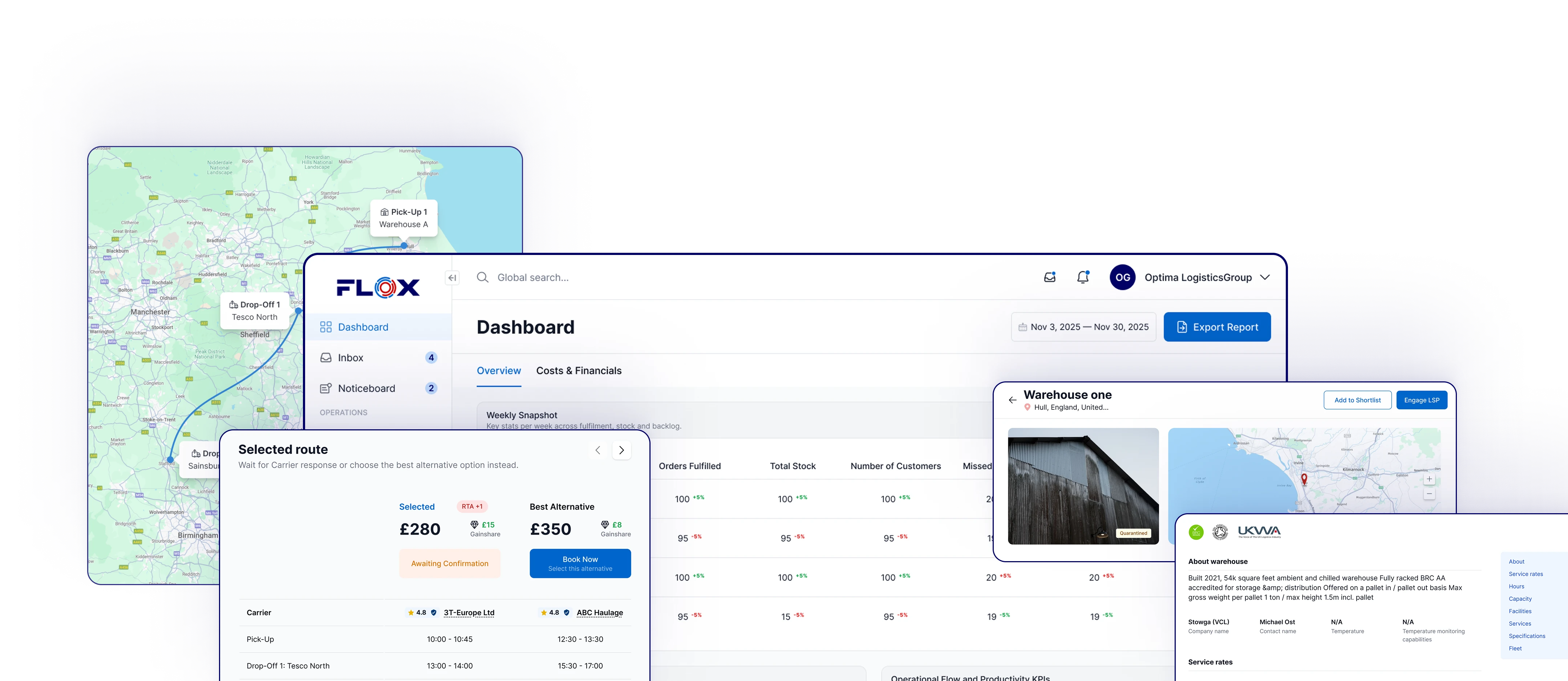
Sitting above all of these individual disciplines is the wider operating question. The buyers who absorb the seasonal peak best are increasingly those who treat their supply chain as a multi-party operating model rather than a stack of bilateral relationships. The marketplace plus orchestration approach that FLOX is built on gives buyers visibility across many warehouse providers, 3PLs and hauliers in a single layer, with the orchestration above the individual contracts running the exceptions, visibility and financial flows centrally. For seasonal peaks, that translates into more capacity options when the primary breaks, faster reallocation when a lane runs hot and a working data layer that the operations team can act on inside the week rather than after the peak has passed.

Explore storage and fulfilment solutions that give your business flexibility and the support it needs to grow.
Subscribe to our newsletter.
Stay up to date with practical insights and useful logistics content
FAQs
The visible peak is Black Friday through Christmas, but the operational peak starts in late summer and runs into February. Production orders for Christmas stock typically need to be placed before the European August shutdowns. Container bookings for Christmas inbound tighten from August onward. Warehouse capacity decisions for overflow space are made by September. The post-Christmas wave of replenishment then runs straight into the Chinese New Year manufacturing slowdown. Treating the peak as a six-month operational programme rather than a six-week event is the single most important change buyers make.