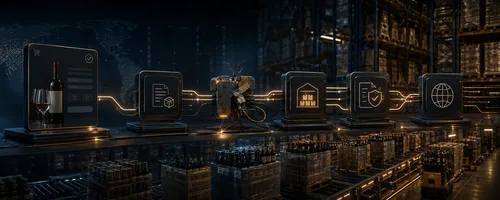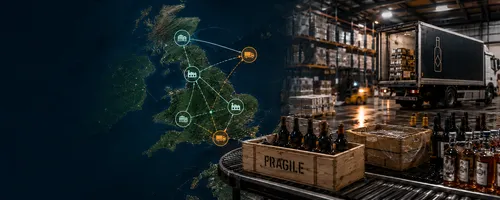


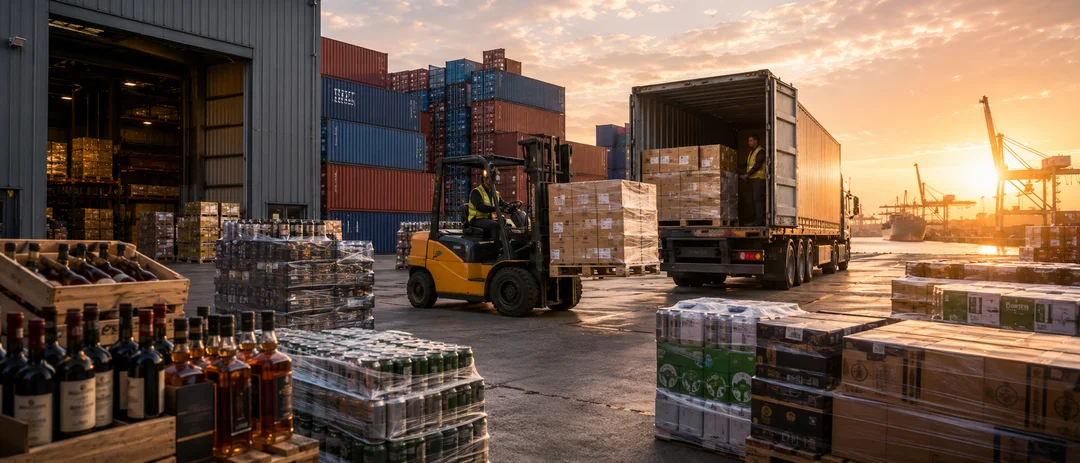
A monthly case of Austrian craft beer, a curated wine subscription that arrives the day before payday, a single-malt special edition booked on Instagram and delivered before the weekend. To the customer it feels effortless. To the operator running it, D2C alcohol logistics is one of the most exposed, regulated and accident-prone supply chains in consumer goods.

Why D2C alcohol logistics is harder than it looks
Most consumer subscription categories share a forgiving operational profile. Books are flat and tough. Beauty products are light. Snacks tolerate a dented corner. Alcohol fits none of that pattern.
Every case is heavy, awkward to stack and packed in glass. Every bottle attracts duty. Every shipment is an age-restricted sale under the Licensing Act 2003. Every cross-border movement triggers excise paperwork that did not exist in the same form before 2021. A box of wine is not a parcel. It is a regulated, fragile, high-value object moving through a network that was built for parcels.
The companies that have grown into this market understand the operational tax. Beer52, The Sunday Times Wine Club, Wine52 and the long tail of independent subscription brands all built their proposition around curation. The hidden work behind that proposition is logistics. The brands that fail in this category usually fail because they treated logistics as a courier integration rather than a regulatory and operational discipline.
“Logistics in that sense plays a role where it's (has to) provide scalability.”
Jean-Philippe Fabre, Founder of Yvonne Belhomme Champagne

Bonded warehousing is where it all starts
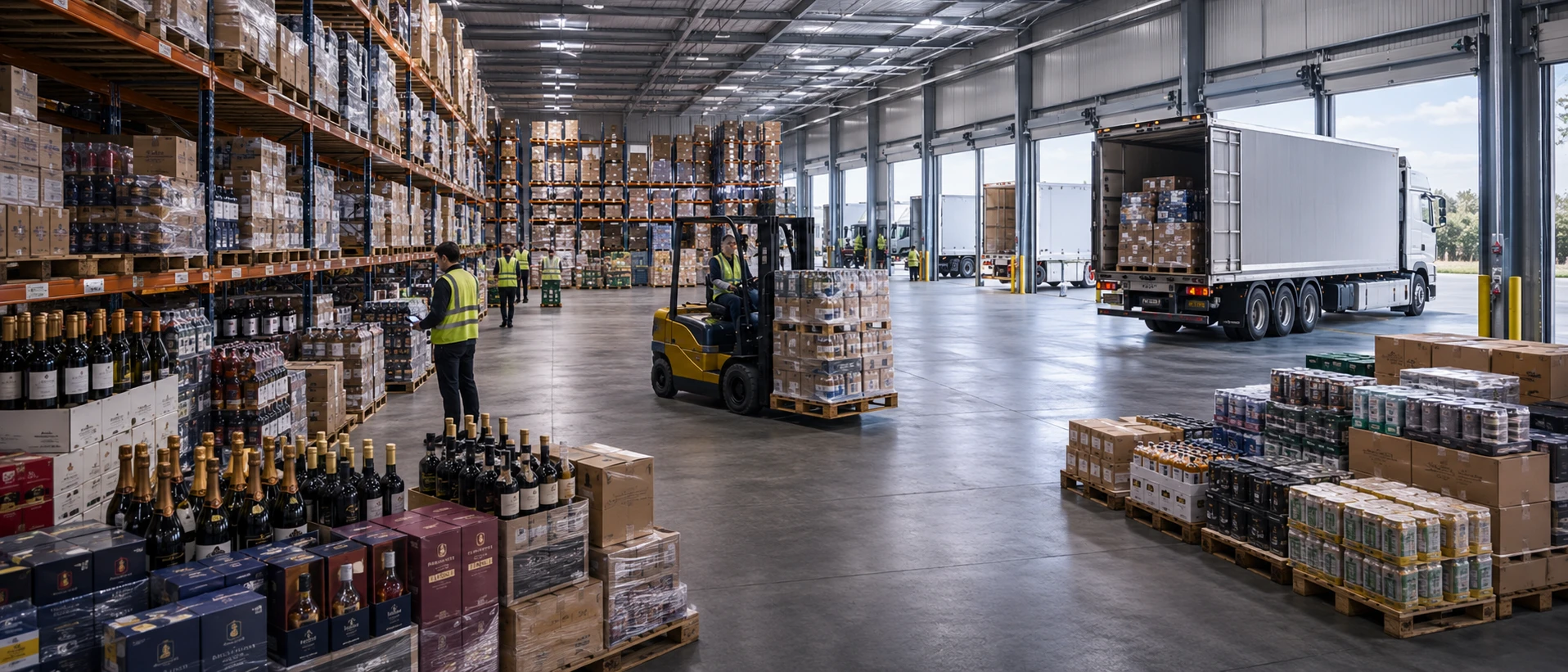
The warehouse is the first place D2C alcohol behaves differently to any other consumer category. Most beer, wine and spirits stock held in the UK sits in a bonded warehouse, technically known as an excise warehouse under HMRC Notice 197. While the product remains in bond, alcohol duty is suspended. The clock starts on duty the moment goods leave for the consumer.
That single fact reshapes everything inside the four walls. Stock movements must be logged in the Excise Movement and Control System (EMCS) and reconciled against the warehouse keeper's own duty-suspended records. Goods must be picked, packed and dispatched against a duty status that is traceable back to the order. Errors do not just create accounting noise. They attract HMRC penalties, and in serious cases the loss of the warehouse keeper authorisation.
The physical handling layer is no kinder. Wine and spirits ship in glass. A pallet of mixed bottles comfortably exceeds 500kg and shifts unpredictably if it is not strapped correctly. Pickers need training that bonded warehouse generalists rarely receive. A dropped case of single malt is a four-figure write-off and a customer service email no one wants to write. We cover the basics of this storage layer in more depth in our piece on bonded warehouses.
Stock rotation matters more here than in almost any other category. Craft beer often has a 90-day sell-by window. Natural wine is unforgiving to temperature swings. First-in-first-out is not a nice-to-have. It is the difference between sending a customer a beer at its peak and one that has flattened in storage. The brands that have scaled this model run a tighter FIFO discipline than most grocery operators.


Jean-Philippe Fabre
Serial Entrepreneur
Chain Reaction Podcasts
Champagne Dreams, Supply Chains
Shipping a regulated excise product like Champagne across borders after Brexit is a logistics nightmare most consumers never see. Jean-Philippe has lived every complication firsthand.
The last mile, where age verification meets broken glass
Once the box leaves the warehouse it enters the part of the journey that the customer actually experiences. This is also where the largest share of D2C alcohol cost-to-serve gets eaten.
Three risks dominate the last mile. The first is theft. Alcohol is one of the most resold categories in the parcel network, and porch-piracy rates climb steeply for branded boxes that obviously contain wine or spirits. Tamper-evident tape, neutral outer packaging and signed-for delivery move the risk down, but never to zero.
The second is breakage. A standard parcel network is built around drop sortation. Drop sortation and 750ml glass bottles are not friends. Operators serious about D2C alcohol either use specialist carriers with hand-sort lines or accept a breakage rate well above the consumer parcel average. Bottle-rated packaging (moulded pulp, six-bottle and twelve-bottle inserts) is a non-negotiable cost line, not a packaging-team experiment.
The third is age verification. Under the Licensing Act 2003 the seller, not the carrier, is legally responsible for the age-restricted sale. Carriers offer age-verification-at-door services to discharge that responsibility in practice, but the obligation sits with the brand. A failed delivery because nobody over 18 was at the door is not a delivery failure. It is a compliance success. Operations need to plan capacity around that distinction or unit economics break quietly. Our piece on warehouse and fulfilment operations walks through how this affects pick and despatch planning.
Customer expectations in this category have been set by curators, not by parcel networks. Beer52, The Sunday Times Wine Club and the better independent wine clubs have trained subscribers to expect a moment, not a parcel. A delivery that arrives broken, late or to an empty house is not a stock-out. It is a relationship event.
Cross-border alcohol after Brexit
The appetite for variety in this category is structural. A UK wine subscriber wants Italian prosecco, an Austrian Gruner, a Loire chenin and a Spanish albarino in the same box. A craft beer subscriber wants German lagers and Belgian saisons next to Yorkshire pales. The product mix is, by design, international.
Brexit changed the operational reality of that mix in ways the consumer never sees. Movements that used to be intra-EU now sit under the GB customs regime. Each consignment crossing into Great Britain needs a customs declaration, a valid commodity code, an Economic Operator Registration and Identification (EORI) number, evidence of duty paid or suspended and compliance with UK alcohol labelling rules including the producer name and address. The Border Target Operating Model (BTOM) added phased import controls from 2024, and the practical effect for D2C alcohol importers has been longer planning horizons and tighter relationships with their bonded warehouse partner. The mechanics overlap with our analysis of brewery and beverage logistics.
The brands that handle this well do three things. They consolidate inbound flows into a small number of bonded sites rather than running ad-hoc shipments. They duty-suspend at the border and pay only on dispatch, which protects working capital. They build sourcing relationships with European producers who already understand the export documentation, not ones who learn it on the job.
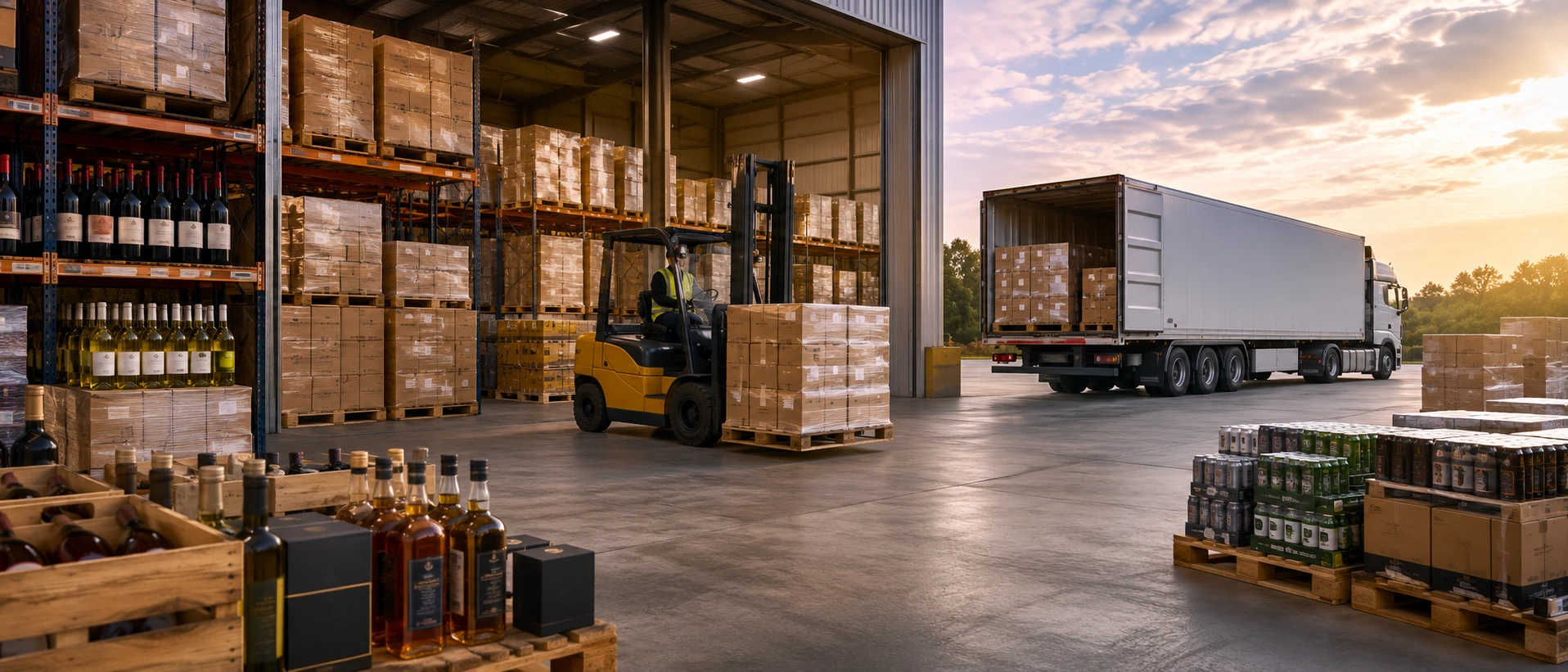
Cross-border is no longer a side capability. It is part of the product. A subscription that pivots to UK-only stock the first time a customs broker is slow loses the curation premium that justified the subscription in the first place.
How FLOX coordinates D2C alcohol logistics
Read the four operational realities together and a pattern appears. D2C alcohol does not usually fail on any single function. It fails at the seams. The bonded warehouse is fine in isolation, the carrier is fine in isolation, the customs broker is fine in isolation. The brand pays for the exception when a slow customs clearance shortens a sell-by window, or when a missed age verification creates a redelivery that the carrier bills and the brand absorbs.
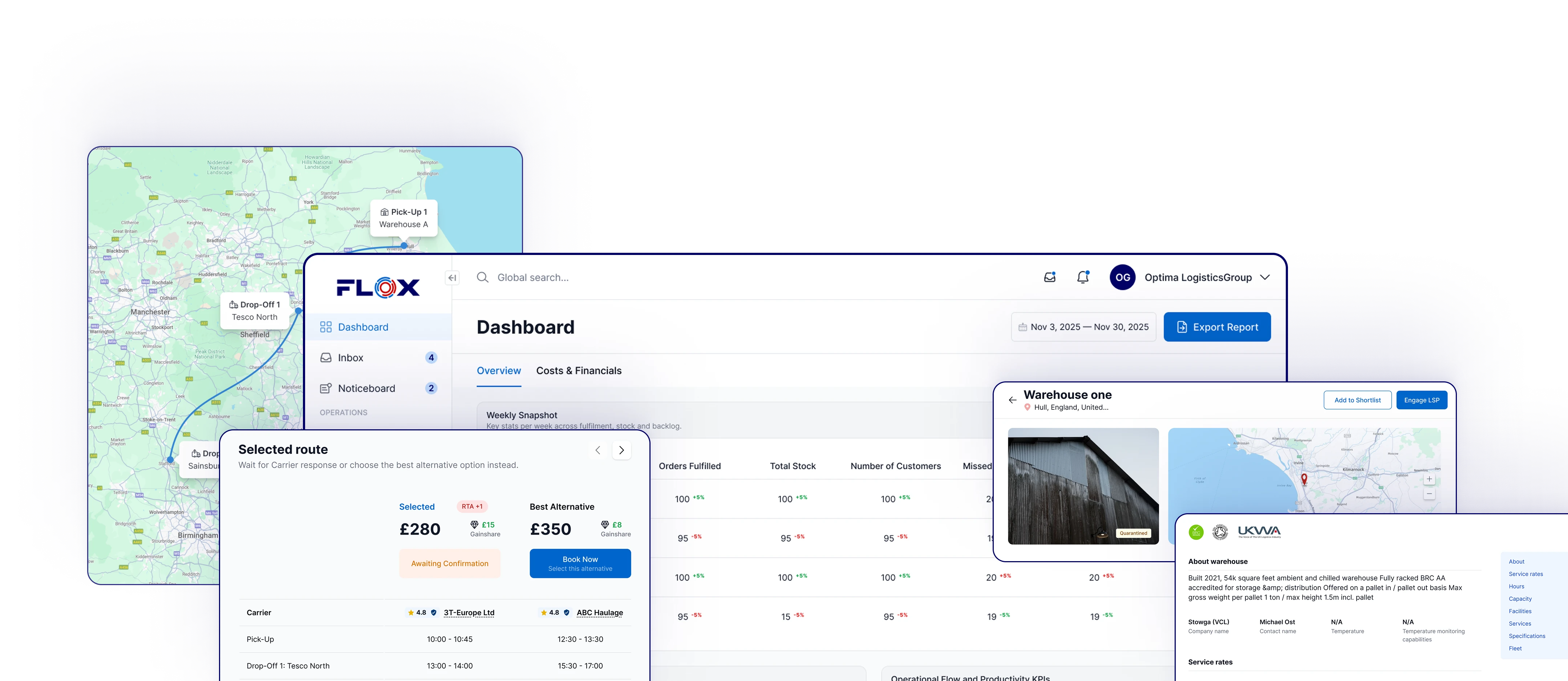
FLOX is built for the seam. The marketplace layer connects buyers and brands with bonded warehouse providers, specialist alcohol carriers and freight partners who already operate in this category. The orchestration layer then runs the multi-party coordination across them: visibility of duty status, exception management when a delivery fails, financial flows that settle correctly across the providers without the brand chasing invoices. The same shipment, the same parties, one operating layer. For operators evaluating the wider warehousing landscape, our guide to warehousing and storage services sets the context.
That coordination is the difference between a D2C alcohol operation that scales and one that runs into a wall when growth outpaces the team's ability to manage exceptions. The wall is rarely a marketing problem. It is an exception-management problem.

Explore storage and fulfilment solutions that give your business flexibility and the support it needs to grow.
About FLOX
FLOX is a multi-party logistics marketplace and orchestration platform. The marketplace connects buyers and shippers with warehouse providers, 3PLs and hauliers. The orchestration layer coordinates execution, exceptions, visibility and financial flows across every party in every shipment, including the bonded, age-restricted and cross-border movements that define D2C alcohol logistics. FLOX is built and operated by Value Chain Lab Ltd in the UK.
Subscribe to our newsletter.
Stay up to date with practical insights and useful logistics content
FAQs
A bonded warehouse, formally an excise warehouse under HMRC Notice 197, is a site authorised to hold alcohol with duty suspended. D2C alcohol operators use bonded storage because duty becomes payable only when goods leave for the consumer, which protects working capital and avoids paying duty on stock that may sit for weeks. The trade-off is regulatory: every movement must be tracked in the Excise Movement and Control System (EMCS) and reconciled against the warehouse keeper's records, with HMRC penalties for errors.