


Table of Contents
The logistics industry has long been governed by traditional models that emphasise backhaul and reverse loads. For decades, carriers and shippers have been preoccupied with ensuring their trucks are full on the return journey - the classic A to B and B to A framework. It is a logical approach at face value. But as data, automation and efficiency reshape supply chains, it is increasingly clear that this model is outdated. Achieving the next level of A to A logistics optimisation means moving away from the fixation on reverse loads.

What is Backhaul and Why Was It Relevant?
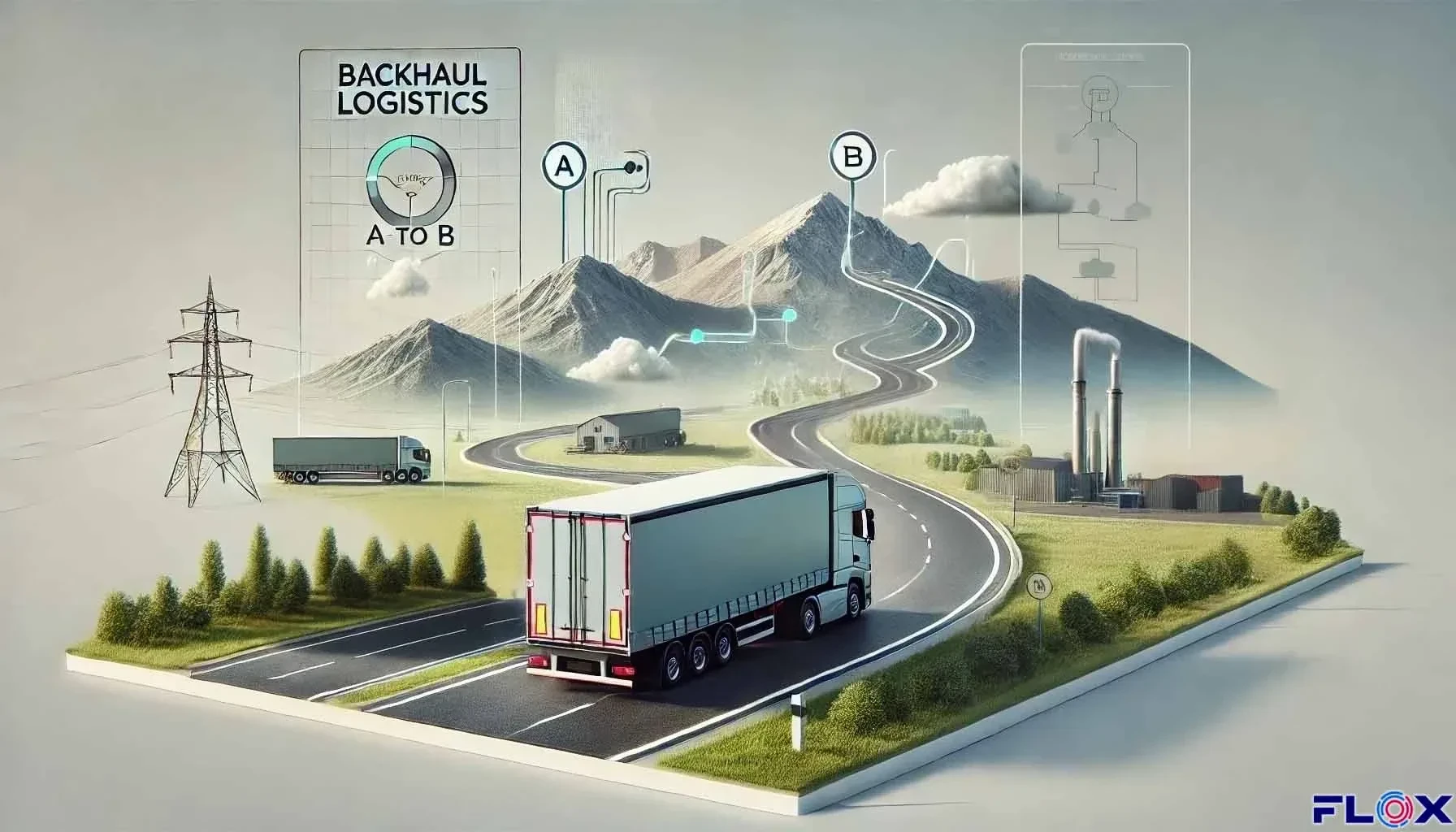
Backhaul refers to finding a load for a vehicle's return trip to its origin point. Suppose a lorry delivers goods from London (A) to Manchester (B). The ideal scenario under the traditional model is to secure another load to transport back from Manchester to London - the reverse load. This system emerged out of necessity to avoid empty miles, reduce fuel costs and maximise the return on investment for each trip.
The scale of the problem backhaul was designed to solve remains significant: one in three kilometres travelled by UK lorries involves an empty vehicle, compared to roughly one in four across Europe. Historically, backhaul made sense because it addressed two concrete problems - the inefficiency of empty running and the financial burden of wasted mileage. As transport networks have evolved and technology has provided new tools for route optimisation, the backhaul model is no longer the gold standard it once was. Clinging to the A to B and B to A framework creates inefficiencies and missed opportunities that are hard to justify when smarter alternatives are available.
The Limitations of Backhaul Thinking
Focusing on backhaul comes with limitations that prevent businesses from achieving true optimisation. The most notable issues include:
Rigid Network Design: Backhaul thinking forces networks into linear, predictable paths - from A to B and back again. This rigidity ignores the dynamic nature of modern logistics, where supply chains are shaped by demand surges, market fluctuations and real-time disruptions.
Missed Opportunities: By prioritising a reverse load from B back to A, carriers may overlook better opportunities to move goods between entirely different locations. What if a more profitable load exists between B and C, or A and D? A backhaul focus limits agility across the whole network.
Overlooking True Cost Optimisation: Empty miles are wasteful, but the obsession with filling return trips often leads to compromises. Carriers may accept lower rates for reverse loads simply to avoid running empty, which squeezes profit margins and hides the underlying inefficiency.
Complexity and Delays: Chasing reverse loads can add delays as drivers wait for a suitable backhaul to materialise. Driver time is already the industry's most constrained resource - vacancies affect roughly a quarter of UK haulage businesses at any given time - and unpaid waiting hours are an operational risk that the backhaul model generates systematically but rarely accounts for.
“The backhaul model was built for a world where information travelled slowly. When you can match a load in seconds, optimising only the return leg is leaving money on the table.”
Michael Ostroumov, Co-founder, FLOX

The Rise of A to A Thinking
A to A logistics optimisation represents a fundamental shift in strategy. It focuses on creating efficiency from the moment a vehicle leaves its starting point to when it returns to the same location, regardless of the intermediate stops or directions. This approach does not prioritise backhaul - it maximises asset utilisation across the entire trip.
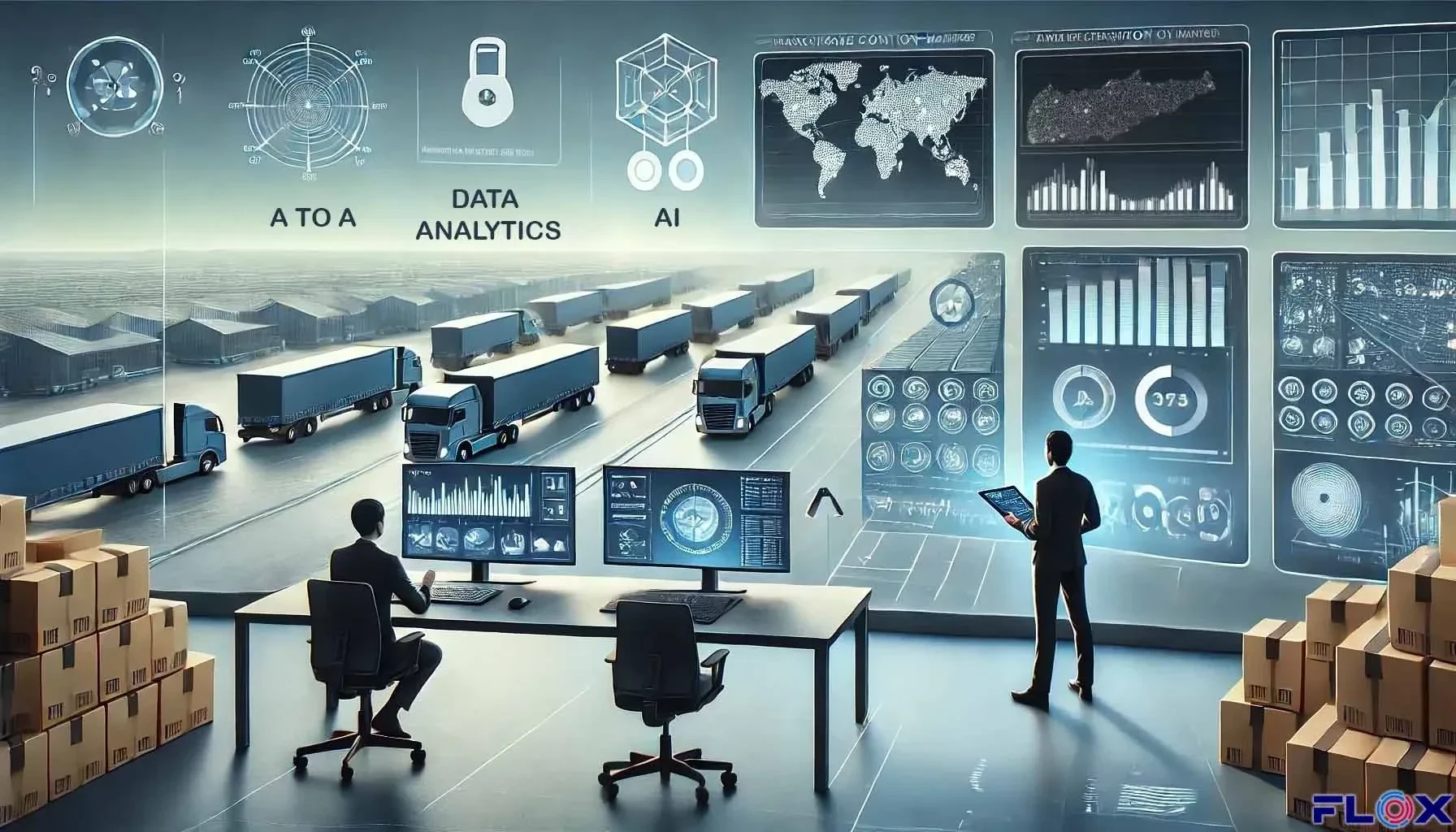
A to A thinking uses advanced technologies such as route optimisation algorithms, real-time data and AI-driven platforms to manage loads dynamically. The emphasis shifts from linear routes to network-wide efficiency, where every mile counts and every load adds value.


Malcolm Pope
Founder of Loguro
Chain Reaction Podcasts
Transform Logistics or Be Left Behind
Up to 30% of UK lorries run empty. Malcolm argues the logistics industry's biggest problem isn't technology — it's a stubborn refusal to collaborate.
Benefits of A to A Optimisation
- Maximised network utilisation: By treating logistics as a dynamic network rather than a series of fixed routes, A to A thinking allows carriers to capitalise on all available opportunities. Instead of focusing solely on returning to the origin with a full truck, carriers can prioritise the most efficient and profitable routes.
- Reduced empty miles without compromise: A to A optimisation uses technology to identify and match loads in real time, minimising empty miles while avoiding the pitfalls of low-rate backhaul trips. The focus is on maintaining profitability and operational efficiency across the entire journey.
- Improved flexibility and agility: Supply chains today are anything but static. A to A thinking builds in flexibility, allowing businesses to adapt quickly to changes in demand, new opportunities or unforeseen disruptions. That agility is necessary for staying competitive.
- Enhanced driver productivity and satisfaction: A rigid backhaul approach can frustrate drivers who spend time waiting for reverse loads. A to A systems prioritise keeping drivers on the move with well-optimised routes, improving productivity and job satisfaction.
- Data-driven decision making: Modern logistics thrives on data. A to A thinking uses sophisticated data analytics to inform decision making, helping businesses identify patterns, reduce waste and optimise resource allocation across the entire supply chain.
Insights From Airlines and the Innovation of Budget Carriers
The concepts behind A to A optimisation align closely with how airlines schedule and route their planes. Traditional airline operations often relied on a hub-and-spoke model, akin to backhaul logistics, where flights would move passengers or cargo between hubs (A to B) and then return to the original hub (B to A). Airlines have increasingly shifted to point-to-point operations - similar to A to A thinking - which focuses on direct routes that maximise utilisation and minimise inefficiencies.
Low-cost carriers like Ryanair and Southwest Airlines have excelled by adopting flexible, direct routing strategies that cut unnecessary hub stops. Ryanair achieves aircraft turnarounds in as little as 15 to 20 minutes between flights - a discipline that directly mirrors what A to A logistics demands from freight operations. This approach reduces idle time for planes, optimises crew schedules and ultimately lowers operating costs.
Just as logistics networks benefit from real-time data, airlines use sophisticated scheduling tools to dynamically adjust routes based on passenger demand, weather conditions and airport congestion. This flexibility helps them avoid empty flights, reduce delays and improve profitability - a strategy logistics carriers can follow to enhance overall efficiency. The parallels extend to work-life balance. Both industries show how dynamic, data-driven optimisation creates a more sustainable environment for employees by keeping them moving rather than waiting.
Driver Upside
One of the most overlooked benefits of A to A optimisation is its effect on drivers' work-life balance and job satisfaction. Under the traditional backhaul model, drivers often face significant delays as they wait for suitable reverse loads to be secured. These delays lead to unpredictable schedules, extended working hours and additional stress - contributing to burnout, dissatisfaction and high driver turnover in an industry already grappling with labour shortages.
The driver shortage is not a minor inconvenience. The UK active HGV driver pool has been contracting steadily, driven partly by an ageing workforce approaching retirement. The industry needs tens of thousands of new drivers every year just to maintain current capacity. Retaining the drivers already on the road - by making the job more manageable, not just better paid - is the fastest lever available to operators. A to A thinking addresses this directly by removing much of the dead time that makes the job harder than it needs to be.
With fewer empty miles and less time spent waiting for backhauls, drivers can complete trips more efficiently and return to their starting points sooner. This creates more predictable schedules and allows for better planning of rest periods, family time and personal commitments. Furthermore, A to A logistics enables carriers to maintain a steady flow of profitable loads, which reduces the financial pressure to overwork drivers or cut corners on working conditions. When drivers are consistently on routes that make logistical and financial sense, they experience greater job satisfaction, lower stress and improved morale. A to A optimisation creates a better working environment - a win for businesses and their workforce alike.

Move products with greater speed and control by picking services that fit your route, timing and delivery needs.
Technology as the Enabler
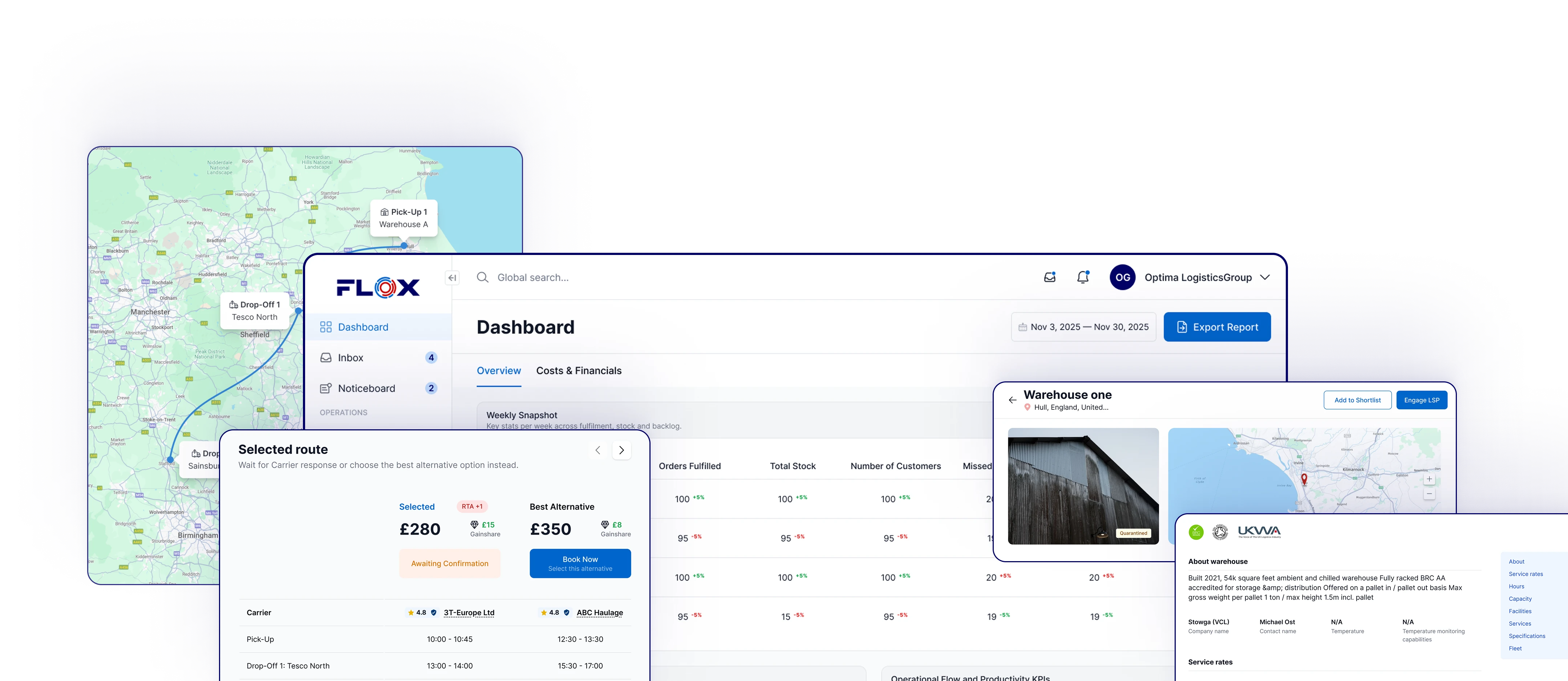
The shift to A to A logistics would not be possible without advances in technology. Real-time tracking, AI-powered planning tools and predictive analytics are enabling carriers to view the logistics network as a dynamic system rather than a series of isolated trips. Platforms that connect shippers and carriers - such as FLOX - play a central role by providing visibility, matching loads efficiently and automating workflows.
The results are concrete. AI-driven load matching platforms are delivering empty mile reductions of 45% or more, with some deployments achieving loaded-mile utilisation rates above 90%. These are not marginal improvements - they change the fundamental economics of freight operations. By moving from reactive decision making to a proactive, strategic approach, carriers find that technology is not simply an add-on to A to A thinking. It is the prerequisite for making it work at scale.
The Carbon Cost of Empty Running
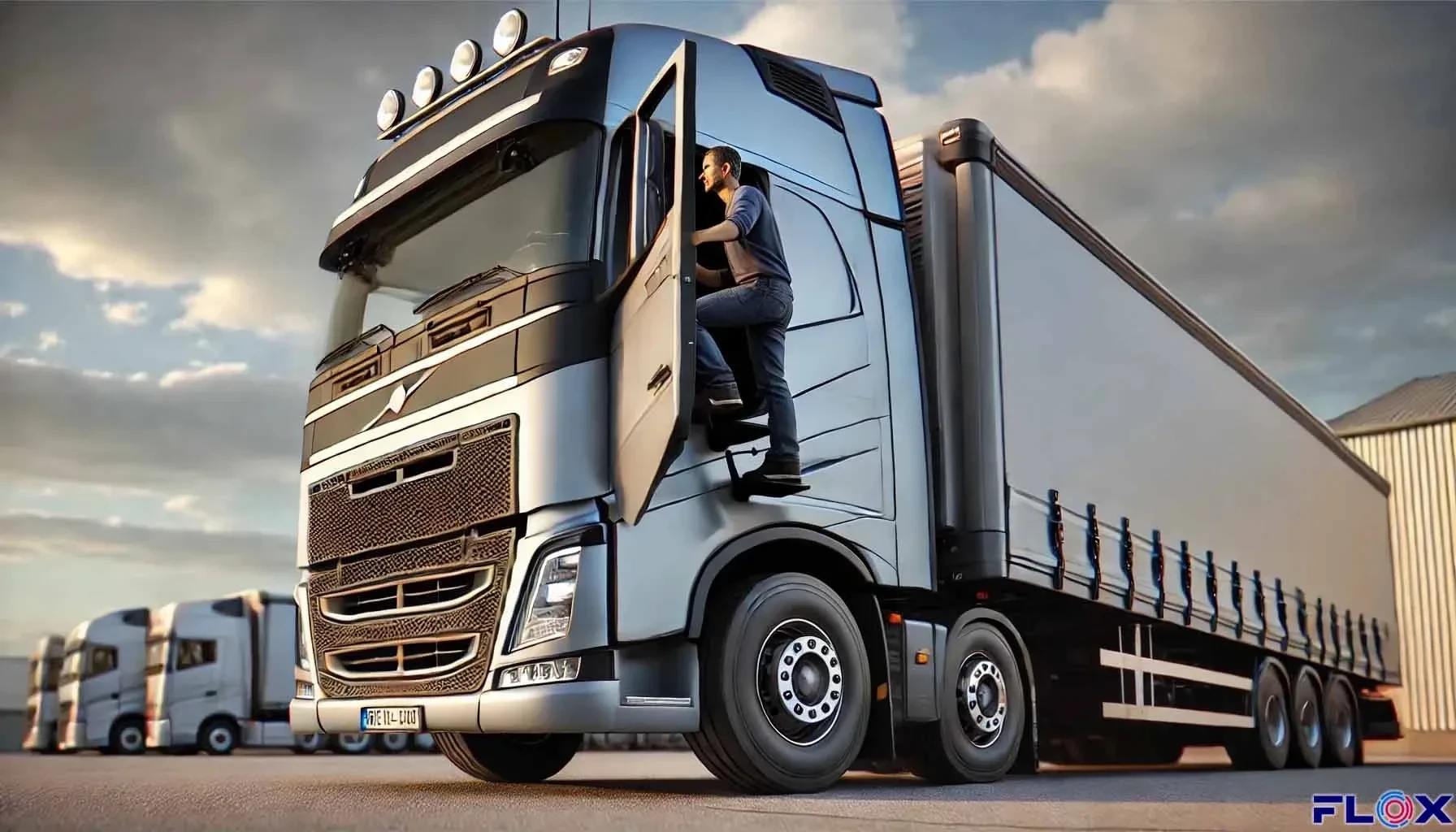
Empty miles do not just waste money - they produce unnecessary emissions with no commercial return. With one in three lorry kilometres on UK roads running empty, the environmental cost of backhaul-fixated thinking is substantial. Every empty leg burns fuel, generates carbon and accelerates vehicle wear without moving a single unit of freight forward.
A to A optimisation directly reduces this. By improving load-matching across the full journey rather than just the return leg, carriers lower total kilometres driven, cut fuel consumption and reduce their carbon output per tonne moved. This matters commercially as well as environmentally. Shipper procurement increasingly carries sustainability criteria, and carriers who can demonstrate lower empty-running rates have a clear advantage at tender stage.
FLOX's multi-party approach to load orchestration makes this achievable by connecting shippers and carriers across a shared network in real time, surfacing collaboration opportunities that a bilateral backhaul model simply cannot see. The result is fewer empty miles, lower emissions and a stronger sustainability position for every party in the chain.
The Future
The freight market is evolving fast and businesses that cling to outdated backhaul models risk falling behind. Focusing on A to A optimisation is not just a trend - it is a necessary response to the demands of modern supply chains.
By taking on an A to A approach, businesses can achieve greater efficiency, flexibility and profitability while reducing environmental impact. It is about making every mile count, using data to drive decisions and redefining what optimisation actually means in freight. The future belongs to those willing to challenge traditional thinking. Backhaul and reverse loads served their purpose in a different era but today, the smarter choice is clear. If you are ready to move forward with A to A optimisation and unlock the full potential of modern logistics, contact us today.

Subscribe to our newsletter.
Stay up to date with practical insights and useful logistics content
FAQs
A to A logistics optimisation focuses on maximising asset utilisation across an entire journey - from when a vehicle leaves its starting point to when it returns - regardless of intermediate stops or directions. Unlike backhaul, which prioritises securing a reverse load from point B back to point A, A to A thinking treats the whole route as a dynamic network. Platforms like FLOX match loads in real time across this network, reducing empty miles without forcing carriers to accept low-rate return trips just to avoid running empty.