

Table of Contents
Supply chain network optimisation for alcohol brands is not a project you finish. It is a process you run continuously or it breaks. Most brands discover this the hard way: a model gets built, a distribution network gets designed around it and within a few months the assumptions baked into that model have quietly stopped being true. Excise duty thresholds shift. A major on-trade account moves to weekly drops. A DTC alcohol delivery logistics programme takes off and the volumes blow past forecasts. A bonded warehouse distribution UK partner loses a key site. None of this was in the model.
The flaw is not the maths. The maths of network optimisation is sound. The flaw is the assumption that a solved network stays solved. In drinks distribution, that assumption fails faster than almost anywhere else in consumer goods, because the regulatory environment, the channel mix and the seasonal demand profile are all in motion at the same time. A model that was right in January can be costing you real money by April.
This piece is for buying teams and supply chain managers at alcohol and spirits brands who have either run a network optimisation exercise and watched it age badly or are about to run one and want to build something more durable. The argument is simple: the decision process around the model matters more than the model itself.
Key takeaways
• Network optimisation models for alcohol brands decay quickly because regulatory inputs, channel mix and seasonal demand all shift independently and often at the same time.
• Excise duty management drives structural decisions about bonded warehouse locations, meaning a change in duty policy can invalidate a network design that was correct at the time it was built.
• On-trade, off-trade and DTC channel mix shifts change the optimal node count, drop size and frequency in a network, which are exactly the variables most optimisation models treat as fixed.
• Seasonal peak planning for spirits, particularly Christmas and summer festivals, creates temporary demand shapes that a static network cannot serve efficiently without pre-agreed flexible capacity.
• The most durable network designs are built around a continuous questioning of model inputs, not a periodic re-run of the same model on stale data.

Why does supply chain network optimisation stop working after a while?
Network optimisation produces a point-in-time answer to a question framed by the data you feed it. Change the data, the answer changes. The problem for drinks brands is that the data changes constantly and most organisations are not set up to notice until the gap between model and reality becomes expensive.
The inputs that drift fastest are cost assumptions and volume assumptions. Fuel costs move. 3PL rate cards get renegotiated. SKU proliferation adds complexity that was not in the original model. A single major retail account shifting from pallet deliveries to mixed-SKU picks can change the economics of an entire regional node. These are not edge cases; they are the normal operating rhythm of a drinks distribution business.
The deeper issue is structural. Most network optimisation exercises are run as a capital allocation exercise: where do we put warehouses, how many and at what size? Once those decisions are made, the organisation moves on. The model becomes a record of a past decision rather than a live input to current ones. By the time someone re-examines it, the cost of the gap is already embedded in OTIF failures, excess mileage and capacity commitments that no longer match demand.
For a practical frame on how good supply chain decision-making works across the broader operation, the supply chain management guide for operators sets out the baseline well.
How excise duty affects distribution network planning
Excise duty management in drinks distribution is not just a finance function concern. It shapes the physical network. Bonded warehouse distribution in the UK creates a structural logic: goods held in bond defer duty payment, which affects cash flow and, therefore, where in the network you want to hold stock and for how long.
A bonded warehouse is a HMRC-approved facility where alcohol can be stored without duty being paid until goods are released for consumption. For a spirits brand carrying high per-unit duty liability, the location and number of bonded sites is a genuine network design variable, not just a logistics preference. Moving goods out of bond into a standard DC before you need to triggers a duty payment you did not have to make yet. Moving them too late creates fulfilment risk, particularly on short-notice on-trade orders.
When duty rates change, the cost calculus around bonded storage shifts. A brand that optimised its network around a particular duty differential may find that the optimisation no longer holds. This is not a theoretical risk; duty structures in the UK have moved multiple times in recent years and each movement creates a reason to re-examine whether the current network design is still the right one.
The practical implication is that excise duty management decisions need to be connected to network design decisions, not siloed in the finance team. A distribution network that does not account for where duty is triggered and when, is leaving cash on the table.
“If we had perfect forecasts, if you had perfect visibility on what your sales were going to do over the next six months, one year, even three months, that would, I think, transform the lives of operations people … responsible for supply chains and trying to manage inventory.”
Max Adorian, Head of Operations at Living Things Soda

How should alcohol brands balance on-trade, off-trade and DTC channels in network design?
On-trade, off-trade and DTC alcohol delivery logistics have different physical requirements and they often compete for the same network capacity. Getting the balance wrong is one of the most common ways a network design ages badly.
On-trade is characterised by high drop frequency, small volumes per drop and tight delivery windows. A pub or restaurant cannot receive a half-pallet of spirits on a Tuesday afternoon without warning; the delivery has to fit the operation. Off-trade, particularly the major multiples, runs on scheduled booking windows, compliance requirements and often LIFO-sensitive pallet configurations. DTC has its own distinct shape: individual cases, age verification at point of delivery, returns complexity and the expectation of a tracked, consumer-grade experience.
A network designed primarily around efficient pallet movement to off-trade DCs will struggle to serve on-trade customers well and is usually a poor fit for DTC at any meaningful volume. The node count, geographic spread and carrier mix that works for one channel creates friction in the others.

When channel mix shifts
The challenge is not just designing for today's channel mix. Drinks brand distribution network design has to account for the fact that channel mix shifts over the life of the network. A brand that was 70% off-trade three years ago may now be running a significant DTC programme alongside a push into independent on-trade. The volume assumptions in the original model are wrong, the drop-size economics are wrong and the right number of distribution points may be different.
This is why channel mix should be treated as a live input to network decisions, revisited at least annually and whenever a new channel programme is launched. For brands thinking through how fulfilment models interact with channel requirements, warehousing and fulfilment models for shippers covers the structural trade-offs clearly.
Seasonal peak planning for spirits: Christmas, festivals and the capacity trap
Seasonal peak planning for spirits is the stress test that exposes every weakness in a static network design. Christmas is the obvious one: a disproportionate share of annual spirits volume moves in the final ten weeks of the year and the supply chain has to absorb that without breaking service. Summer festival season creates a different but comparable spike, concentrated in a shorter window and often in locations that require specialist logistics.
The capacity trap is straightforward. A network sized for average throughput is undersized at peak. A network sized for peak throughput is expensive to run for the other forty weeks of the year. Neither answer is right. The practical solution is a network with a committed core and a pre-agreed flexible layer, where additional capacity, additional bonded storage or additional carrier coverage can be activated at defined price points without a six-month procurement cycle.
Brands that do not pre-arrange flexible capacity find themselves in a bad negotiating position in October. Every 3PL knows who is calling in a panic. The cost of arranging peak cover in-season is materially higher than the cost of building a flexible capacity arrangement in March. The network optimisation model is not going to tell you this; it is a distribution problem, not a route problem.


Christopher Chilton
Co-Founder of Ram Tang Cello
Chain Reaction Podcasts
How Ram Tang Reinvented Craft Spirits
Breaking into the UK spirits market means fighting an oligopoly of distributors who control access. Christopher shares how Ram Tang found a way through.
What good seasonal planning looks like
Good seasonal peak planning starts with a demand shape that is more granular than an annual forecast. Week-by-week volume projections by channel and by region give the network a shape to plan against. Those projections need to be shared with logistics partners early enough for them to commit capacity. A 3PL that receives a peak volume projection in September cannot guarantee FTL coverage from a bonded facility in November. Twelve weeks is a reasonable minimum for meaningful capacity commitment; twelve months is better for the largest peaks.
For brands that have not yet formalised how they evaluate 3PL partners, pressure-testing a 3PL before signing covers the questions worth asking before volume commitments go in both directions.
How often should you re-run a network optimisation model for a drinks brand?
The honest answer is that the frequency of re-running the model matters less than the quality of the inputs going into it. A model re-run every quarter on stale volume assumptions, outdated rate cards and last year's channel mix will produce an answer that is more precisely wrong than one run annually on current data.
That said, a useful rule of thumb for drinks brands is to formally review network design inputs at least annually and to trigger an unscheduled review whenever one of a small set of material changes occurs. Those triggers should include: a significant shift in channel mix (more than 15% movement in any channel's share of volume), a duty rate change, the addition or loss of a major bonded warehouse partner, the launch of a new DTC programme or a change in the geographic footprint of the brand's key accounts.
What matters more than review frequency is building the habit of questioning model inputs as a standing practice, not a periodic project. The distribution teams closest to day-to-day operations, the people negotiating rate cards, managing the bonded sites and handling carrier escalations, often know before the model does that something structural has changed. The information exists in the business. The gap is usually that no one has connected it back to the network design.
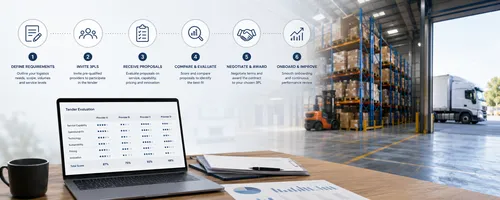
For brands that want to run a more structured sourcing process when the network review does trigger a new capacity search, running a structured 3PL tender without spreadsheets is a practical starting point.
What causes a supply chain model to become outdated?
A supply chain model becomes outdated when its inputs no longer reflect the operating environment. For alcohol brands, the most common culprits are predictable: volume drift, rate card changes, regulatory shifts and channel mix evolution. Each of these changes the cost surface the model was optimising against.
Volume drift is insidious because it happens incrementally. A brand growing 10% year-on-year will, over three years, be running 33% more volume through a network that was sized for the original base. The network may still function, but it is no longer optimal. Somewhere there is a node that is too small, a carrier relationship that does not cover the new geographic spread or a bonded site that is creating unnecessary duty exposure because it made sense at lower volumes.
Rate card changes are more sudden but equally consequential. A 3PL that renegotiates its pallet-in/pallet-out rates can shift the cost-per-case calculus at a specific node significantly enough to change where you would want to hold stock. Most brands absorb these changes passively, updating their P&L but not re-running the network logic that determined the node's location in the first place.
The practical implication is that the model needs a maintenance owner: someone whose job includes tracking the gap between model assumptions and current reality. This is not a full-time role, but it requires standing access to current rate data, volume actuals and channel performance. Without that, the model becomes historical record rather than decision support.
For teams thinking about how digital tools can keep operational data current rather than historical, the real-time simulation capabilities of digital twins in logistics is worth understanding in this context.
Building decisions around the model, not just from it
Supply chain network optimisation for alcohol brands works best when it is treated as an input to a decision process, not a substitute for one. The model produces an answer; the decision process asks whether the answer is still right, what has changed and what the next decision point is.
That shift in framing changes what you build. Instead of a one-time network design exercise, you build a set of standing questions: Are our bonded warehouse locations still reflecting current duty economics? Does our carrier coverage match where our on-trade and DTC volumes are growing? Is our peak capacity arrangement sized for this year's forecast, not last year's actuals? These questions are not complex. What makes them hard is that answering them requires current data flowing to the people who make network decisions, not arriving six weeks later in a finance report.
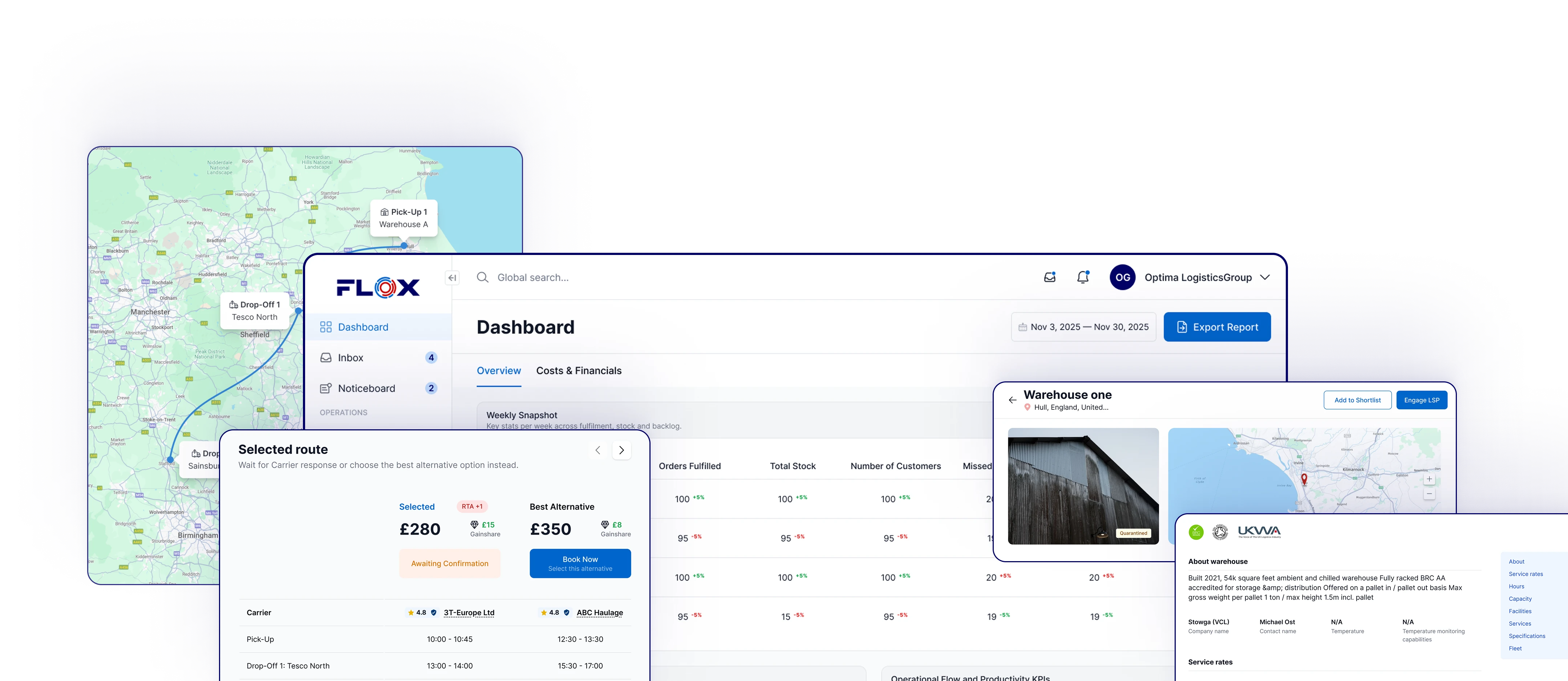
Brands that want to close that gap need logistics partners who share operational data in a format that supports decisions, not just billing. That means visibility at the shipment level, rate transparency and the ability to bring in alternative capacity quickly when the network shape needs to change. Finding partners with those characteristics, across bonded storage, haulage and last-mile DTC, is exactly what a structured marketplace with orchestration depth is built to support. The network model tells you what the right answer looks like. The partners you have access to determine whether you can actually execute it.

Ask anything to learn how FLOX works and helps buyers and sellers of logistics run more efficient and profitable operations.
Subscribe to our newsletter.
Stay up to date with practical insights and useful logistics content
FAQs
Network optimisation produces a point-in-time answer based on the inputs fed into it. When those inputs change, which they do constantly in drinks distribution through volume growth, rate card shifts, channel mix changes and regulatory updates, the model's output no longer reflects the current cost and service reality. The model does not update itself; the decision process around it has to.