

Table of Contents
A structured 3PL tender is supposed to reduce decision risk. In practice, most tenders add noise rather than remove it. Buyers send out a request for proposal, receive responses in twelve different formats, spend two weeks reformatting cells and then make the final call based on who presented best. The spreadsheet pile grows; the decision quality does not.
This is not a process problem caused by laziness. It is a design problem. Most tender processes are built to collect information, not to support a decision. The two things are not the same. Collecting information feels like progress. Supporting a decision requires knowing upfront what the decision actually hinges on, which criteria are genuinely differentiating and which provider claims need live verification rather than a typed answer in a box.
What follows is a practical structure for running a 3PL tender that produces a comparable, defensible shortlist without requiring a team of analysts to reconcile every row. The underlying logic applies whether the scope is ambient warehousing, temperature-controlled fulfilment or a full pallet network across multiple UK regions.
Key takeaways
• A 3PL tender built to collect information rather than support a decision produces incomparable data and a gut-feel outcome, regardless of how many providers respond.
• Defining the decision criteria before issuing the RFP forces buyers to separate genuinely differentiating requirements from hygiene factors that any qualified provider will meet.
• Live verification of provider claims at an approver-gate stage, rather than accepting written responses at face value, is what separates a robust tender from a box-ticking exercise.
• Normalising pricing to a common cost model before scoring prevents headline rate comparisons that obscure total landed cost differences.
• The best tender outcome is a shortlist of two or three providers who genuinely fit the requirement, not a ranked list of every respondent.
Why most 3PL tenders produce bad decisions
Bad tender outcomes are not caused by bad providers. They are caused by a process that rewards well-formatted responses rather than genuine capability. When a buyer sends an unstructured RFP, the providers who invest most in a polished document tend to score highest on first review. The providers with the right operational fit but a lean commercial team often look worse on paper.
The second structural problem is timing. Tenders that run long give everyone more time to optimise responses. A 3PL that knows a decision is six weeks away will refine its pricing and wording iteratively. The buyer ends up comparing a version-five proposal from one provider against a version-one proposal from another, without knowing which is which.
Third and most damaging, is the absence of a verification step. Written answers to questions about capacity, accreditations, systems integration and service levels are assertions, not facts. A tender that accepts assertions without checking them is not a structured process. It is a structured collection of marketing material. This is why the approver-gate stage, covered later in this piece, matters so much.
The decision that hurts most in logistics is the one made late on partial data. A tender that takes three months and still does not produce verified, comparable inputs is producing exactly that outcome, just with more documentation attached.
Designing the RFP around the decision, not the information
Before a single question is written, the buyer needs to answer three things internally: what outcome is this tender trying to achieve, which requirements are genuinely differentiating and what would disqualify a provider regardless of price.
Most RFPs skip this step and jump straight to questions. The result is a document that asks for everything, weights nothing and leaves the scoring team to invent a framework retrospectively. Retrospective frameworks always reflect the preferred outcome rather than the original logic, which defeats the purpose of running a structured process at all.
A better approach splits requirements into three tiers before the RFP is written.
“It’s really more of a blended assessment and analysis than just looking at that bottom line or that purchase order cost.”
Emma Stone, VP of Global Operations at Hurdle

Tier one: disqualifiers
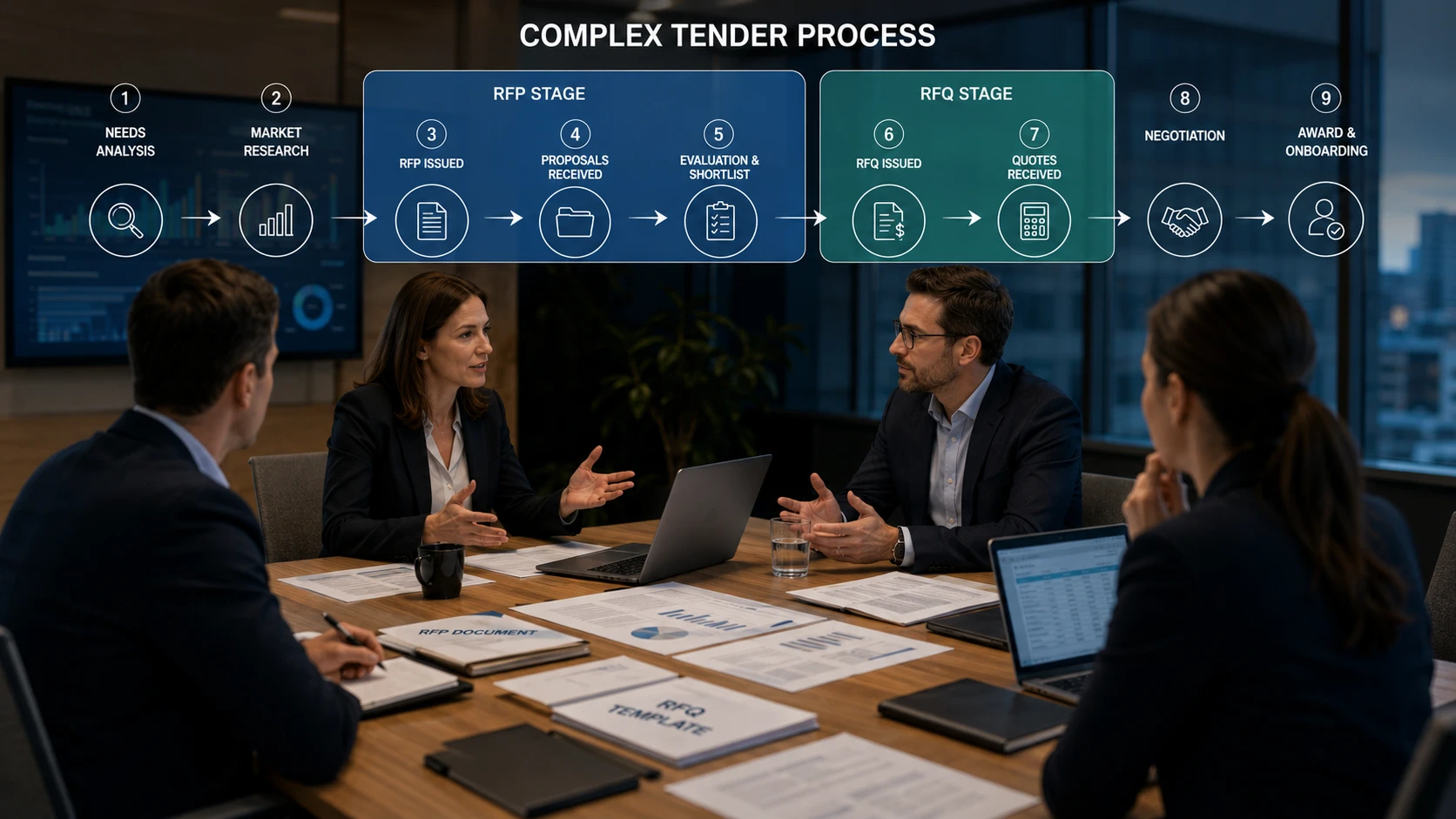
These are the requirements a provider must meet to be considered. Common examples include specific accreditations, minimum capacity thresholds, geographic coverage and systems compatibility. Disqualifiers should be verified at the RFQ stage, before a full proposal is requested. Asking a provider to invest two weeks in a detailed response, then discovering they lack a required accreditation, wastes everyone's time and damages the buyer's market reputation.
Tier two: differentiators
These are the requirements where providers will genuinely vary and where variance materially affects the outcome for the buyer. Scoring effort should concentrate here. For a fashion retailer with seasonal surges, flex capacity might be the differentiator. For a pharmaceutical distributor, it might be cold-chain compliance granularity. The differentiators are specific to the buyer's operating model, not generic.


Rob Field
Supply Chain & Logistics Leader
Chain Reaction Podcasts
Fixing Broken Supply Chains: Rob Field's Playbook
When Rob arrived at JLA, they had 17,500 SKUs serving a demand that required barely half of them. His turnaround playbook starts with one thing: data honesty.
Tier three: hygiene factors
These are requirements that any qualified provider will meet at a similar level. Health and safety standards, basic KPI reporting and standard liability clauses typically sit here. Hygiene factors should be confirmed, not scored. Including them in the weighted scoring model dilutes the signal from the actual differentiators and makes shortlisting harder.
This tiering exercise takes half a day with the right stakeholders in the room. It makes every subsequent step faster and the final decision cleaner. For a broader view of how to evaluate 3PL providers beyond the rate card, the piece on how mid-market shippers should evaluate a 3PL covers the commercial and operational dimensions in more detail.
Building a pricing model that makes comparison possible
Pricing is where most tenders break down. Buyers ask for rates. Providers quote rates. The rates are not comparable because the assumptions behind them differ: pallet configurations, dwell time, handling frequencies, ancillary charges and minimum volumes are all built into the numbers in different ways by different respondents.
The fix is to own the cost model rather than accept each provider's structure. This means issuing a standardised volume and activity profile with the RFP and asking all providers to price against it. The profile should reflect realistic operational volumes, including seasonal variation, rather than average annual throughput. A provider who prices attractively on average volumes but loads surcharge rates during peaks will look cheaper at tender stage and more expensive in practice.
The standardised profile also makes the cost-per-unit comparison honest. A provider quoting a lower per-pallet-movement rate but a higher minimum weekly charge may be cheaper or more expensive depending on actual volumes. Without a common model, the buyer cannot tell. With one, the comparison takes minutes.
Ancillary charges deserve specific attention. Storage charges, returns handling, labelling, pallet inspection and IT integration fees are frequently listed separately and frequently underestimated by buyers. The RFP should explicitly request a fully loaded cost schedule against the issued profile, including all ancillaries, not a headline rate with a note that other charges apply. The guide to choosing a UK warehouse and 3PL partner without overpaying on the rate card sets out the specific line items worth scrutinising at the pricing stage.

The approver-gate: live verification before shortlisting
The approver-gate is a structured verification step that sits between the written response stage and the final shortlist. Its purpose is to confirm that the claims made in a provider's proposal are accurate before any scoring is locked in. This is not a site visit or a reference call, though both may follow. It is a specific, documented check against the disqualifiers and the highest-weighted differentiators.
Verification works at two levels. The first is document verification: checking that accreditations cited actually exist and are current, that the systems integrations claimed are live rather than planned and that the stated capacity is available at the relevant location rather than a group-level figure. This can be done remotely and quickly. Many tenders never do it, which is why they occasionally shortlist providers who cannot actually deliver the requirement.
The second level is operational verification: a short, structured conversation with the operational lead at the proposed site, not the commercial team who wrote the proposal. The questions should be drawn directly from the differentiator tier. If flex capacity during peak is a differentiator, ask the operations manager how they actually plan and staff for it. The answer will tell you more than any written response.
The approver-gate does not add weeks to a tender. Run well, it adds two to three days and removes the risk of a poor decision reaching the contract stage. It also sends a clear signal to providers that the buyer is serious and specific, which tends to improve the quality of engagement through the rest of the process.
For operators thinking about how to get ongoing value from a 3PL relationship once the tender is complete, the piece on getting actual value out of a 3PL picks up where the tender process ends.
Scoring, shortlisting and making the decision hold up
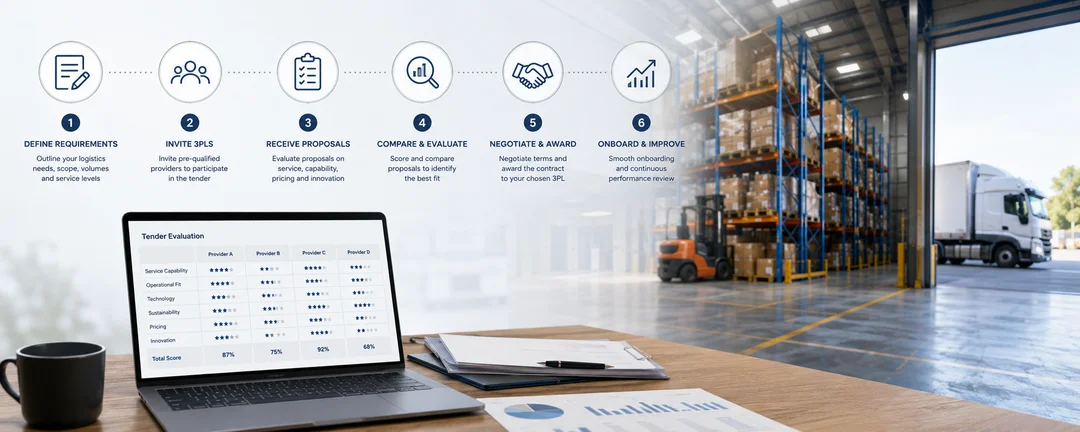
Scoring should be done before any provider presentation, not after. Presentations are persuasive. If the scoring model is applied after presentations, it will reflect the order in which providers presented and who had the better slides. Apply the model to written responses first, then use presentations to probe gaps and test operational depth.
The weighting scheme should be agreed by all internal stakeholders before responses are received, not after. When stakeholders agree weights retrospectively, they adjust them to match their preferred provider. This is not deliberate manipulation; it is how human judgment works under uncertainty. Locking the weights before scoring removes that variable.
Shortlisting to two or three providers is the right outcome at this stage, not a ranked list of all respondents. A ranked list implies that position five is a viable option if positions one through four decline. In most tenders, that is not true. Providers outside the top two or three either have a genuine operational fit problem or a price problem that did not resolve during the process. Maintaining a long list wastes negotiation time and creates false optionality.
Once the shortlist is set, the final decision should be documented clearly enough that someone who was not in the room can understand why provider A was chosen over provider B. This matters for governance. It also matters practically, because supply chain relationships get reviewed and sometimes challenged internally. A clear decision record is worth the thirty minutes it takes to produce.

Ask anything to learn how FLOX works and helps buyers and sellers of logistics run more efficient and profitable operations.
What a clean tender process actually produces
A well-run structured 3PL tender produces three things. A shortlist of providers who genuinely fit the requirement. A cost comparison that reflects total landed cost rather than headline rates. And a decision record that holds up to scrutiny from finance, procurement and operations.
It does not produce certainty. No tender process eliminates execution risk. What it does is reduce the gap between the decision made and the decision that the available information supports. That gap is where most supply chain relationships go wrong: not in the first month of operation but in the moment a problem surfaces and neither side can agree on what was actually agreed.
The spreadsheet problem does not go away entirely, but it becomes manageable when the process is designed around the decision rather than around data collection. The operators who run tenders well tend to run shorter tenders, not longer ones, because they know what they are looking for before they start.
Subscribe to our newsletter.
Stay up to date with practical insights and useful logistics content
FAQs
A well-structured tender can run in four to six weeks from RFP issue to shortlist. Tenders that run longer than eight weeks typically suffer from scope creep, late stakeholder involvement or an absence of pre-defined scoring criteria, not from genuine complexity.