


Table of Contents
3PL selection for made-to-order models is a fundamentally different exercise from selecting a provider to run a conventional bulk fulfilment contract. The volume is lower, the unit value is higher, condition standards are tighter and the returns logic is almost unrecognisable. Yet most shippers approaching this transition start in the wrong place: they take their existing 3PL contract, write some addenda and hope the operation will follow.
It rarely does. The mismatch is not a supplier performance problem. It is a brief problem. The criteria that produced a workable outcome for high-volume, lower-value throughput are structurally misaligned with what made-to-order fulfilment actually requires. Fixing that starts before the first tender document is written.
This piece works through what changes in the logistics requirement when production shifts to on-demand, what that means for provider selection and how to avoid the trap of governing a new model with old metrics.
Key takeaways
• Made-to-order production changes the logistics brief at every level: lower volume, higher unit value, tighter handling standards and a returns model built on restoration rather than write-off.
• Adapting an existing 3PL contract to cover on-demand fulfilment rarely works because the selection criteria that produced that contract were written for different economics.
• The right provider for made-to-order is not necessarily the largest or cheapest; it is the one whose operations, systems and incentive structure align with low-volume, high-care throughput.
• Exception management matters more in made-to-order than in bulk fulfilment because every unit carries more margin and every deviation from condition has a direct customer or returns cost.
• Multi-party logistics structures suit made-to-order well because no single provider excels at every leg and the model rewards precise handoffs rather than consolidated throughput volume.
What actually changes when production goes made-to-order
Made-to-order production is a model in which goods are manufactured or configured after a confirmed order rather than held as finished stock. The logistics implication is not simply lower volume. It is a different relationship between time, condition and unit economics at every stage of the supply chain.
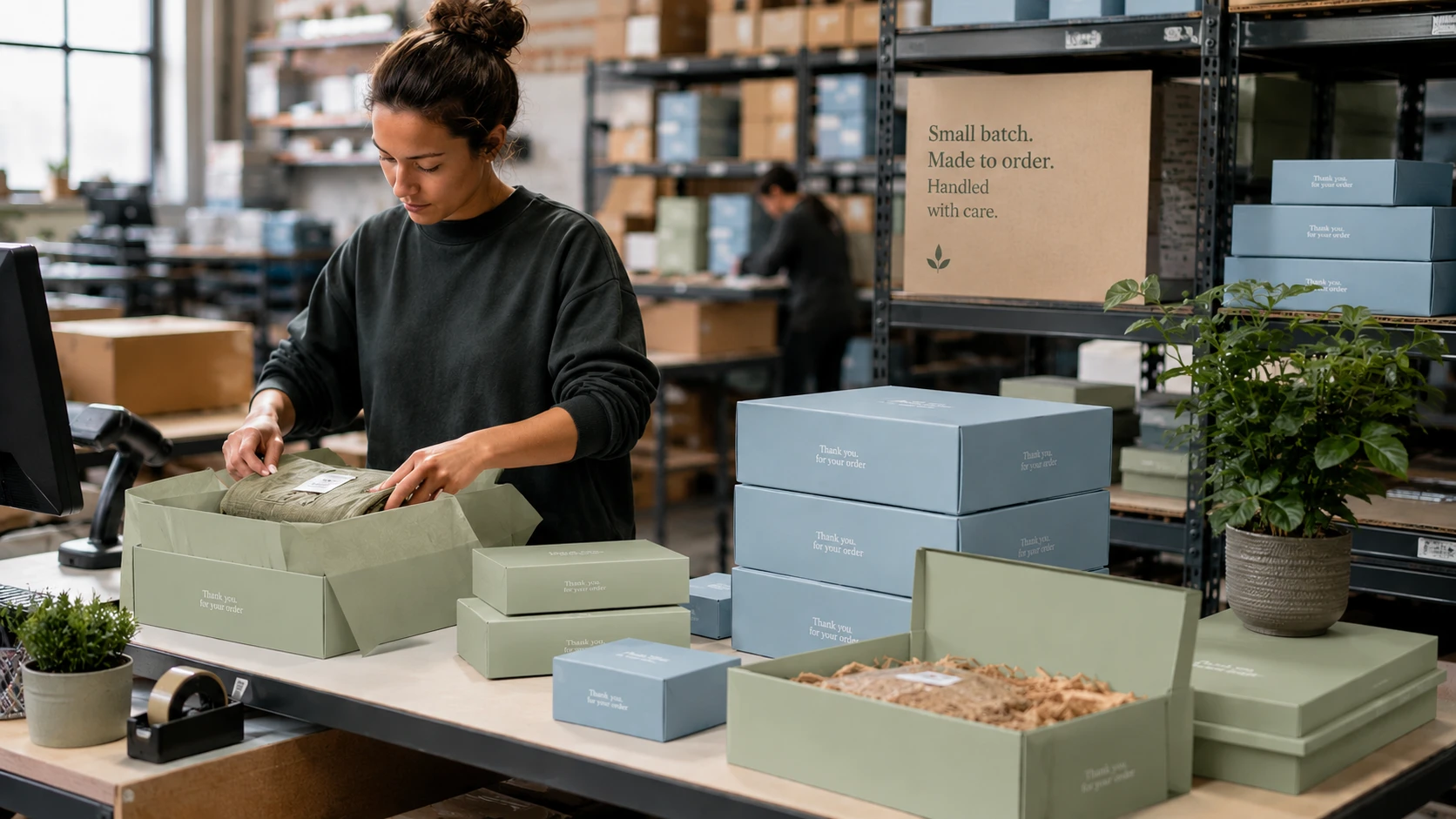
In a conventional model, a 3PL handles large inbound receipts, stores against forecast and picks in bulk. Throughput volume creates the operational rhythm. Errors on any individual unit are absorbed by the margin profile of the batch. In a made-to-order model, there is no batch to absorb against. Each unit is already sold at a specific price point, often a premium one and condition at delivery is a direct expression of the brand promise the customer paid for.
The time profile also shifts. Conventional fulfilment tolerates some slack in the warehouse cycle because production and delivery are decoupled by a buffer of finished goods. Made-to-order removes that buffer. The logistics window between production completion and delivery confirmation is tight and highly visible to the customer. A provider whose systems are calibrated to batch throughput will create friction at precisely the points where speed and accuracy matter most.
None of this means made-to-order logistics is harder in absolute terms. It means it rewards different capabilities and selecting on the criteria that worked for the previous model will surface the wrong providers.
Why adapting an existing 3PL contract is the wrong starting point
The instinct to adapt rather than rebuild is understandable. Existing provider relationships have operational history, data and familiarity. Renegotiating a contract feels faster than running a full tender. The problem is that the contract being adapted was itself the output of a selection process designed around different requirements and the selection criteria embedded in that contract quietly determine everything that follows.
Rate structures negotiated for volume throughput create the wrong incentives at low volume. SLAs written around pick accuracy and on-time despatch for standard parcels miss the condition and presentation requirements that matter for premium goods. Reporting frameworks built to surface aggregate performance hide the unit-level exceptions that are the real risk in a high-value, low-volume model. Each of these problems compounds the others.
There is a further issue with amendment-led transitions. When a 3PL takes on a new product type under an existing contract, the operational team generally runs it against existing processes unless the commercial incentive is strong enough to justify re-engineering. Adding a premium handling specification as a contract clause does not automatically produce a premium handling process on the warehouse floor. The provider needs both the capability and the commercial structure to make that investment worthwhile.
Shippers who want to understand where existing contracts fall short before committing to a new brief will find it useful to evaluate their current 3PL arrangement against a broader set of criteria before entering any renegotiation.
“We're on 0.2% returns right now on our first four years. The industry standard is 20 to 60%… that's where all the logistics costs involved in it as well. You pay for a package that goes out and comes back.”
Pim Vellenga, Head of Operations at Batch LDN

What the selection brief needs to capture for on-demand fulfilment
Building a brief for made-to-order fulfilment means starting from the unit's journey rather than from the warehouse's operational defaults. The questions that structure a conventional brief (what is the pallet volume, what is the pick rate, what is the acceptable despatch SLA) are not wrong, but they are insufficient on their own.
Handling standards and condition requirements
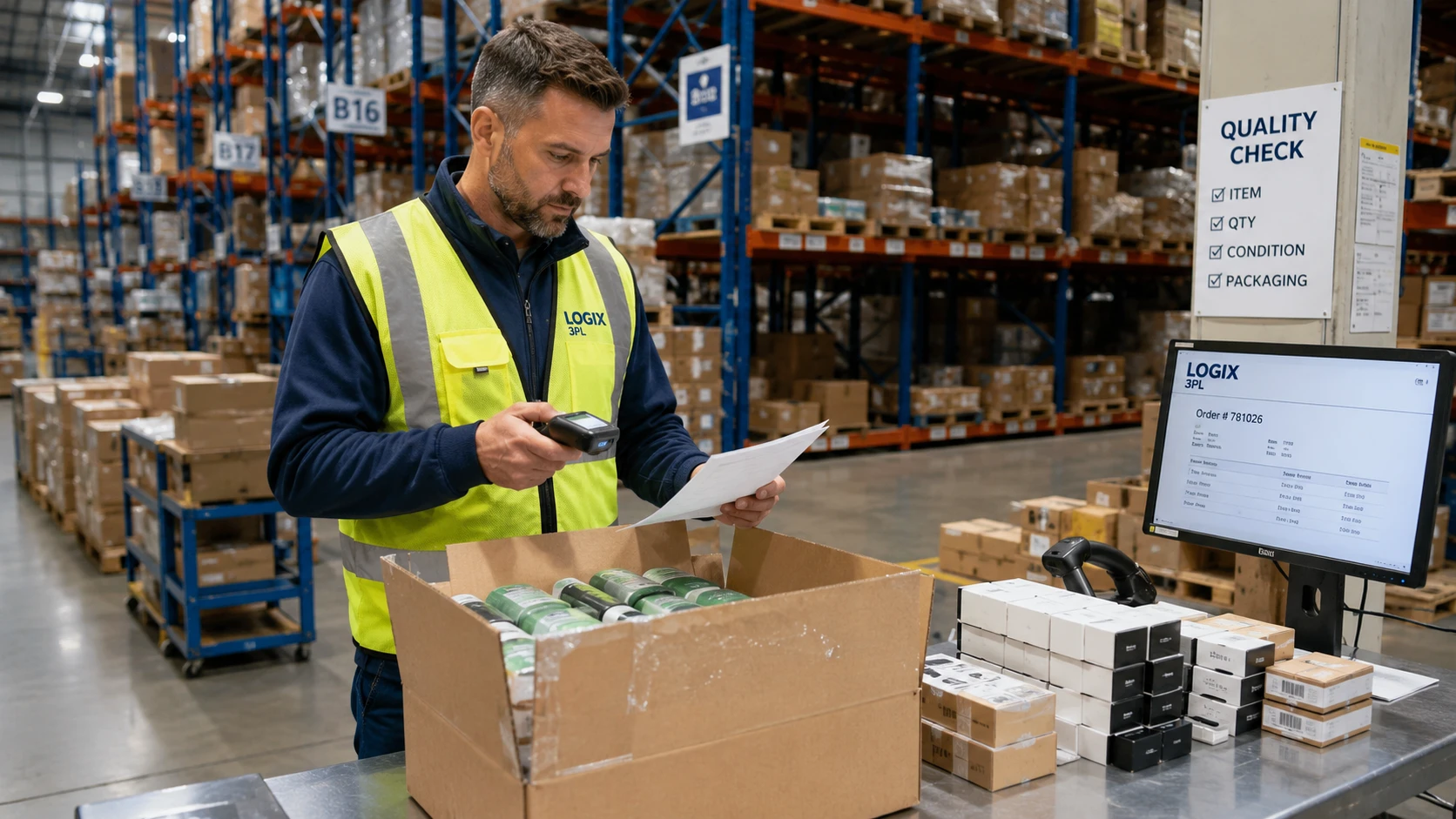
For high-value goods, the brief needs to specify condition at every handoff, not just at final delivery. That includes inbound receipt, storage environment, pick and pack process, outbound carrier interface and returns intake. Each of these is a point at which condition can degrade and each requires the provider to have both a process and a visibility mechanism. A 3PL that cannot report at unit level on condition events is not equipped for this model regardless of its headline pick accuracy numbers.
Returns logic
Returns economics in made-to-order are different from bulk returns processing. In a high-volume model, returns are often processed to a binary outcome: resaleable or not. In a made-to-order model at premium price points, the return is more likely to enter a restoration or re-inspection process before re-entering the fulfilment cycle. That requires specific triage capability, specialist handling and a returns workflow that connects back to the production or customisation record. Selecting a provider on standard returns processing metrics will miss this entirely.


Keiran Hewkin
Co-Founder & CEO of Swyft Home
Chain Reaction Podcasts
Inventory Is the Magic Wand: Swyft's Delivery First Model
Next-day sofa delivery sounds impossible — and it was, until Keiran redesigned the entire supply chain around inventory, modularity, and a delivery-first mindset.
System connectivity and unit-level data
Made-to-order fulfilment is information-intensive at the unit level in a way that bulk fulfilment is not. Each item carries a specific order record, often with customisation detail. The 3PL's WMS needs to connect to that order record in a way that supports picking accuracy, condition recording and returns triage. Providers whose systems are designed primarily for SKU-level batch management will require significant integration work to meet this requirement and that work has a cost and a timeline that needs to be in the brief from the outset.
For shippers running a formal provider search, structuring the selection process clearly before going to market matters as much as the criteria themselves. A structured 3PL tender process surfaces these capability gaps before contract, not after go-live.
Why made-to-order logistics is structurally multi-party
A single 3PL covering every leg of a made-to-order operation is the obvious procurement preference, but it is rarely the operationally correct one. The capability profile that suits last-mile premium delivery is not the same as the one that suits returns restoration and neither maps neatly onto specialist storage for high-value goods awaiting production completion. Consolidating into one provider for commercial simplicity usually means accepting capability compromises at multiple points in the chain.
Made-to-order logistics suits a multi-party structure because the model rewards precise handoffs rather than consolidated throughput. The risk in multi-party logistics is not having multiple providers; it is having multiple providers without the orchestration layer to keep the plan coherent when one provider has a capacity constraint or a delay. That is the real design question in 3PL selection for on-demand production: not which single provider can cover everything, but which combination of providers produces the right capability at each stage and what sits above them to manage the flow.
The answer to that question changes at different volume points and at different stages of maturity. Shippers early in the transition to made-to-order often underestimate how quickly the logistics structure that worked at low test volume becomes insufficient when the model scales. Building the orchestration layer into the design from the start, rather than retrofitting it when handoff failures become visible, is the difference between a logistics structure that supports the model and one that constrains it.
For brands managing rapid growth alongside this kind of operational transition, the peak season provider selection challenge is worth examining in parallel, because made-to-order at scale will face concentrated demand spikes that test the multi-party structure directly.

Explore storage and fulfilment solutions that give your business flexibility and the support it needs to grow.
Exception management is where the model earns its margin
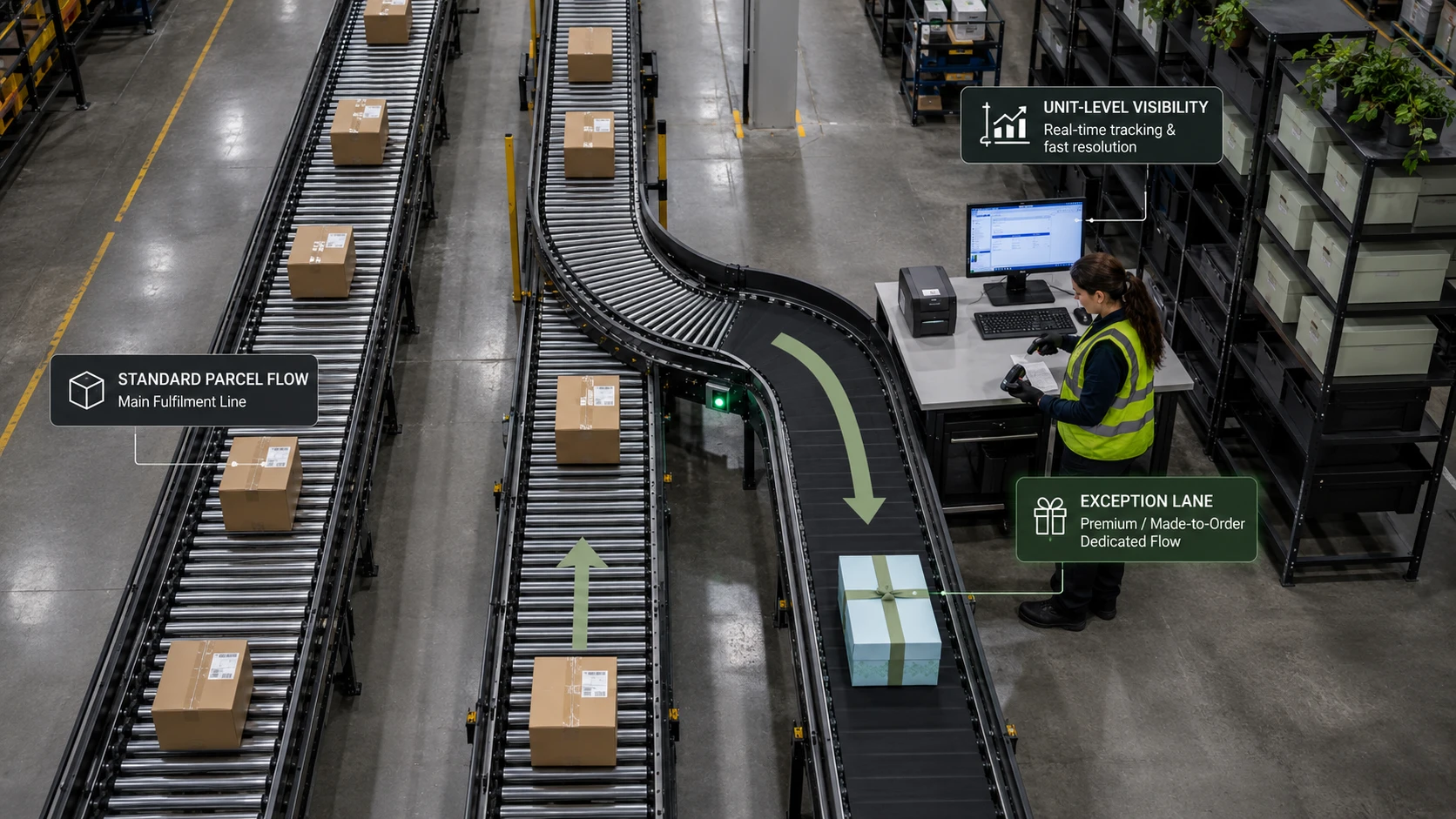
In bulk fulfilment, the happy path handles the economics. The operation is designed around the normal case and exceptions are managed as deviations that occasionally breach SLA. In made-to-order at premium price points, exceptions are proportionally more consequential because each one carries a larger unit margin, a direct customer relationship and a reputational cost that does not average out across volume.
A damaged unit in a bulk despatch operation is a cost item. A damaged unit in a made-to-order despatch is a customer who paid a premium and received something that does not reflect what they bought. The operational and commercial implications are different and the 3PL needs to be selected and governed with that difference in mind.
This means the provider's exception management capability needs to be assessed directly during selection, not inferred from aggregate SLA performance. Questions worth asking include: how is a condition variance detected, by whom and at what point in the process? What is the escalation path for a unit that fails inspection? How is the customer or account team notified and what is the resolution workflow? Providers who can answer these questions with specificity are operating exception management as a process. Providers who cannot are treating it as ad hoc.
Governance after contract award needs the same orientation. Reporting that shows aggregate on-time and in-full performance will not surface the exception patterns that matter in this model. Unit-level visibility and fast-loop exception reporting are not a nice-to-have: they are the mechanism by which a shipper protects the margin that justified the move to made-to-order in the first place.
Where to start when rebuilding the brief
Rebuilding the 3PL selection brief for made-to-order does not require discarding everything. It requires revisiting the first principles: what does each unit need at each stage, what can go wrong and who is accountable for it? The answers to those questions produce a brief that is specific enough to surface genuine capability differences between providers rather than one that produces comparable proposals from a field of broadly similar operations.
Start with the unit journey and map every handoff. At each handoff, define what condition standard applies, what evidence is required to confirm it and what the escalation path is if it is not met. That map becomes the operational specification that the brief is built around. Rate structures, volume assumptions and SLA thresholds follow from it rather than driving it.
The providers shortlisted against that brief will look different from the providers a conventional 3PL selection would surface. Some will be smaller. Some will have deeper specialism in a narrower capability range. That is expected and appropriate: the model has changed and the provider field that fits it has changed with it.
Shippers who want a grounded view of what extracting real value from a 3PL relationship looks like across the life of a contract, not just at selection, will find that the governance question and the selection question are more connected than they first appear. The brief that produces the right provider is also the one that makes performance visible once the contract is live.
Subscribe to our newsletter.
Stay up to date with practical insights and useful logistics content
FAQs
In most cases no. A standard 3PL contract is built around volume throughput economics, aggregate SLAs and batch-level visibility. Made-to-order fulfilment requires unit-level condition standards, a different returns workflow and system connectivity at the order record level. Adapting the contract without rebuilding the underlying selection criteria usually means the provider is optimised for the wrong model.