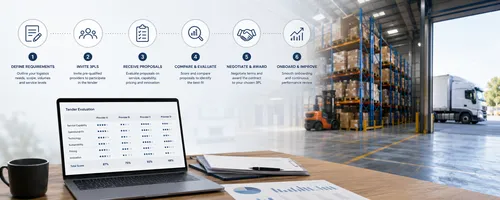
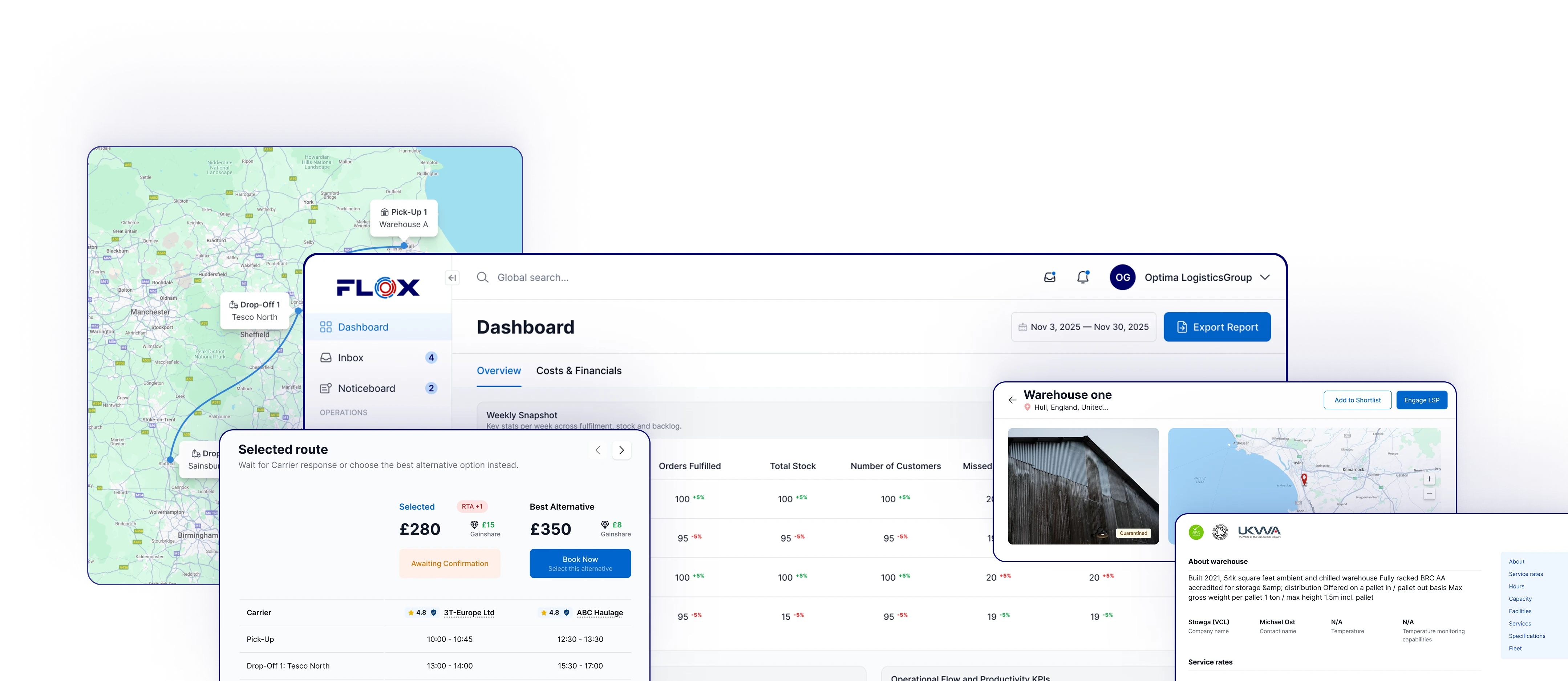
How FLOX Works


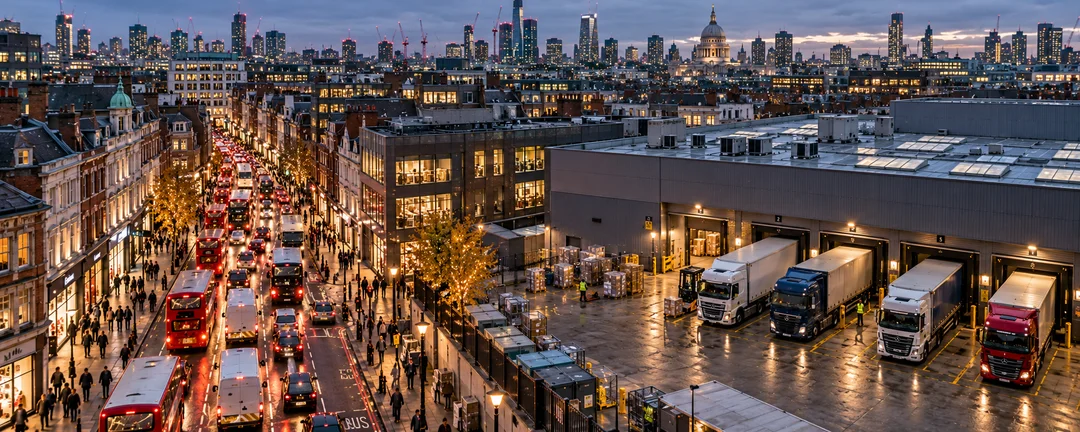
Table of Contents
The urban warehousing shortage in UK retail hotspots is not a future problem. It is repricing right now, in the same postcodes where consumer footfall is recovering and physical retail is growing again. Fashion retailers have been vocal about the hunt for prime high-street units in cities like Manchester, Birmingham, Bristol and Edinburgh. What receives far less attention is the parallel hunt happening a few miles from every flagship store: the search for last-mile delivery capacity, same-day despatch space and urban fulfilment stock that serves both those stores and the shoppers who browse in them and order online.
The two pressures are not coincidental. They are structurally linked. Retail recovery in dense urban centres drives store replenishment frequency, raises the bar on OTIF and compresses the window between a customer placing an order and expecting it at their door. Every new store opening in a top-25 retail destination tightens the logistics network that feeds it. Yet planning systems, property markets and most 3PL conversations treat the two as separate problems. They are not.
Key takeaways
• Urban logistics space is shrinking in the UK's busiest retail destinations at the same time as physical store openings are increasing omnichannel fulfilment pressure in those same postcodes.
• Industrial and logistics vacancy rates in dense urban areas are significantly lower than the national average, making short-notice capacity nearly impossible to secure without paying a premium.
• Rising urban logistics space rents are pushing fulfilment operations further from city centres, increasing cost per drop and lengthening last-mile delivery windows precisely where speed matters most.
• Brands building an omnichannel fulfilment network need to treat logistics capacity in retail hotspots as a competitive asset to be secured early, not a commodity available on demand.
• Micro-fulfilment centres and shared urban logistics space are growing as a response to the shortage, but availability is patchy and requires active sourcing rather than passive tendering.
Why is warehouse space so hard to find in UK city centres?
Urban warehousing shortage in UK retail hotspots has a straightforward structural cause: the land that once housed light industrial, trade-counter and small-warehouse units in inner-city zones has been progressively converted to residential, mixed-use and hospitality over the past decade. Planning pressures and the conversion of former industrial land to residential and mixed-use developments have reduced the availability of suitable logistics space in parts of Britain's major cities.
The result is that the industrial and logistics vacancy rate in urban areas is now materially lower than in established out-of-town logistics corridors. Sheds on the M1, M6 or M62 corridors turn over and replenish supply with reasonable frequency. A 5,000 to 15,000 square foot unit within ten miles of Manchester city centre or the Birmingham Bullring is a different conversation entirely. Supply barely moves and when a unit does become available, it is frequently absorbed before it reaches an open-market listing.
For a brand managing an omnichannel fulfilment network, this creates an asymmetry. The retail property team can spend months hunting for the right high-street unit. The logistics team often has weeks, sometimes days, to find complementary last-mile delivery capacity. The timelines are mismatched and the supply is thinner.
How retail store expansion affects local logistics capacity
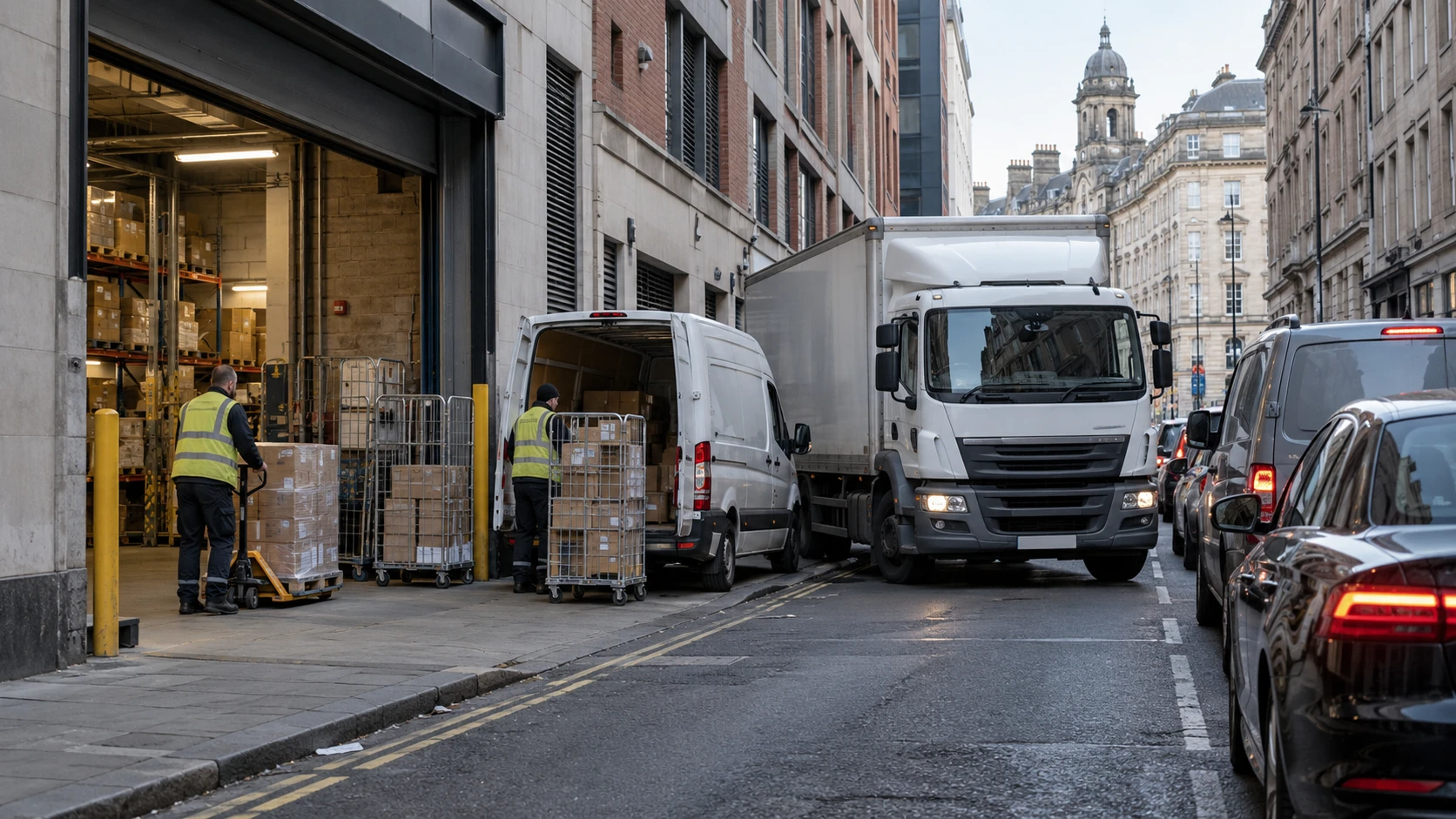
Every new store in a dense retail postcode creates a logistics tail. Stock needs to be replenished, sometimes daily for fashion lines with tight sell-through windows. Click-and-collect volumes need to be managed. Returns need to be processed close to the point of receipt to avoid cross-country movement costs. A single mid-sized fashion store opening in a top-tier retail destination can generate a material increase in inbound pallet movements, van runs and courier collections within a two to three mile radius.
Multiply that across the wave of store openings that characterise a recovering high street and you have a significant uplift in urban freight activity concentrated into a small geographic area. Loading bays become contested. Delivery windows narrow. Drivers face longer dwell times in urban traffic. Cost per drop climbs. The economics that made urban proximity attractive start to erode.
This pressure is not evenly distributed. In cities with well-established inner-ring industrial estates, some parts of outer Birmingham, parts of Leeds and Glasgow, there is at least a functional market for short-lease urban logistics space. In tighter markets like central London, Bristol's harbourside zone or Edinburgh's old town fringe, a brand arriving late to source last-mile delivery capacity will find the realistic options have already been committed to, often on 12 months' notice or longer.
Understanding how to pressure-test a 3PL before signing matters more in these markets than anywhere else. The stakes of a poor fit are higher when the alternatives are thin.
“The problem with that is people want it tomorrow, but they don't want to pay for tomorrow.”
Ross Jermy, Managing Director and Co-Founder of Move Parcel

What is driving up urban logistics space rents in the UK?
Urban logistics space rents are rising for reasons that have little to do with speculative demand and a lot to do with constrained supply meeting structural need. Three forces are compressing availability simultaneously.
First, the shift to same-day and next-day delivery expectations has moved the minimum viable stock position closer to the consumer. A fulfilment operation running from a regional distribution centre 80 miles from a major city can serve next-day in most circumstances. It cannot serve same-day, it struggles with sub-three-hour slots and it absorbs a higher cost per drop for every urban delivery. Brands competing on delivery speed need urban proximity and they are willing to pay for it.
Second, the growth of dark stores, grocery rapid-delivery operators and specialist returns handlers has introduced a new class of occupier competing for exactly the same small-format urban units that fashion brands need for forward-stocking. These occupiers can often absorb higher rents because their model is specifically built around urban-proximity economics. A fashion brand trying to bolt on an urban micro-fulfilment centre as a secondary node is frequently outbid.
Third, infrastructure constraints compound the rent pressure. A unit that has the right square footage but inadequate loading access, insufficient power for automation or no FLT turning space may sit empty or be used suboptimally while headline availability figures suggest the market is tighter than it is. Functional urban logistics space rents bear little resemblance to the per-square-foot figures quoted for basic industrial units.
The displacement effect
As urban logistics space rents rise, fulfilment operations are pushed to the urban fringe. That adds miles to every delivery run, extends ETAs and raises cost per drop in a way that directly affects the competitiveness of the omnichannel proposition. A brand that spent years building a same-day capability in a city can find that capability quietly degrading as its logistics partner relocates to a cheaper shed 15 miles further out.

Where to find last-mile fulfilment space near high street retail hotspots
Last-mile fulfilment space near prime retail destinations is rarely found through standard property searches or conventional 3PL tenders. The units that fit, sub-20,000 square feet, urban access, flexible lease terms, are often held by operators who manage them as part of a wider shared-space or multi-client model. They do not always advertise vacancy. They fill through networks.
The most reliable route is to source specifically rather than broadly. A tender that goes to 15 3PLs across the Midlands and asks who can handle omnichannel fulfilment will return 15 responses that look broadly similar. A sourcing process that starts from a defined postcode radius, maps which operators already have a footprint there and asks specific questions about last-mile delivery capacity and inbound pallet receipt will surface a much shorter, more useful list.
Micro-fulfilment centres are increasingly part of the answer in major cities. A micro-fulfilment centre is a compact urban warehouse node designed for fast-pick and same-day despatch, typically holding a curated forward stock of fast-moving SKUs rather than full-range depth. They are growing in number but are not uniformly available across the UK's retail hotspots. London has the deepest market. Manchester and Birmingham have developing options. In smaller high-street cities with significant retail footfall, purpose-built micro-fulfilment options remain thin and the practical alternative is a negotiated forward-stock arrangement with an existing local 3PL.
For brands building out a longer-term omnichannel fulfilment network, the question of urban node location is worth treating with the same rigour applied to primary distribution centre selection. Choosing the right warehousing and fulfilment model from the outset avoids expensive corrections later.


Ross Jermy
Managing Director & Co-Founder of Move Parcel
Chain Reaction Podcasts
First-Time Delivery: Logistics' Biggest Challenge
First-time delivery failure is the single biggest cost driver in parcel networks — and it's an information problem, not a transport one. Ross explains why.
How falling retail vacancy impacts warehousing supply
Falling retail vacancy on the high street and falling industrial and logistics vacancy rate in the surrounding urban area are not separate phenomena. They feed each other in ways that compound the pressure on logistics operators.
When retail vacancy falls, landlords and local authorities become less willing to grant change-of-use consent for retail-adjacent properties into logistics or light industrial use. The political and economic logic runs the other way: protect retail, protect footfall, protect the high street. That means the pipeline of potential urban logistics units from retail-to-industrial conversion stays closed even as demand grows.
At the same time, active retailers with growing store estates generate more inbound freight, more returns flows and more same-day fulfilment complexity in urban cores. The logistics demand curve rises while the supply curve flatlines. That is the structural mechanism behind the urban warehousing shortage UK retail hotspots are experiencing and it is not a cyclical blip. It reflects a decade of planning decisions that will take years to reverse.
Brands that treat urban logistics capacity as a commodity, available on request at a price roughly in line with out-of-town rates, will find themselves repeatedly disappointed. The brands gaining competitive advantage here are the ones treating urban proximity as a supply chain asset, secured proactively rather than sourced reactively. The comparison with avoiding common 3PL selection mistakes is direct: the errors made in haste cost more in dense urban markets than anywhere else.
What the best UK locations for urban fulfilment centres actually have in common
There is no single answer to which UK locations offer the best conditions for urban fulfilment, because the answer depends on where a brand's store estate and customer concentration sits. That said, the locations that consistently perform well for urban fulfilment share identifiable characteristics rather than just a postcode.
Functional urban fulfilment nodes tend to cluster around established inner-ring industrial areas that pre-date the residential conversion wave: parts of outer east London, the industrial fringe of Leeds and Sheffield, the north Birmingham logistics corridor, parts of outer Glasgow and Edinburgh's western industrial zones. These areas retained employment land designation through planning cycles that stripped it elsewhere and still carry a mix of small and mid-format units with workable loading access.
Proximity to the motorway network matters but is secondary to proximity to the delivery destination. A unit five miles from the city centre with direct dual-carriageway access will outperform a larger shed ten miles out on a motorway junction if the last-mile delivery capacity it enables saves 20 minutes per run across 50 drops a day. Cost per drop arithmetic, not lease rate per square foot, is the right unit of evaluation.
Thinking network, not node
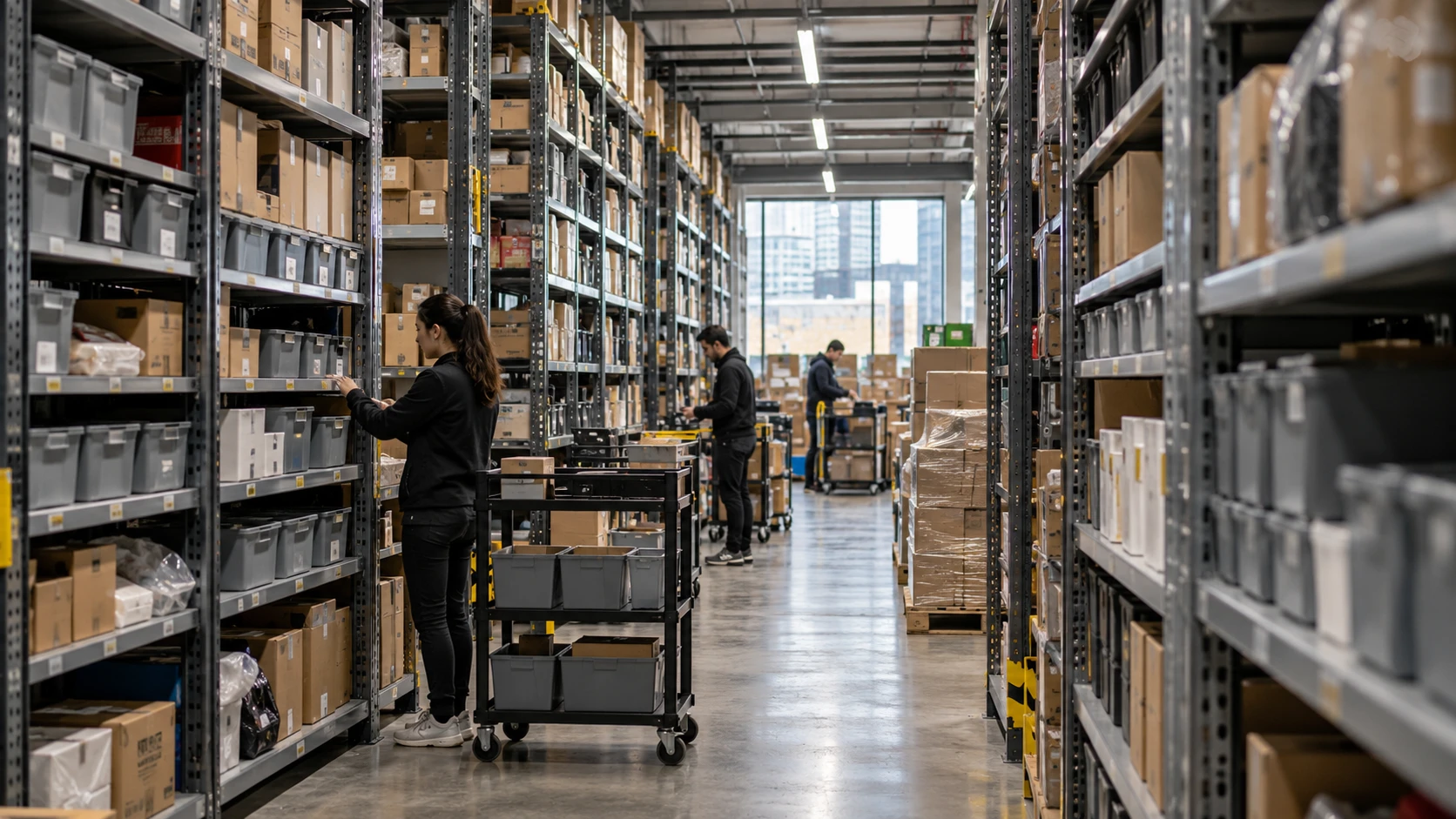
The brands managing urban logistics most effectively treat their fulfilment footprint as a network of complementary nodes rather than a single primary location. A regional DC handles bulk and slow-moving lines. An urban forward-stock node handles fast-moving SKUs for same-day and next-day city delivery. Store replenishment consolidates through a cross-dock or shared-user service. Each node has a defined role and the industrial and logistics vacancy rate in each market is actively monitored rather than checked at the point of need.
For manufacturers and brands thinking about how to structure that forward-stock layer, the logic of forward-position fulfilment warehousing applies directly to the urban node question.
Sourcing urban capacity before the market prices you out
The urban warehousing shortage across UK retail hotspots will not resolve itself quickly. The planning pipeline, the land constraints and the competing demand from grocery, returns and rapid-delivery operators are structural. For a brand with an omnichannel fulfilment network that depends on urban proximity, waiting until a lease expires or a carrier relationship breaks down before searching for alternatives is a costly strategy.
The practical response is to start sourcing urban capacity with the same lead time and rigour applied to a primary DC selection. Map the retail footprint. Identify the logistics nodes required to serve it at the service level the omnichannel proposition demands. Assess current industrial and logistics vacancy rate conditions in each target city. Then go to market specifically, asking providers about real availability and real terms, not just capabilities.
FLOX matches brands with vetted logistics providers who hold genuine footprints in the locations that matter, without the noise of a conventional tender process. If urban last-mile delivery capacity or forward-stock space near a specific UK retail hotspot is what you need to source, that is exactly the kind of structured match worth starting.

Explore storage and fulfilment solutions that give your business flexibility and the support it needs to grow.
Subscribe to our newsletter.
Stay up to date with practical insights and useful logistics content
FAQs
Planning policy across most major English cities has progressively converted inner-city industrial and light-warehouse land to residential and mixed-use over the past decade, shrinking the stock of urban logistics units. The industrial and logistics vacancy rate in urban areas is now significantly lower than in out-of-town corridors and what little space does become available is typically absorbed quickly, often before it reaches an open-market listing.