


Most manufacturers treat the factory floor as the heart of their operation, and rightly so. But the moment a product leaves the line, it enters a different world: one governed by order management systems, pick-and-pack workflows and last-mile carrier networks. For manufacturers selling direct to consumer or supplying smaller retailers, bridging that gap is one of the biggest operational challenges they face.
Fulfilment warehousing exists to solve it. Not just storing goods, but getting individual orders out the door accurately and on time. This guide explains how fulfilment warehousing works for manufacturers, where it differs from standard storage and what to look for when choosing a third-party logistics partner.

What fulfilment warehousing actually does for manufacturers
Traditional warehousing is built for bulk: pallets in, pallets out, long dwell times and relatively simple inbound and outbound processes. Fulfilment warehousing is built for velocity. Goods arrive in bulk but they leave as individual orders: a single unit picked from a shelf, packed to specification and labelled for a specific carrier service.
For a manufacturer, this distinction matters enormously. Your factory is optimised for production runs, not for processing hundreds of individual D2C orders a day. The moment you try to run fulfilment operations from a production facility, you create conflict: fulfilment demands space, staff and systems that pull focus away from what the factory is actually there to do.
A fulfilment warehouse takes that conflict away. It receives finished stock, stores it in a location optimised for rapid picking, processes orders as they come in and despatches them through your chosen carrier network. The factory focuses on making. The warehouse focuses on getting products to customers.
For manufacturers new to direct-to-consumer selling, this separation is particularly important. The operational rhythms are completely different. Production runs in batches; fulfilment runs in real time. Getting the wrong infrastructure in place early can limit growth far more than product or marketing constraints.
“Delivery visibility matters because the customer want to know exactly what time they are going to receive it.”
Rafael Noberto, Logistics Coordinator, Delivery Mates

The difference between bulk storage and fulfilment
Manufacturers sometimes assume that any warehouse offering storage can also handle fulfilment. In practice the two are quite different, and using the wrong type creates real problems.
A storage facility is designed for palletised goods moving in large quantities. The processes, staff skills and systems it uses are calibrated for inbound pallet receipts and outbound pallet or full-case despatch. Unit-level picking, multi-carrier labelling and order management integrations are not part of the picture.
A fulfilment warehouse, by contrast, is designed around individual units and orders. Stock is stored in pick faces that allow single-unit retrieval. Pick-and-pack operations run to tighter service level agreements because consumers expect next-day or same-day delivery. Returns handling is built in. And the warehouse management system is connected to your order channels: your website, wholesale portal or marketplace listings.
If you place fulfilment stock in a standard storage facility, you will typically pay for manual workarounds, deal with higher error rates and struggle to scale during peak periods. Getting the right warehouse type from the start saves significant operational pain later.
The simplest test: ask a potential provider what percentage of their daily outbound movements are single-unit orders. If the answer is low, you are looking at a storage facility that does some fulfilment on the side. That is not the same as a dedicated fulfilment operation.


Joshua Hegarty
Founder and CEO of Cloud9 Fulfillment
Chain Reaction Podcasts
Poker Pro Turned Logistics CEO: What E-Commerce Gets Wrong About Fulfillment
Professional poker taught Joshua to read situations, manage risk, and stay calm under pressure — skills that transferred directly to running a fast-growing fulfilment operation.
B2B and D2C: two very different fulfilment models
Not all manufacturer fulfilment needs are the same. A manufacturer supplying smaller retailers typically needs B2B fulfilment: mixed-case orders, retailer-specific labelling, compliance with routing guides and an ability to handle purchase orders rather than consumer orders.
A manufacturer selling direct to consumer needs D2C fulfilment: individual units, consumer-facing packaging, carrier options covering next-day and standard delivery, and a returns process that protects the brand experience.
Some manufacturers need both. A kitchen equipment brand might supply independent retailers through a trade channel while also running a direct website. In that scenario, a fulfilment partner needs to handle both order types cleanly without cross-contaminating processes or stock locations.
When assessing a 3PL partner, be specific about which model you need. B2B-specialist providers are not always equipped for D2C volumes and vice versa. Ask for evidence of experience with your specific order type. A provider confident in both channels will have separate processes for each and will be able to show you how they work in practice.
Worth noting: the cost structures differ too. B2B fulfilment tends to be charged at a case or pallet level. D2C fulfilment is priced per unit picked and per order despatched. Make sure you are comparing the right pricing model for the right channel when evaluating providers.
What happens between the order and the delivery
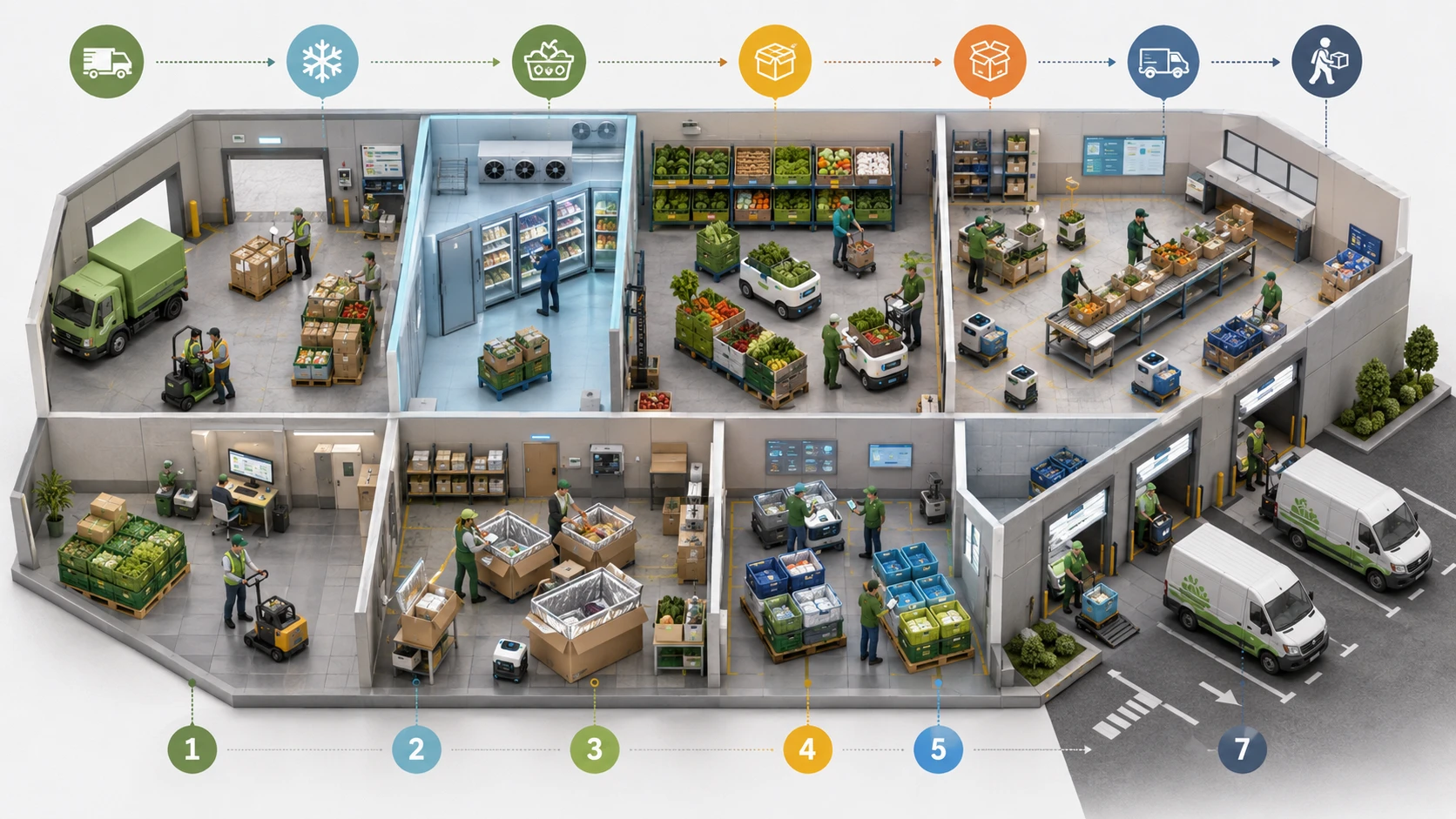
Understanding the core fulfilment workflow helps manufacturers ask better questions when evaluating partners. The process typically works as follows.
When an order is placed (whether through an e-commerce platform, an EDI feed from a retailer or a direct wholesale portal), it flows into the warehouse management system. The WMS allocates stock, generates a pick list and routes the task to a warehouse operative. The picker retrieves the correct unit from the correct location, confirms the pick and passes it to the packing station.
At packing, the unit is packaged to your specification: branded tissue paper, a plain polybag or a retail-ready outer carton. A shipping label is generated against your contracted carrier service. The packed order moves to the despatch area, where it is collected by the carrier and enters their network.
Across this entire process, the WMS logs every movement: what was picked, by whom, at what time and against which order. That data is your audit trail if something goes wrong and your performance dataset for identifying bottlenecks over time.
For manufacturers, one of the less obvious benefits of this workflow is the insight it generates. A well-integrated fulfilment operation gives you visibility of sell-through rates, regional demand patterns and returns reasons that a factory-based despatch operation simply cannot provide.
You can read more about how supply chain technology connects these workflows in our article on supply chain management for growing businesses.

Connecting your systems to a fulfilment partner
One of the most practical decisions a manufacturer makes when moving to third-party fulfilment is how to connect their systems to the warehouse. Without a reliable integration, orders must be transmitted manually, stock updates are delayed and you lose real-time visibility of what is happening.
Most established fulfilment partners support integration via API or EDI. If you run an ERP (SAP, Microsoft Dynamics, NetSuite) or an order management system, your fulfilment partner should be able to receive orders from that system and push stock confirmations and despatch notifications back. If you sell through Shopify, WooCommerce or a similar platform, a direct integration is standard.
The key questions to ask are: how is inventory synchronised, what happens when a stock discrepancy is detected, and how quickly does the WMS reflect a despatch event back to your order system? A reliable integration gives you one accurate view of stock and order status at all times.
If a potential partner cannot demonstrate a working integration with your technology stack, treat that as a significant risk. Manual processes between manufacturer and 3PL are a common source of errors and the first thing to break under volume. Ask to see a live connection with a reference client that uses the same system as you before committing.
For a broader view of how technology connects the supply chain, see our piece on digital transformation in logistics.

Explore storage and fulfilment solutions that give your business flexibility and the support it needs to grow.
What to look for when choosing a 3PL partner
Choosing a fulfilment partner is a decision that affects your customer experience, your costs and your operational capacity for years. A few criteria matter most for manufacturers.
Sector experience. A 3PL that has handled similar products (fragile goods, regulated items, temperature-sensitive stock) will have the processes and physical infrastructure already in place. You will not be paying for their learning curve.
Location. Warehouse proximity to your primary customer base reduces carrier transit time and cost. If you are selling primarily into the UK, a centrally located facility with strong carrier coverage is worth more than a lower-quoted facility in the wrong location.
Transparency. You should have real-time access to your stock levels, order status and error rates. Any partner that cannot offer a client portal or API access to this data is asking you to manage your fulfilment operation without full visibility.
Scalability. Your volumes will peak. A good 3PL absorbs that peak without degrading service levels. Ask specifically how they handle seasonal volume spikes and what capacity buffer they maintain.
Contract terms. Watch for long minimum terms, exit penalties and opaque pricing structures. A clear, itemised tariff covering inbound, storage, pick, pack and despatch is what you should expect. If the pricing requires extensive explanation, that is a warning sign.
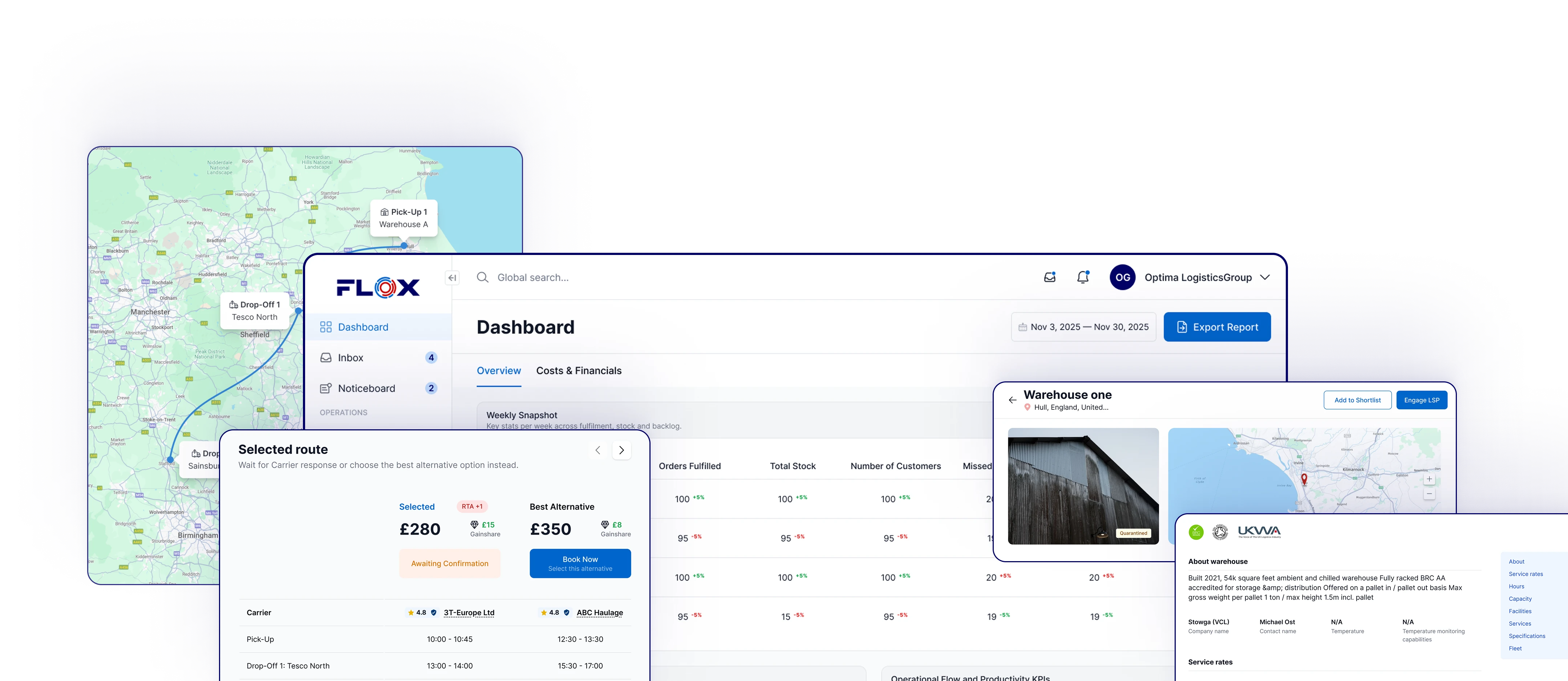
FLOX connects manufacturers with vetted fulfilment partners across the UK from a single platform, giving you side-by-side visibility of capacity, pricing and capability before you commit. Find out more about how fulfilment warehousing works.
Subscribe to our newsletter.
Stay up to date with practical insights and useful logistics content
FAQs
Fulfilment warehousing is a logistics service that handles the storage, picking, packing and despatch of individual customer orders on behalf of a business. Unlike bulk storage, which moves goods by the pallet, fulfilment warehousing processes orders at unit level. For manufacturers, it provides the operational infrastructure needed to service D2C consumers or smaller retailers without running those operations in-house. The warehouse receives your finished stock, manages it against live demand and ships each order through contracted carrier services to the end customer.