


Freight brokerage connects shippers with carriers and coordinates the movement of goods across the transport network. The function is consistent across markets. The conditions under which it operates are not. Geography, regulation, carrier market structure and customer expectations all shape what effective brokerage requires in the UK, Europe and the US, and the differences are significant enough that an approach built for one market will often underperform in another.
This piece works through each of the three markets in turn, examining what actually distinguishes them in practice. The focus is on the variables that matter most to operators and shippers deciding how to source and manage transport across borders.
What freight brokers do and why the role looks different in each market
Freight brokers are intermediaries. They connect shippers who need transport with carriers who can provide it, negotiating rates, selecting carriers, coordinating logistics and managing the documentation that cross-border or regulated shipments require. When problems arise, they resolve them. A delayed shipment, an unexpected route closure or a customs query each create a situation where the broker's network and knowledge determine how quickly the disruption is contained.
Rate negotiation sits at the centre of the broker's commercial work. Brokers understand market pricing across different lanes, carrier types and freight categories. That knowledge lets them secure rates that work for both shippers and carriers, and it is one of the primary reasons shippers use brokers rather than managing carrier relationships directly. The depth of that knowledge varies considerably depending on the market. A broker with genuine expertise across the main logistics operations and terminology in a specific region will consistently outperform a generalist on the same lanes.
Carrier selection requires a different skill set in each market. In the US, it means navigating a highly fragmented carrier base of tens of thousands of operators with varying service profiles and reliability records. In Europe, it involves matching carriers to the specific regulatory requirements of cross-border routes, including national restrictions on foreign-registered vehicles. In the UK, the pool is smaller and more concentrated, but the timing expectations are high and the margin for error is low.
Compliance and documentation is where the three markets diverge most visibly. Freight brokers prepare and verify the documentation that accompanies every shipment: bills of lading, invoices, delivery receipts and, for cross-border movements, customs declarations and sector-specific certificates. Since 2021, UK-EU movements have required documentation that did not exist before Brexit. A broker without up-to-date competence in post-Brexit customs compliance is a liability for any UK shipper moving goods to or from the European continent.
“We’re not just selling a service. We complement and improve our customers’ own businesses.”
Neil Powell, Founder and MD of The NX Group

The UK: dense networks, tight timelines and post-Brexit complexity
The UK freight market operates across relatively short distances compared to continental Europe or the US. The dense motorway network and concentration of industrial and commercial activity in a compact geography mean that road transport dominates across most freight categories. For brokers, sourcing capacity in this market is generally achievable. Meeting the timing expectations that come with it is harder.
Delivery windows in the UK are tight. The distances between origins and destinations are short enough that high-frequency, time-definite delivery has become the standard in most categories. Traffic congestion, driver availability and slot constraints at major distribution centres all affect whether those expectations can be met. Brokers absorb a significant part of the coordination burden, bridging the gap between what shippers expect and what the carrier market can reliably deliver at any given time.
Post-Brexit changes have added a meaningful layer of complexity for cross-border movements. UK-EU shipments now require customs documentation that was not previously needed for intra-EU trade. Border processing introduces delays that are difficult to predict and expensive when they compound. Driver shortages, which were already a structural challenge before 2020, were made more acute by the departure of a significant number of EU-national drivers from the UK market. Brokers operating in this environment have had to develop competence in customs compliance that was not previously part of their standard capability.
ESG requirements are reshaping sourcing decisions in the UK with increasing speed. Clean air zones in major cities impose charges on non-compliant vehicles, and shippers with Scope 3 emissions targets are beginning to treat low-emission transport capacity as a procurement requirement rather than a preference. For brokers, finding carriers who can meet both the operational requirements and the emissions profile their clients need is now a standard part of the sourcing brief in most urban corridors.

Europe: regulatory fragmentation with multimodal depth
European freight brokerage operates across dozens of national regulatory environments, each with its own requirements for vehicles, drivers and cross-border movements. The Schengen Area removes passport controls for people but it does not harmonise freight regulations across member states. Cabotage rules, which limit the number of domestic journeys a foreign-registered carrier can make within a given country, add complexity to route planning and carrier selection that has no equivalent in the UK or US domestic markets.
Customer service in the European market requires managing both the speed expectations driven by e-commerce growth and the regulatory requirements that vary between the countries a shipment passes through. A movement from Germany to Spain involves different carrier licensing considerations than a movement from the Netherlands to Poland. Brokers who perform consistently across European corridors maintain local expertise by market rather than treating the continent as a single operational environment.
Multimodal transport is a structural feature of the European market that has no direct equivalent in the UK or US. Europe's developed rail, inland waterway and road networks give brokers genuine alternatives to road transport for many freight categories. Rail is competitive for long-distance bulk shipments. Waterways carry significant volumes in Germany, the Netherlands and Belgium. The ability to design cost-efficient transport strategies across modes is a differentiator for European brokers, and the regulatory push toward lower-emission transport is making non-road modes more commercially attractive for shippers who previously defaulted to road.
ESG requirements in Europe are the most developed of the three markets. Carbon taxes, low-emission zones and regulatory incentives for greener technologies are widespread and becoming more specific over time. Shippers with Scope 3 targets are making the carbon profile of transport solutions a standard evaluation criterion. Brokers who cannot provide credible evidence of the emissions profile of the capacity they source are losing ground to those who can.


Malcolm Pope
Founder of Loguro
Chain Reaction Podcasts
Transform Logistics or Be Left Behind
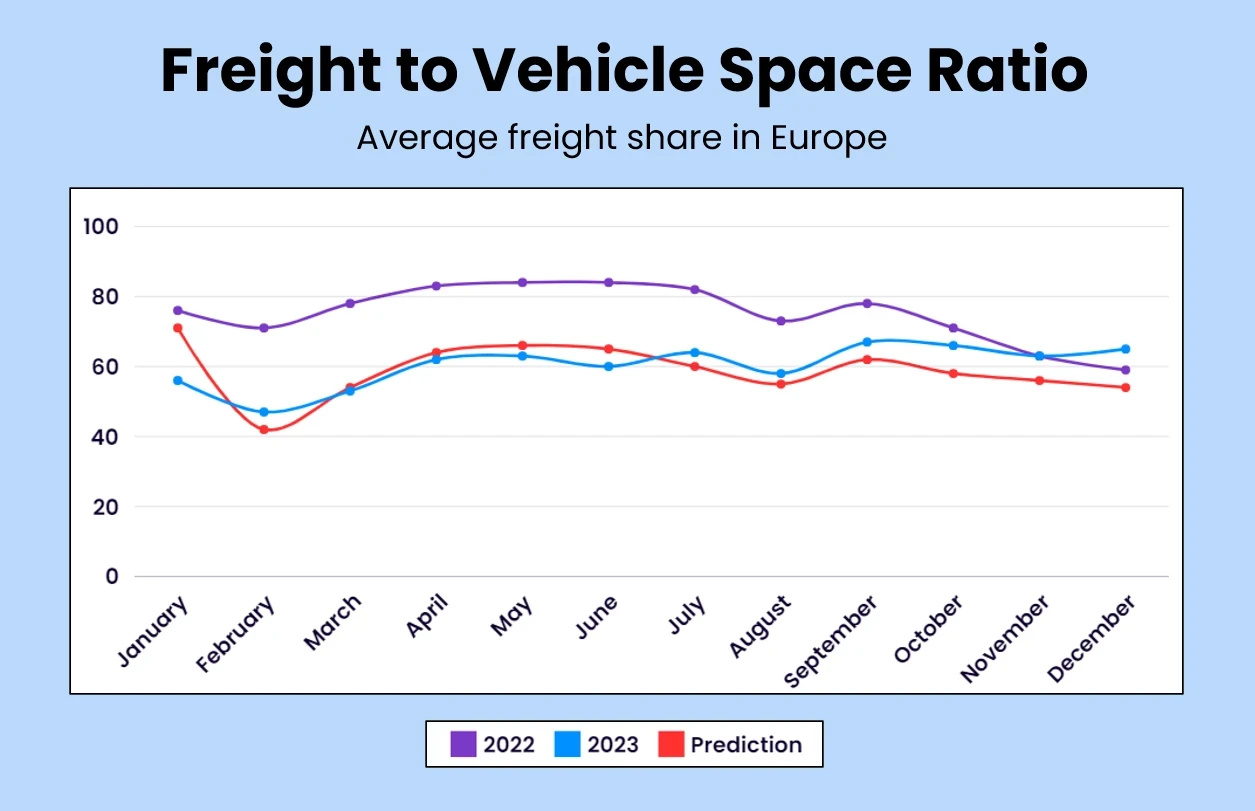
Up to 30% of UK lorries run empty. Malcolm argues the logistics industry's biggest problem isn't technology — it's a stubborn refusal to collaborate.
The US: deregulated, competitive and built for scale
The US freight brokerage market is defined above all by scale. The distances between major industrial and logistics hubs are an order of magnitude larger than in the UK or most European corridors. A coast-to-coast freight movement covers more than 2,500 miles. Even regional shipments often span distances that would cross multiple European countries. Road transport, and specifically trucking, carries the vast majority of US domestic freight, with rail playing a significant role for bulk and intermodal movements over long distances.
The US carrier market is highly fragmented and largely deregulated. Large national carriers operate alongside hundreds of thousands of small and mid-sized operators. Low barriers to entry have maintained strong competition and relatively transparent pricing across most lanes. Digital freight platforms have accelerated that transparency over the past decade. AI tools and digital freight platforms have shifted the value proposition for brokers away from information arbitrage and toward network depth, service reliability and specialist knowledge of specific high-volume lanes.
Driver shortages are a persistent constraint in the US trucking market, similar in origin to those seen in the UK. Capacity tightens during peak periods and on high-demand lanes, which pushes spot rates up sharply. Brokers managing long-term shipper relationships typically develop volume agreements with core carrier partners to stabilise capacity access and reduce exposure to spot market volatility. These relationships take time to build and are one of the main sources of competitive advantage for established brokers over newer entrants and purely transactional platforms.
ESG is a growing factor in US brokerage, though it lags the regulatory intensity of the European market. Large shippers are setting voluntary carbon reduction targets and beginning to require their transport partners to help meet them. California and a small number of other states have introduced low-emission requirements that influence sourcing decisions in specific corridors. The direction of change is consistent with the European trajectory, even if the regulatory pace is slower.
What regional differences mean for operators sourcing across borders
The three markets require meaningfully different approaches, and the operators who perform best across them are those who have developed specific capability in each rather than applying a single model everywhere. A brokerage strategy built for the deregulated, distance-dominated US market will underperform in the regulatory complexity of European cross-border freight. A UK operation that has not updated its documentation processes for the post-Brexit environment carries unnecessary cost and compliance exposure on every EU-bound shipment.
The underlying market is growing across all three regions. The global freight forwarding market was estimated at $216.64 billion in 2024, with projections indicating it will reach $271.26 billion by 2029. That represents a compound annual growth rate of 4.6%, according to Market Data Forecast (June 2024). The growth is not uniform across markets or freight types, and operators who understand where structural demand is building will be better placed to respond when conditions shift.
For shippers managing freight across more than one of these markets, operational visibility is the area where investment produces the most consistent return. The cost of running fragmented systems across UK, European and US freight movements accumulates in exception management, manual reconciliation and slow response when a disruption occurs. Getting full value from logistics service providers requires a shared operational picture rather than separate reporting from each carrier and broker in the network.
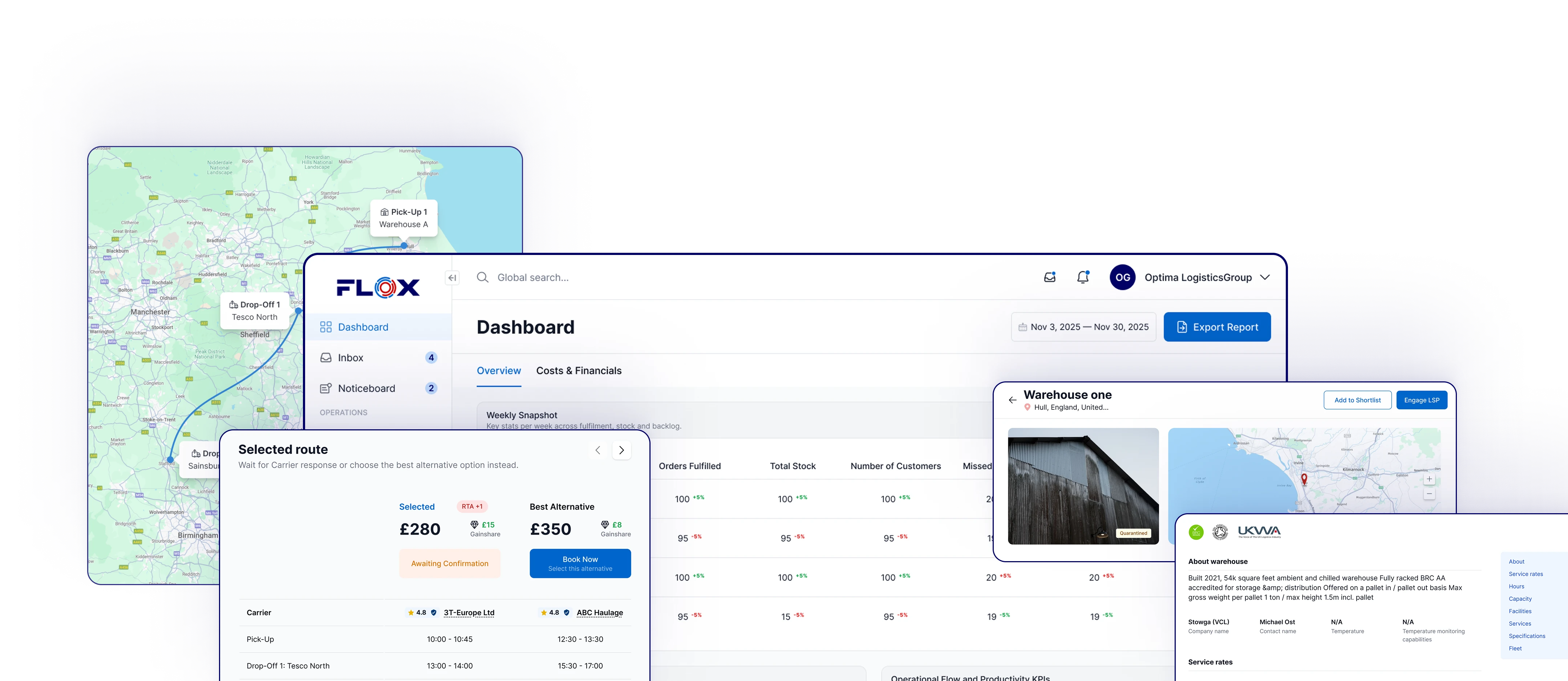
FLOX's marketplace and orchestration platform connects buyers, shippers and logistics service providers with a shared operational layer covering execution status, exceptions and financial flows across every party in each shipment. The platform is built around the problem of supply chain agility: the ability to respond quickly when market conditions change, capacity tightens or a route needs to be adjusted at short notice. Regional differences in freight brokerage are real, but the tools for managing across them are improving.

Move products with greater speed and control by picking services that fit your route, timing and delivery needs.
Subscribe to our newsletter.
Stay up to date with practical insights and useful logistics content
FAQs
A freight broker connects shippers with carriers to facilitate the movement of goods. Their core work covers rate negotiation, carrier selection, logistics coordination and documentation management for each shipment. They also resolve problems when delays, route changes or regulatory issues arise. Brokers add value by maintaining networks of carrier relationships and market knowledge that most shippers cannot cost-effectively build and maintain internally. The complexity of the role varies significantly by market, freight type and whether movements cross international borders.