

Table of Contents
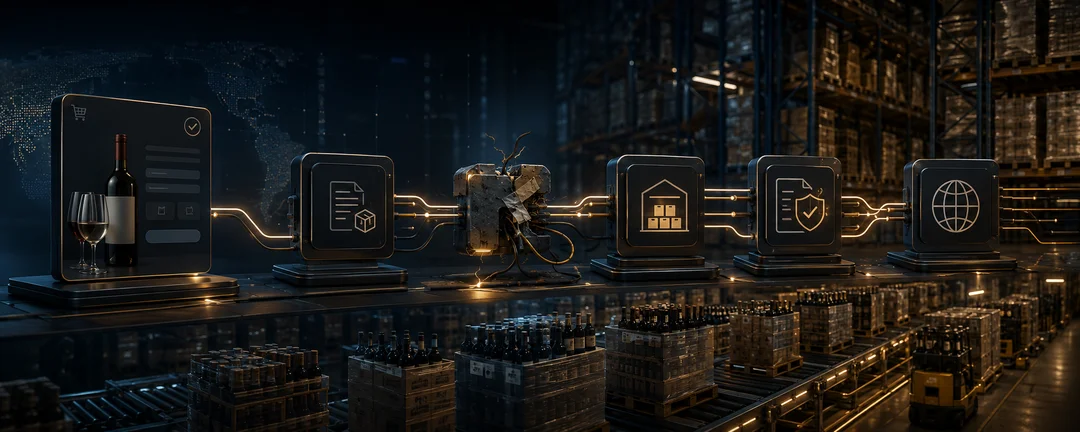
3PL tech integration testing for drinks brands is where most selection processes quietly fall apart. Not at the commercial stage, not during the site visit, but in the weeks after go-live when a DTC order hits the bonded warehouse system and nothing talks to anything else correctly. The brief that took four months to write reduces integration to a single checkbox: "Do you integrate with Shopify?" The answer is always yes. The real question is whether the integration holds under the actual conditions of an brand's operation: excise duty reporting, age verification at checkout, LIFO/FIFO lot rotation for vintage-sensitive SKUs and the spike pattern that arrives e.g. every November without warning.
Integration capability is the single most predictive signal of operational fit. A 3PL that has built clean, tested connections between its WMS, your order management system and the regulatory layer will perform under load. One that has duct-taped a middleware connector together will show you the join at the worst possible moment. The good news is that you can expose the difference before you sign, if you know what to test and how to run it. This piece covers exactly that.
Key takeaways
• Integration capability is the single most predictive signal of 3PL operational fit for alcohol brands, ahead of rate card, location and SLA wording.
• A 3PL technology integration test for drinks brands should include live EDI or API calls against real bonded warehouse scenarios, not just a demo environment.
• Excise duty software integration must be verified end-to-end: the 3PL's WMS needs to generate accurate duty-suspended movement records without manual intervention.
• Age verification checkout integration is a non-negotiable for DTC spirits fulfilment and must be tested against your actual storefront, not a generic sandbox.
• Integration build time is typically four to twelve weeks depending on stack complexity; factor this into your go-live date before you sign heads of terms.

Why the standard brief misses the point
Most 3PL tender documents include a technology section that asks providers to list their WMS, confirm EDI capability and tick a box next to any platforms they connect with. That format was designed for ambient grocery and general retail. It does not reflect how an alcohol brand's operation actually runs.
An on-trade spirits brand is managing duty-suspended stock in bonded storage, sending pallets to wholesale accounts under specific movement documentation, running a DTC channel that legally requires age verification at checkout and handling returnable packaging for kegs or casks. Each of those flows has its own data requirement. The WMS EDI integration for alcohol logistics is not a single pipe: it is a set of transaction types, each of which must map correctly to a duty status, a lot number, a movement authorisation and a customer record. A provider who cannot describe that mapping in concrete terms during the tender process will not have it working cleanly on day one.
The standard evaluation criteria for mid-market shippers covers rate card and service level in reasonable depth, but integration is where the due diligence typically stops short. The fix is not a longer questionnaire. It is a structured technical test run before you reach the contract stage.
What integrations a 3PL must have for alcohol brands
The baseline for any 3PL handling spirits or wine in the UK covers four integration layers. Each one is load-bearing.
WMS to order management
The 3PL API integration for fulfilment needs to push confirmed stock positions, lot numbers and FIFO/LIFO rotation data to your OMS in real time. Batch updates that run hourly are not adequate for a DTC channel where a customer expects a dispatch confirmation within minutes of placing an order. The integration should support webhooks or event-driven API calls, not just scheduled file transfers.
Bonded warehouse system integration
Bonded warehouse system integration is the connection between the 3PL's WMS and the duty management module that tracks stock in a duty-suspended warehouse and generates the movement documentation required by HMRC. This is not optional. Every movement out of bond, whether to a domestic trade account or to an export destination, must be recorded against the correct duty status. A provider whose WMS does not natively support duty-suspended lot tracking will be managing this in a spreadsheet or a disconnected system and you will carry the compliance risk.
“It wasn't just the sales people telling me they were good at what they did. I had some data to support it.”
Phil Rees, Founder of Shipmax

Excise duty software integration
Excise duty software integration with a 3PL means the provider's system can generate accurate excise movement and guarantee references, link them to outbound shipments and pass the data back to your finance or compliance system without a manual re-keying step. Ask specifically whether their WMS connects to HMRC's Excise Movement and Warehousing System natively or through a third-party layer and who owns the mapping when EMCS schema updates occur.
Age verification checkout integration
For DTC spirits fulfilment, age verification checkout integration is the connection between your storefront's age gate (whether that sits at checkout or at the point of dispatch instruction) and the 3PL's fulfilment workflow. The 3PL needs to receive a verified status flag on the order and, in some configurations, apply a hold or a carrier-specific delivery instruction for age-verified-at-door services. Test this against your actual Shopify or platform setup, not a generic demo account.
How to run a pre-contract integration test
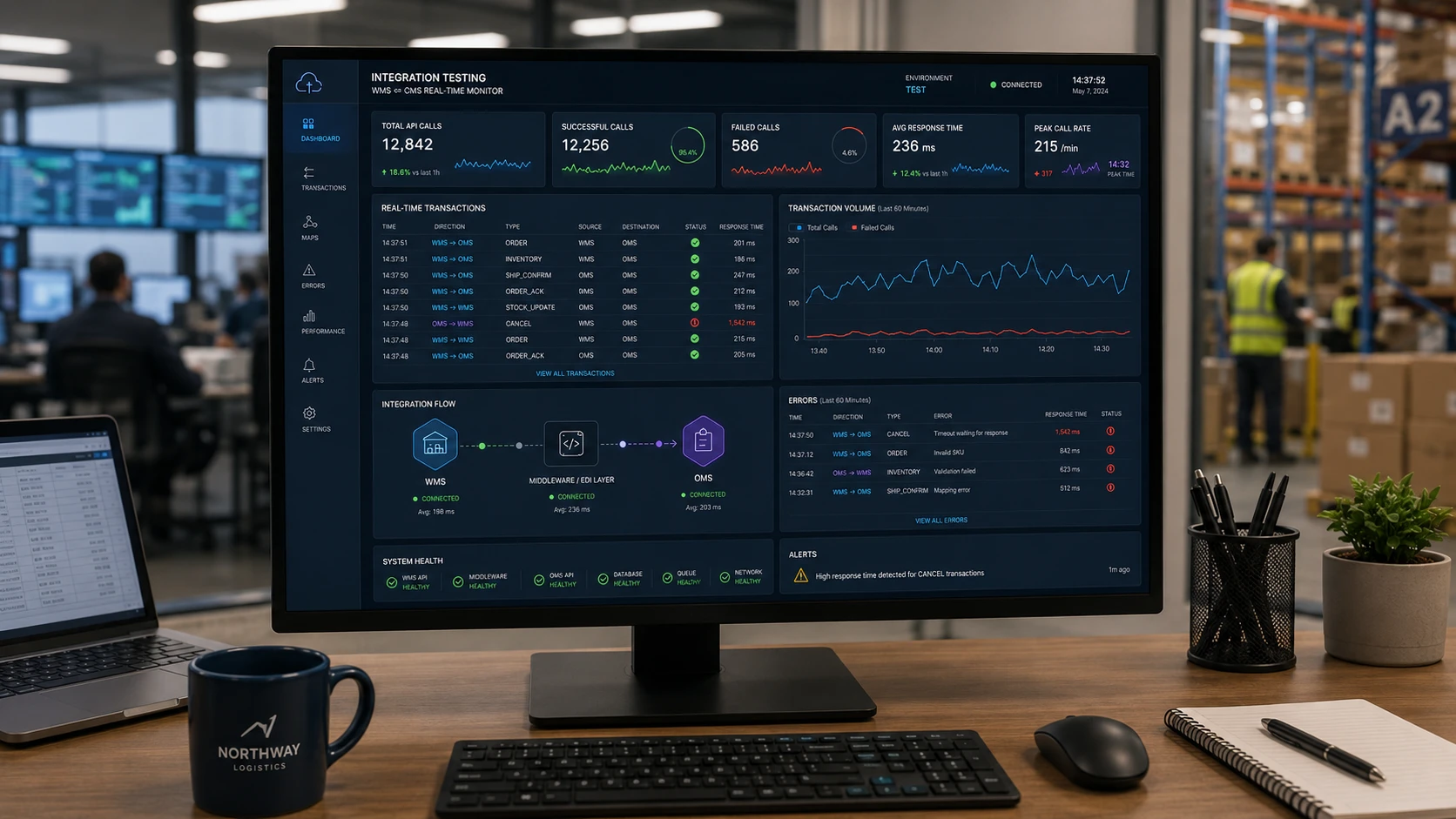
The principle is simple: do not accept a demo. Run a test against real transaction types in a staging environment that mirrors your live stack. A demo proves the system exists. A staged test proves the integration works for your specific operation.


Leo Rodriguez
Vice President at River Plate
Chain Reaction Podcasts
What Makes a Great 3PL Partner?
Getting a product from a warehouse to a customer might look simple from the outside. In reality, successful fulfilment depends on everything from packaging and item setup to inventory data, exception management, technology, forecasting, and the relationship between a brand and its 3PL.
Define the test scenarios first
Before you send anything to the 3PL, write down the five or six order and movement types that are most critical or most likely to break. For a spirits brand these typically include: a DTC Shopify order with age verification, a bulk pallet movement out of bonded storage with duty payment instruction, a wholesale OTIF order to an on-trade account, a stock adjustment for breakage or short pick and an inbound goods receipt with lot number assignment. Each scenario should specify the data your system will send and the data you expect back.
Ask for a sandbox, not a slide deck
A 3PL that is confident in its integration capability will set up a staging environment and run the scenarios with you. A provider who cannot do that within two weeks of a request is signalling that the integration is more fragile than their sales team suggested. Treat reluctance to run a live test as a red flag, not a negotiating position.
Check the exception behaviour, not just the happy path
The real value in any logistics operation sits in exception management, not in the clean runs. During your integration test, deliberately trigger the exceptions: send an order with a missing lot number, cancel an order mid-pick, send a duplicate shipment reference. What the system does when the data is wrong tells you far more about operational fit than watching a correct order flow through cleanly.
Document the ownership question
For every integration point, establish in writing who owns the mapping, who is notified when the upstream system changes a schema and what the SLA is for a fix. WMS EDI integration for alcohol logistics is not a one-time project. HMRC updates its requirements, platforms update their APIs and your own OMS will change over time. The 3PL that treats integration as a living responsibility rather than a go-live deliverable is the one worth contracting.
Seasonal peaks and what they expose in the stack
Christmas and summer festival season are the two periods when every integration weakness becomes an operational failure. Spirits brands know this better than most. The DTC fulfilment platform integration that handles 200 orders a day in October needs to handle 2,000 in the first two weeks of December without degrading the duty-status data or dropping the age verification flag.
Load testing is not standard practice in 3PL selection, but it should be for alcohol brands with significant seasonal swing. Ask the provider to demonstrate, with real transaction logs or a stress test, that their API layer does not queue or drop webhook events under high volume. Ask what happens to bonded warehouse system integration when the pick team is processing at three times normal throughput: does the WMS still write movement records in sequence or does the duty audit trail develop gaps?
What growing brands get wrong about overflow warehousing and 3PL selection is a useful reference point here. The operational errors that appear at peak are rarely random. They follow the same fault lines that were visible in the integration architecture before go-live; they are just invisible until volume forces them open.
Build your peak scenario into the integration test. Send a simulated burst of 50 concurrent DTC orders with age verification flags and watch what the system does with them. If the provider cannot support that test, the risk sits with you on 15 December.
How long integration actually takes
The honest answer is four to twelve weeks, depending on stack complexity, the 3PL's existing connector library and the availability of technical resource on both sides. A 3PL that already has a certified Shopify app, a tested EDI connection to major UK wholesale platforms and a native EMCS connector in its WMS will be at the shorter end. One that needs to build a custom middleware layer from a blank canvas will not.
The danger is in allowing the commercial timeline to compress the integration timeline. Heads of terms that require a go-live in six weeks are not automatically achievable if the 3PL API integration for fulfilment has never been built to your stack. The cost of a rushed go-live in bonded spirits logistics is not just a few late orders: it is a duty compliance gap that HMRC can audit and a DTC experience that ships age-restricted product without the correct carrier instruction.
When running a structured tender, build the integration build period into the project timeline as a fixed phase with its own sign-off gate, separate from the commercial and legal phases. Do not allow the go-live date to float backwards into the integration window. If the timeline cannot accommodate a proper build and test, the 3PL is the wrong choice for this go-live date, not the calendar.

Questions to ask before you commit
These are the questions that separate a provider with genuine integration depth from one with a well-practised demo.
Ask for the last three integration incidents in their WMS: what broke, how long it took to detect and how it was resolved. Ask who specifically owns schema updates when HMRC or a carrier changes a data format. Ask whether their bonded warehouse system integration is native to the WMS or runs through a third-party middleware layer and who holds that contract. Ask what happens to excise duty reporting if the API connection between their WMS and EMCS goes down mid-shift: is there a manual fallback and what is the audit trail?
For DTC, ask whether their age verification checkout integration has been tested with the carrier services they propose to use for your channel. Some age-verified-at-door carrier services require a specific shipment flag that not all WMS systems generate correctly. Find out before go-live, not after a customer complaint.
The answers to these questions will tell you whether the provider has built and operated the integration in a live environment or is describing what they expect it to do. The distinction is everything.
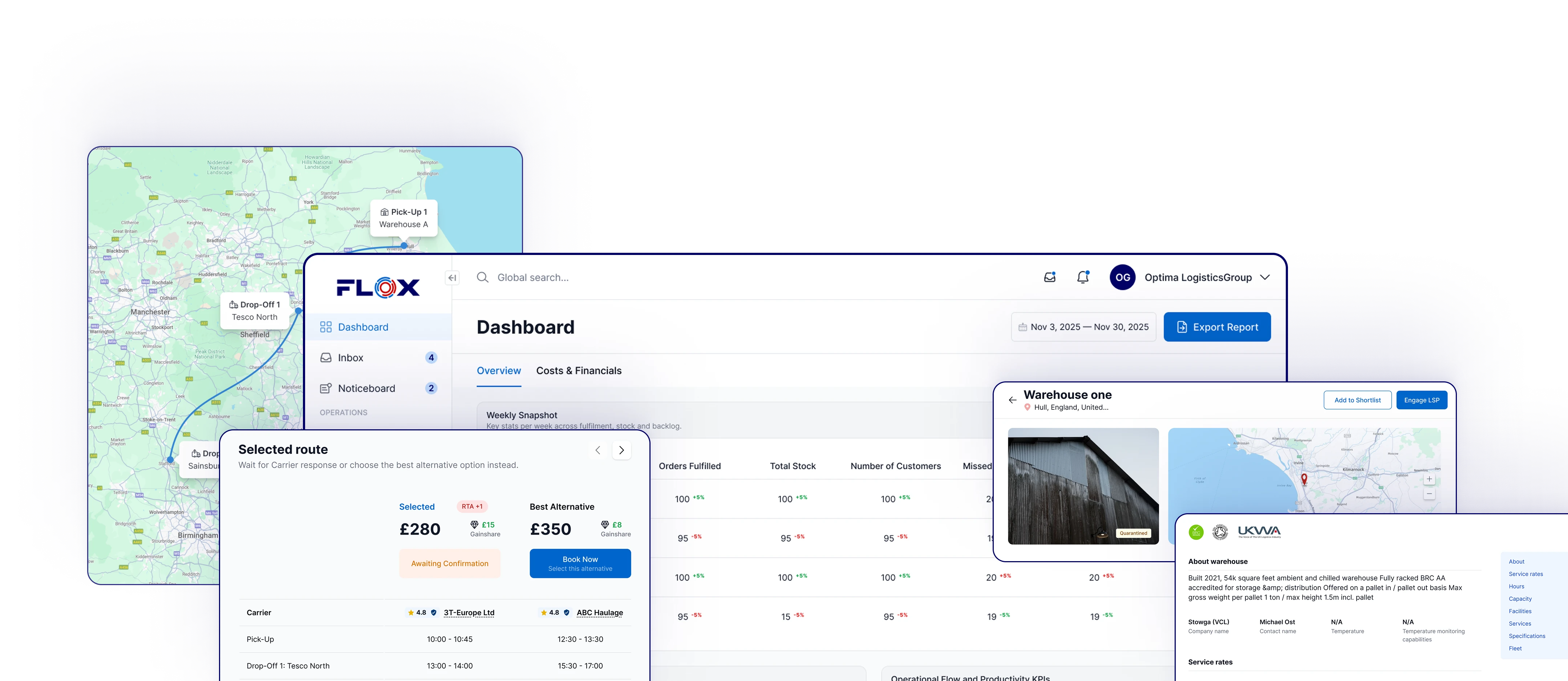
If running this test process across multiple providers in parallel feels like more than your team can absorb, FLOX matches alcohol brands with logistics partners whose integration capability has already been assessed against the requirements of bonded and DTC spirits fulfilment. The matching process starts with the real operational brief, not a generic tender document.

Explore storage and fulfilment solutions that give your business flexibility and the support it needs to grow.
Subscribe to our newsletter.
Stay up to date with practical insights and useful logistics content
FAQs
Ask the provider to set up a staging environment that mirrors your live stack and run your specific order and movement types through it: DTC orders with age verification, bonded stock movements with duty documentation and wholesale OTIF orders. Deliberately trigger exceptions such as missing lot numbers or duplicate references. A provider confident in its integration capability will support this within two weeks. Reluctance to run a live staged test is a reliable indicator of fragile integration.