

Table of Contents
The supply chain network was built for human drivers: Why autonomous electric freight may change inventory positioning, warehouse strategy and the future role of regional distribution centres
Autonomous electric freight could redraw supply chain networks
The first time most logistics planners hear the phrase autonomous electric trucking, the conversation usually drifts toward labour shortages, charging infrastructure or regulation. Those are obvious concerns and they matter. Yet the more profound shift may be something quieter and far more disruptive. It may change the entire shape of supply chain networks themselves.
Regional distribution networks were built around human and transport constraints
For decades, network modelling has been built around a fairly stable set of assumptions. Distribution centres were positioned to balance transport costs against service levels. Transport planners worried about driver hours, fuel consumption, delivery windows and inventory positioning. Businesses accepted that long distances created delays, that urban congestion reduced productivity and that overnight delivery capacity was constrained by human fatigue and legal driving limits.
Those assumptions shaped billions of pounds of investment. Companies built regional distribution centres closer to population centres because outbound transport was expensive and difficult to scale. The logic was straightforward. If transport is slow and costly, stock must move closer to the customer.
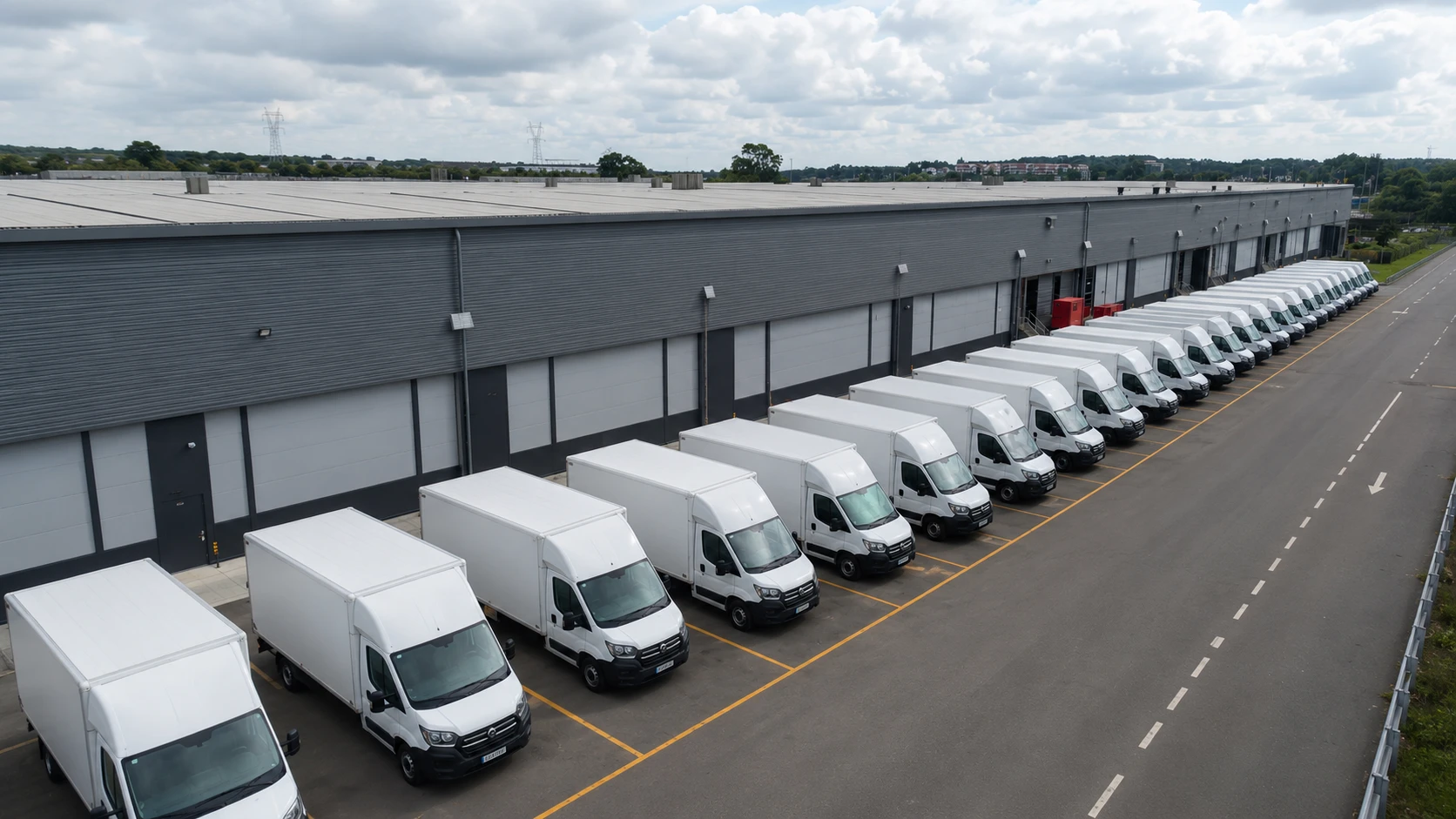
That thinking produced sprawling logistics estates across Europe and North America. Large retailers and manufacturers built networks of regional DCs to compress lead times and reduce final mile costs. In many industries, the distribution network became denser every decade. More local facilities meant faster replenishment and greater resilience against disruption. Now some of those assumptions are beginning to weaken.
Autonomous overnight trunking could weaken the case for dense regional DC networks
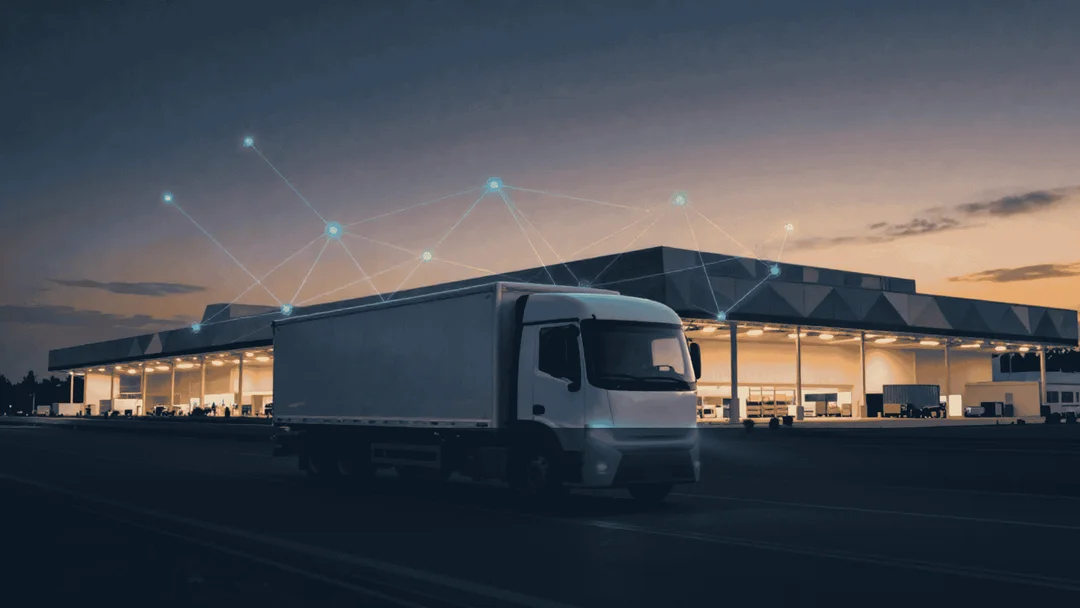
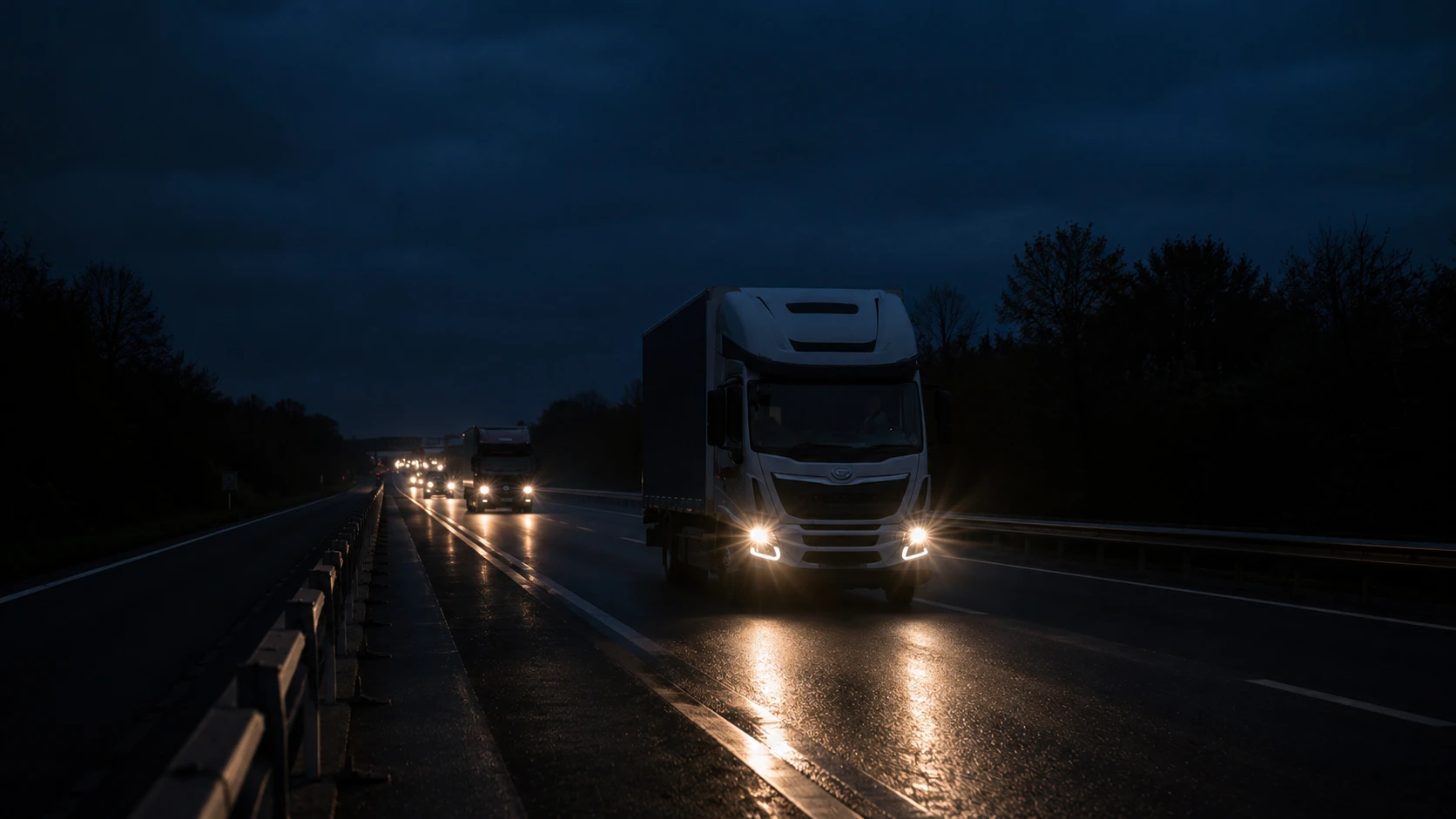
An autonomous electric truck does not think about overnight shifts or driver rest breaks in the same way a human operation does. It can leave a central facility late in the evening, travel hundreds of miles through the night and arrive at a local cross dock before morning traffic begins. A smaller human-operated fleet can then complete the final mile during daytime hours. That changes the geometry of the network.
A company that once required six regional distribution centres may eventually need only two or three large automated hubs supported by cross docking facilities. Inventory could become more centralised again because the transport penalty for distance begins to shrink. The trade-off between stockholding and transport shifts in a way that many traditional network models do not yet fully capture.
Long-term warehouse investment is becoming harder to model
This is where long-term investment decisions become uncomfortable. Warehouses are not temporary assets. Large automated distribution centres are often planned over 25-year horizons. Land acquisition, construction, robotics integration and transport infrastructure represent enormous capital commitments. The problem facing supply chain leaders today is that the assumptions underpinning those investments may not survive the next decade.
“The logistics industry is a unique industry because by default, de facto, it has to collaborate. FLOX is built to enable exactly that.”
Paul Brooks, MD or GFC, Author

Battery improvements could change the economics faster than expected
There is an old tendency in logistics to optimise for the present while assuming the future will evolve gradually. That assumption feels increasingly dangerous. Consider battery technology alone. Today, electric heavy goods vehicles still face practical limitations around range, charging speed and payload efficiency. Many logistics operators look at those constraints and conclude that widespread adoption remains distant. Yet battery density improvements have consistently accelerated faster than expected. Charging infrastructure investment is increasing across Europe and Asia. Governments are actively incentivising electrification while major vehicle manufacturers are pouring billions into development.
If charging times fall sharply and vehicle ranges extend beyond current expectations, the economics of overnight long-haul transport begin to change rapidly. A centralised inventory strategy that looks risky today may appear highly efficient within ten years.
AI and automation may reduce the need for distributed stockholding
Artificial intelligence may compound that shift further. Supply chains have traditionally carried excess inventory because forecasting has always been imperfect. Businesses protected themselves with safety stock because demand variability created uncertainty. More advanced predictive systems may steadily reduce that uncertainty. Real-time sensing of consumer demand, weather, transport conditions and production constraints could enable inventory levels to shrink significantly while maintaining service performance. If businesses need less buffer stock overall, they may also require fewer storage locations.
Warehouse automation introduces another layer of complexity. Fully automated facilities favour scale because robotics investments become more efficient at higher throughput volumes. A highly automated mega distribution centre may outperform multiple smaller facilities simply because the economics of robotics improve with concentration. Autonomous forklifts, robotic picking systems and AI-driven warehouse orchestration all reward density and consistency.
Additive manufacturing may push some supply chains in the opposite direction
At the same time, additive manufacturing may pull certain supply chains in the opposite direction. The ability to produce spare parts or specialised products closer to the point of consumption could reduce the need for some transport flows altogether. In industries such as aerospace, healthcare and industrial manufacturing, distributed production models may gradually reduce dependence on large inventories and long-distance replenishment networks.
Future networks will need to handle competing forces
This creates a strange contradiction for network planners. Some technologies favour consolidation while others favour localisation. The challenge is no longer about identifying a single optimal network. It is about building networks flexible enough to survive multiple possible futures.
Climate policy and urban access could change which sites matter
Climate policy adds still more uncertainty. Carbon reporting requirements are tightening across global supply chains. Companies increasingly face pressure from investors, regulators and customers to demonstrate measurable emissions reductions. That pressure will influence where facilities are built, how products move and even which suppliers remain commercially viable.
A logistics network designed purely around lowest operating cost may become politically or financially unsustainable if carbon taxation increases sharply. Equally, a network optimised for current sustainability targets could become obsolete if autonomous electric transport dramatically reduces emissions from long-haul distribution. Even urban planning could reshape logistics strategy. Many cities are exploring restrictions on diesel vehicles, congestion charging expansion and dedicated autonomous freight corridors. If urban access becomes more controlled, final mile operations may rely on micro fulfilment centres, autonomous delivery vehicles or shared logistics infrastructure.
That possibility raises uncomfortable questions about existing warehouse portfolios. Some facilities that appear strategically valuable today may become poorly positioned within future transport ecosystems. Others may become critically important because they sit near charging infrastructure, smart freight corridors or urban consolidation hubs.


Rob Field
Supply Chain & Logistics Leader
Chain Reaction Podcasts
Fixing Broken Supply Chains: Rob Field's Playbook
When Rob arrived at JLA, they had 17,500 SKUs serving a demand that required barely half of them. His turnaround playbook starts with one thing: data honesty.
Optionality may matter more than optimisation
The real difficulty in network modelling is that these changes do not happen in isolation. Technology, regulation, labour markets, energy infrastructure and consumer expectations all interact with one another. A model built around static assumptions can become dangerously misleading. This is why traditional supply chain optimisation exercises increasingly feel incomplete. Many still focus on minimising cost within a known operating environment. The more important challenge may be designing optionality into the network itself.
Can facilities be expanded, automated or repurposed later? Can transport partnerships evolve alongside new vehicle technologies? Can inventory strategies flex between decentralised and centralised models without requiring complete reconstruction of the network?
Those questions matter because supply chains are entering a period where certainty is becoming rare. Twenty years ago, a logistics network could remain structurally stable for decades with only incremental improvements. Today, a warehouse approved for construction may operate in a completely different transport environment before it reaches the midpoint of its economic life.
There is also a psychological challenge. Supply chain leaders are often rewarded for efficiency and certainty. Boards want clear returns on investment and precise business cases. Yet many of the most important variables shaping future logistics networks remain uncertain. The temptation is to delay difficult decisions until technologies mature further. That may prove equally risky. Businesses that wait too long may find themselves trapped inside outdated infrastructure while competitors build networks designed for entirely different operating models.

Explore storage and fulfilment solutions that give your business flexibility and the support it needs to grow.
The next advantage will belong to adaptable supply chains
The future supply chain may look strangely familiar in some ways. Huge centralised stockholding facilities were once common before rising transport costs encouraged regionalisation. What changes now is the technology surrounding those assets. Autonomous electric trucking, predictive AI, robotics and smart infrastructure may make large-scale centralisation economically attractive once again.
But the companies that succeed will probably not be those betting blindly on one outcome. They will be the ones recognising that network modelling is no longer just an exercise in optimisation. It has become an exercise in adaptability. The next generation of supply chains may not belong to the businesses with the largest warehouses or the fastest trucks. They may belong to the ones that built networks capable of evolving before the future fully arrived.
Subscribe to our newsletter.
Stay up to date with practical insights and useful logistics content
FAQs
Autonomous electric trucks could shift inventory away from dense regional networks toward fewer, larger central hubs. Because an autonomous truck can run overnight without driver rest breaks, stock no longer has to sit close to the customer to compress lead times. This weakens the long-standing logic that slow, costly transport forces stock to move nearer to demand.