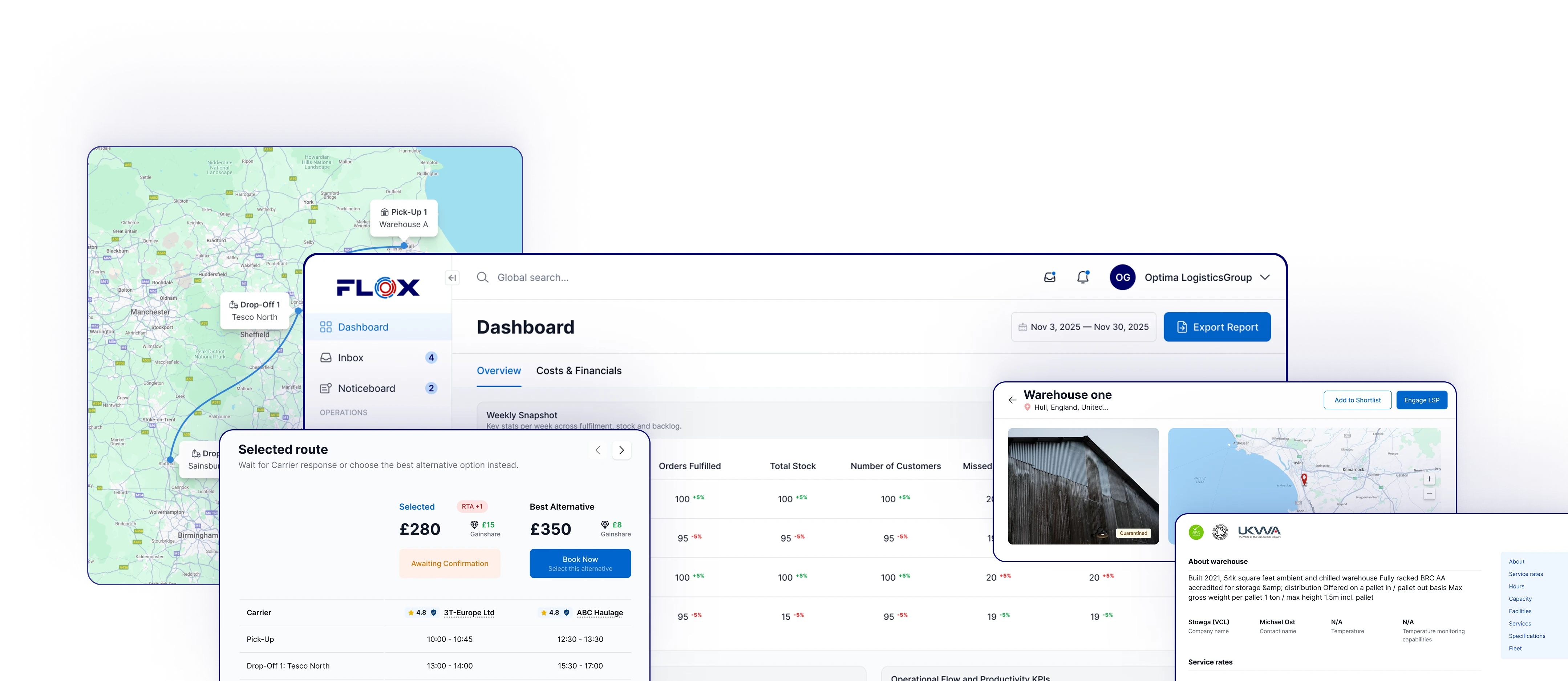
How FLOX Works



Most transport efficiency programmes start at the wrong point. Shippers reach for optimisation software, consolidation tools or rate benchmarking before asking whether the underlying operating model is set up to use them. The result is well-optimised execution on top of a poorly structured operation.
The pattern repeats across sectors: warehousing, fulfilment and haulage run as separate bilateral relationships, each managed in isolation. Exceptions get handled by phone. Invoices arrive from three directions and reconcile against different data. Adding a routing algorithm to that structure does not fix the inefficiency; it speeds up a broken loop.
The operating model question is specifically about who coordinates what and where the financial flows sit. A multi-party logistics setup where the marketplace layer surfaces the right warehouse, 3PL or haulier capacity and the orchestration layer runs execution, exceptions and settlement across all of them changes the coordination structure first. Optimisation tools then have clean inputs to work with.
The new FLOX blog on transport inefficiency goes further into this argument, with the operating model framed as the prerequisite, not the afterthought. Read it before the next carrier review.