


Table of Contents
Warehouse customer acquisition is a constant priority as business requirements shift and contracts turn over. Demand for warehousing in the UK has grown considerably, driven by e-commerce growth - for every GBP 1 billion spent online, an additional 1 million square feet of warehouse space is needed. One billion square feet of new warehousing space has been built globally over the past decade.
The UK's national vacancy rate for industrial and logistics space now sits just under 8%, having risen from historic lows of around 3%. London and the South East remain acutely constrained, with prime logistics vacancy below 2%. 3PLs are the dominant occupier group, and online retailers have increased warehouse occupancy by over 600% compared to a decade ago. The increase in demand driven by e-commerce means warehouse operators should be acquiring customers through digital channels - especially since this has become the norm for businesses searching for warehousing and e-commerce fulfilment solutions.
Traditional warehouses are giving way to fulfilment centres - facilities where incoming e-commerce orders are received, processed and dispatched. To stand out, warehouses must offer quality services and adopt new methods of warehouse customer acquisition. Some of the digital tools warehouses use to acquire customers include company websites, email marketing and social media platforms like LinkedIn.
What Is Email Marketing for Warehouses?
Email marketing involves sending direct commercial messages to a group of individuals via email. For warehouse customer acquisition, it can be a practical tool for both generating new leads and retaining existing clients. By building an email list of potential leads, existing customers and industry contacts, warehouse managers can share relevant content about services, promotions and industry news.
Three approaches tend to work well. First, personalisation - tailoring emails to the recipient's specific needs, referencing their previous interactions or suggesting solutions based on their business requirements. Second, segmentation - dividing your list into groups based on characteristics like past purchases, location or industry. A warehouse might send different emails to local SMEs compared to large retailers, showcasing the services most relevant to each group. Third, compelling content - providing useful information such as industry trends, tips on optimising supply chain operations or case studies demonstrating successful partnerships. This positions your warehouse as a credible source rather than just another sales pitch.

“Logistics in that sense plays a role where it's (has to) provide scalability.”
Jean-Philippe Fabre, Founder of Yvonne Belhomme Champagne

What Are Traditional Warehousing Marketing Channels?
Before digital channels, the warehousing industry relied on customer referrals, company websites, agents and brokers, newspaper adverts, print media, networking events and street signage.
Logistics has been driven by human relationships for decades. Agents, brokers and customer referrals have been a large part of the industry's success. Customer referrals carry additional credibility - a recommendation from an existing customer still carries weight that no advert can match.
But print media has declined sharply. UK regional daily newspaper circulation fell by 18% in the first half of 2025 alone, and only three regional dailies sell more than 10,000 copies per day. National titles are seeing double-digit year-on-year drops. Traditional print is no longer putting warehouse operators in front of the right audiences. Agents and brokers remain active, but they add a layer of cost and opacity - customers can't easily verify whether they're getting the best deal.


Maddi Solloway-Price
Head of Road Freight at Logistics UK
Chain Reaction Podcasts
The Human Cost of Road Freight
Behind every delivery is a driver working long hours with limited recognition. Maddi challenges an industry obsessed with automation to remember the people keeping freight moving.
How Can Warehouse Managers Understand Customer Demands?
Understanding customer demands and pain points plays a direct role in warehouse customer acquisition. Three strategies help warehouse managers gain deeper insight into what their prospects need.
Leverage customer data analytics. CRM systems and order data can reveal purchasing behaviour patterns, preferences and recurring issues. Collecting and analysing this data from existing customers helps identify what new prospects are likely to need.
Conduct market research. Surveys, interviews and competitor analysis reveal industry trends and customer expectations. Direct engagement with potential customers provides actionable feedback that helps you adapt your services before they go looking elsewhere.
Communicate regularly with customers old and new. Open channels - regular check-ins, feedback forms, service reviews - surface what's working and what isn't. Active engagement builds trust and generates the kind of insight that shapes a better offering.
What Are Potential Customers Looking for in Warehouse Storage?
Whether start-ups or enterprise businesses, potential customers tend to prioritise three things when evaluating warehouse and storage solutions.
Efficiency and reliability. Customers want timely stock handling and distribution. A warehouse that can demonstrate fast order processing times, accurate inventory management and consistent delivery schedules has a clear competitive edge.
Advanced technology. Automation, real-time tracking and warehouse management systems (WMS) are sought-after features. Communicating your technology investments - and showing how they translate into fewer errors and faster throughput - reassures prospects that their operations are in capable hands.
Customised solutions. Every business has specific requirements, from temperature-controlled storage for perishable goods to tailored logistics strategies for seasonal demand. Warehouses that can flex around individual needs stand out from those offering a rigid, one-size-fits-all service.

How to Define Your Warehouse's Unique Selling Proposition
A clear unique selling proposition (USP) distinguishes your warehouse from competitors and communicates the specific benefits customers can expect.
Start by assessing what sets you apart. This could be your storage capabilities, operational efficiency, WMS software, storage locations, the expertise of your management team or a track record of exceptional customer service. Gather feedback from your team and existing clients to identify genuine strengths - not aspirational ones.
Then align your USP with your target market's needs. If your warehouse excels in temperature-controlled storage and your target market deals in perishable goods, that alignment should be front and centre in everything you communicate. A USP that doesn't match what buyers actually care about is just a tagline.
Back it up with evidence. Customer testimonials and case studies provide social proof that your claims hold up. People buy from people - a credible recommendation from a real customer carries more weight than any brochure.
How to Identify Your Ideal Warehouse Customer
Not every lead is worth pursuing. Warehouse managers should define what their ideal customer looks like - and a customer feedback loop is one of the most effective ways to build that picture.
Establish clear feedback channels. Surveys, direct interviews and suggestion forms let current and prospective customers share their needs, challenges and preferences. Make it easy for them to tell you what matters.
Analyse the patterns. Categorise feedback into themes - service quality, pricing, technology expectations, delivery speed. If multiple customers cite order fulfilment delays as a concern, that's a signal to invest in operational efficiency improvements.
Act on what you learn. Collecting feedback without responding to it erodes trust. Demonstrating that you've listened and made changes builds credibility with existing customers and attracts new ones who are watching how you respond. It also increases the likelihood of referrals.
What Warehouse Marketing Material Do You Need?
Company website. This is your digital shopfront. It should communicate your services, capabilities and value propositions clearly. Include warehouse floor size, available space, the WMS you operate, your fulfilment process and distribution partnerships. Customer testimonials and case studies add credibility. All websites need to be optimised for mobile devices.
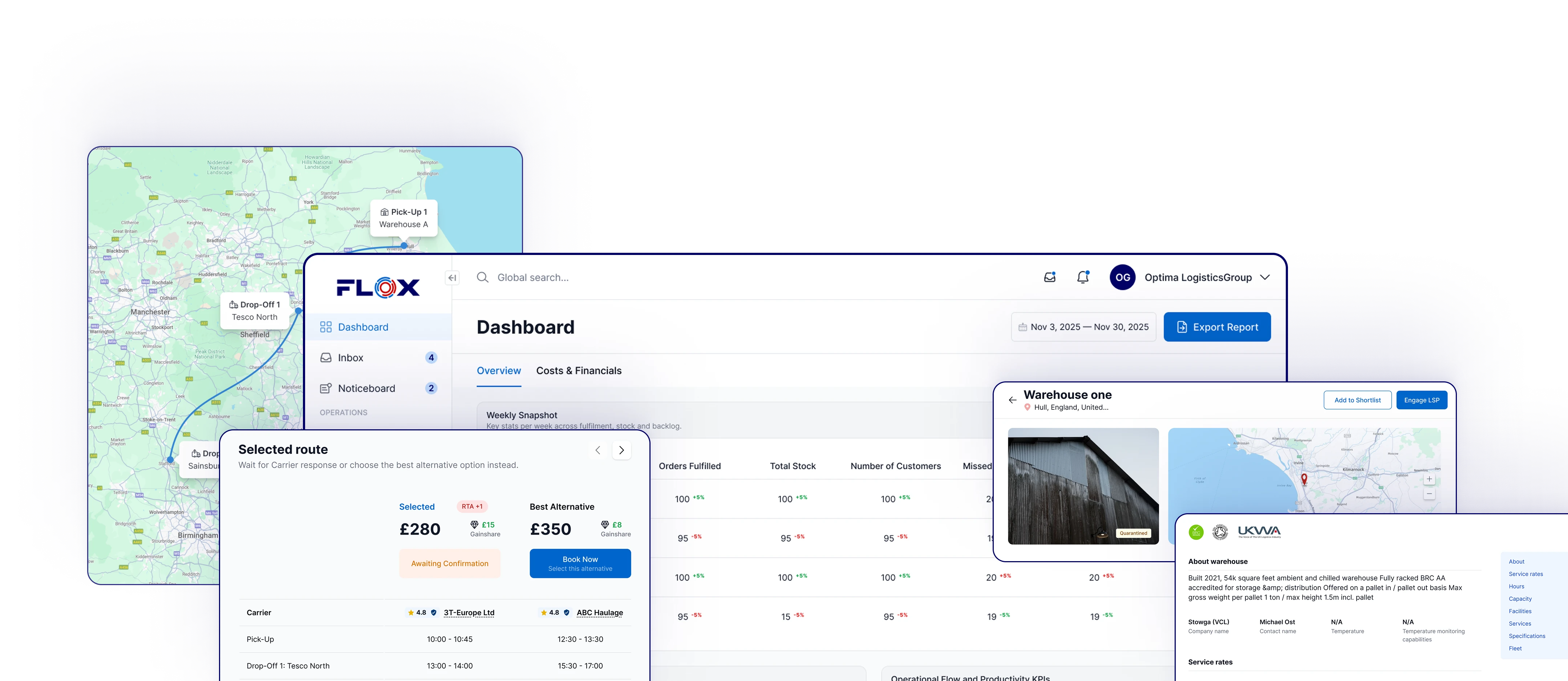
An asset profile on FLOX. FLOX lists all warehouse and transport capabilities so potential clients have the information they need before making contact. Building an asset profile on the platform puts your company in front of buyers already searching for your services - without the marketing spend.
Brochures and digital catalogues. Printed and digital materials provide detailed information about your services, technologies, pricing and operational capabilities. Distribute at industry events, networking meetings or as part of follow-up packages.
Social media presence. LinkedIn is the primary channel for B2B logistics. Use it to showcase operations, share industry news and highlight client success stories. An active presence helps build the kind of collaborative partnerships that drive long-term growth.

How to Build an Effective Warehouse Customer Acquisition Process
A structured sales process turns interest into contracts. Three stages matter most.
Lead generation. Combine digital tactics - SEO, pay-per-click advertising and targeted email campaigns - with networking at industry events and leveraging customer referrals. Capture contacts through website sign-up forms and social media. A survey from the Logistics Management Group found that 64% of logistics businesses tracking digital marketing results saw positive ROI within six months of launching campaigns.
Qualifying leads. Not every enquiry is a good fit. Develop criteria based on budget, timeframe, storage requirements and specific needs. Ranking leads by potential and readiness to buy lets you focus resources on the most promising opportunities. Intent-based targeting tools can help identify companies actively searching for warehouse solutions, giving your sales team a warmer starting point.
Personalised outreach. Generic pitches fall flat. Research each prospect's business, their industry challenges and potential pain points. Craft messages that show you understand their circumstances and can explain how your warehouse solves their specific problems.

Explore storage and fulfilment solutions that give your business flexibility and the support it needs to grow.
How to Keep Existing Warehouse Customers Loyal
Retaining customers is as valuable as acquiring new ones. Loyal customers become advocates and provide a steady stream of referrals.
Deliver excellent customer service. Well-trained warehouse staff who understand responsiveness, problem-solving and proactive communication make the difference between a one-off contract and a long-term partnership.
Consistently meet and exceed expectations. High delivery speeds, accurate order fulfilment and following through on promises build the reliability that keeps customers coming back.
Implement a customer feedback loop. Regularly solicit feedback through surveys and informal check-ins. Showing customers you value their opinions - and acting on them - strengthens the relationship and surfaces improvement opportunities before small issues become reasons to leave.
Customer Communication Through FLOX
FLOX enables warehouse operators and their customers to communicate and transact through one platform. There's no need for spreadsheets or scattered email threads. FLOX provides customers with visibility and reporting out of the box - a customer-facing portal that makes your services easier to work with and harder to leave.
Using Your WMS to Improve Warehouse Customer Acquisition
Your warehouse management system holds valuable intelligence about customer interactions. Leverage it through automated surveys and feedback forms - many WMS platforms support post-delivery satisfaction surveys that capture data on delivery times, order accuracy and overall experience.
Track customer interactions and order history to identify patterns in preferences and behaviour. If feedback flags recurring issues with specific processes, that data points you straight to the fix. FLOX connects directly to your WMS and acts as an integrated customer-facing portal, removing the need for additional integration with your client's SRM, ERP or other systems.
Subscribe to our newsletter.
Stay up to date with practical insights and useful logistics content
FAQs
Warehouse customer acquisition is the process of attracting and converting new clients for warehousing and logistics services. It matters because contract turnover is a constant in the industry - even well-run warehouses lose clients to changing business needs, seasonal shifts or company closures. A steady pipeline of new prospects keeps occupancy rates healthy and revenue predictable. Platforms like FLOX help by putting warehouse operators in front of buyers already searching for specific storage and logistics capabilities.