

Concentration risk in logistics rarely announces itself. It builds gradually as shippers consolidate volumes into one provider for simplicity, then surfaces at the worst possible moment: a Q4 peak, a port disruption or a provider restructure that pulls available capacity without notice.
The operational consequence is asymmetric. When a 3PL tightens its network, the shipper absorbs the cost of finding alternatives at short notice, often at spot rates that undo months of contract savings. The provider, meanwhile, is managing its own asset utilisation. Those incentives are not aligned and a standard SLA does not change that.
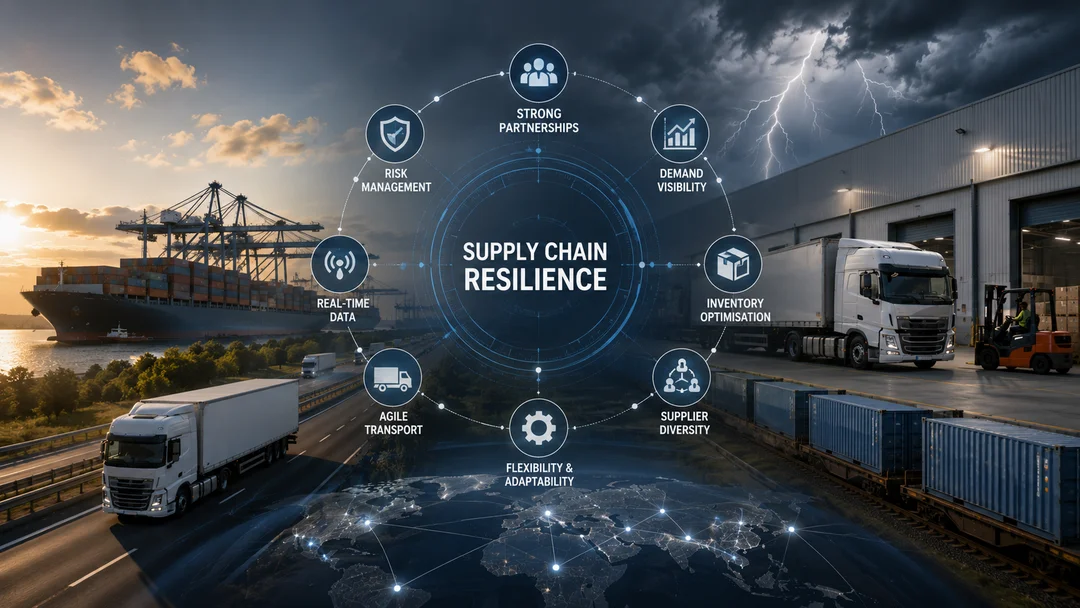
A multi-party model distributes that exposure. Spreading volume across complementary providers, matched to specific flows rather than to a single master contract, means no single capacity decision can strand the whole operation. The complexity is real, but it sits in the orchestration layer, not in the shipper's day-to-day management.
Building for exception is the point. The happy-path SLA is straightforward to write; the question is what happens when one node pulls back. Shippers who have already stress-tested that scenario across multiple providers are in a structurally different position to those who discover the gap during a live disruption.