

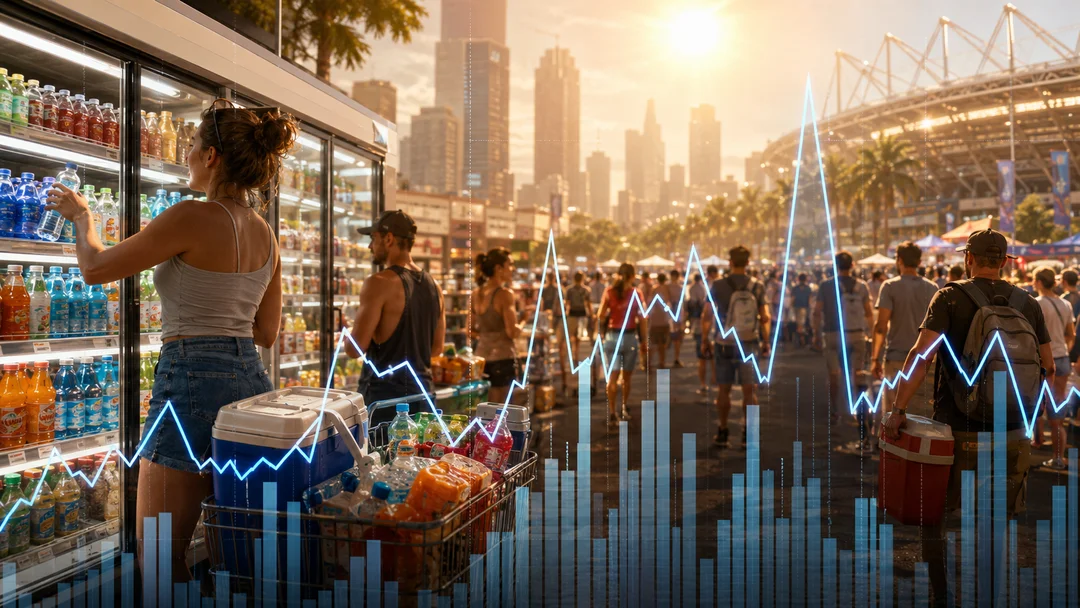
The IGD finding covers two overlapping shocks: a prolonged heatwave and a FIFA World Cup hosted in a timezone that shifted evening meal patterns across the country. Either event alone strains a demand plan. Together, they show how quickly standard weekly forecasts become fiction.
The problem is not that planners failed to anticipate heat or football. It is that most logistics networks are calibrated to absorb deviation gradually, through safety stock and replenishment cycles, rather than to trigger fast exceptions when a signal crosses a threshold. By the time a 73% shift in shopper behaviour shows up in a fulfilment centre's pick data, the window to reposition stock or flex capacity has already closed.
Faster exception triggers change that calculus. A network that acts on point-of-sale velocity or basket composition data within hours can redirect a temperature-sensitive consignment, add a collection slot or call on a secondary provider before shelves empty. One that waits for the weekly forecast review cannot.
Exogenous events are not anomalies to be smoothed away in the next planning cycle. They are the normal operating environment for any UK grocery or foodservice network. The question is whether the logistics layer is wired to detect and respond or just to average.