

Extreme-weather events are arriving often enough that insurers, lawyers and trade bodies are pushing food businesses to codify them in commercial agreements. That is a sensible first step. The problem is that a contract clause is only as useful as the operational plan it references and most logistics briefs have not moved at the same pace.
When the brief still assigns a single primary haulier per lane with no stated fallback or a single ambient warehouse with no overflow arrangement, the force majeure clause becomes a liability-transfer mechanism rather than a continuity tool. It describes who bears the cost of failure; it does not prevent the failure.
Brief reform means treating weather disruption as a standing variable: documented alternative lanes, pre-agreed capacity thresholds with secondary providers and exception-routing rules that can be triggered without a phone call up a management chain. That is an orchestration problem, not a legal one. Matching contracts to briefs that still rely on informal relationships and annual tenders leaves the gap exactly where it was.
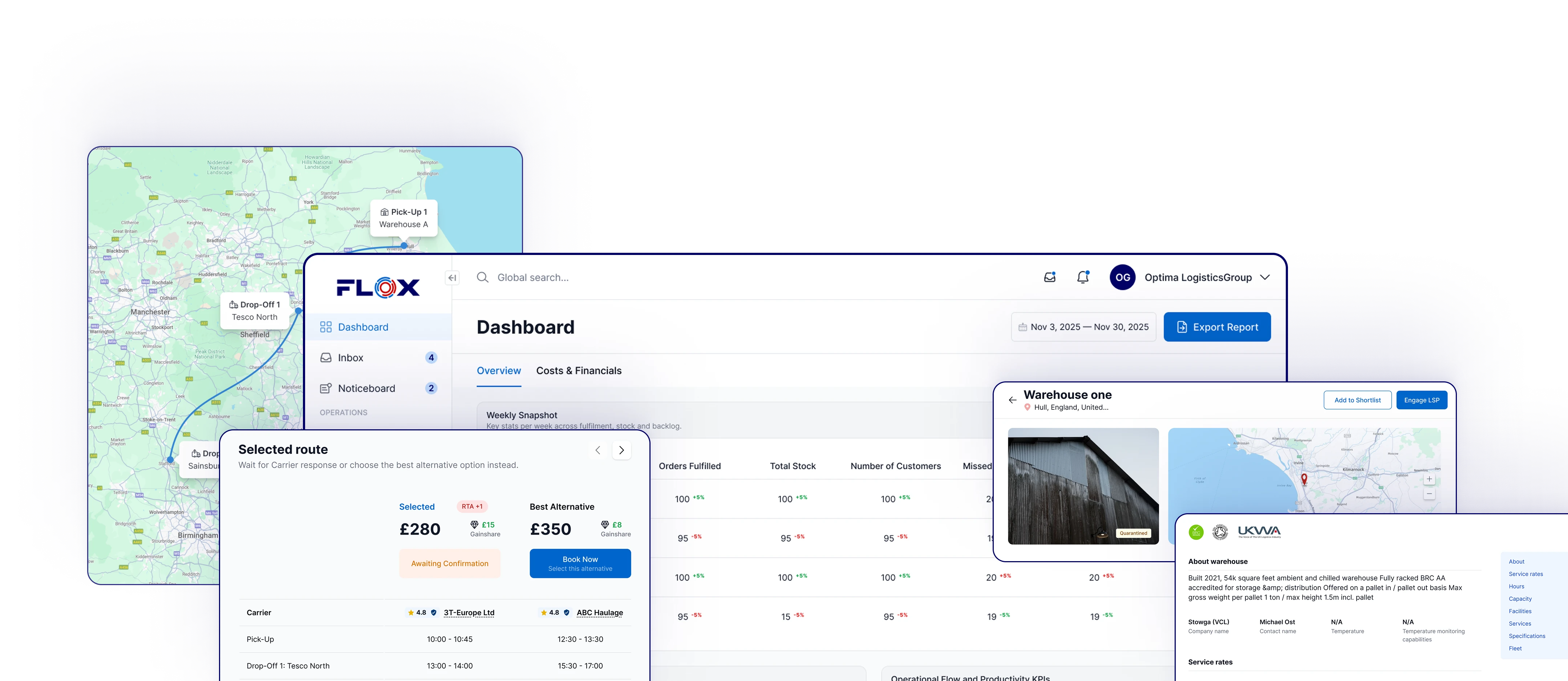
For UK food manufacturers operating across multiple warehouse and transport providers, coordinating that kind of fallback structure across every party is where a multi-party logistics marketplace and orchestration platform does practical work. The contract can then reference something that actually exists.