

The FDF, citing HMRC data, describes the picture as a worrying sign of a downturn. The US is the sharpest single break: exports fell 27.9% to GBP 529.6m, with salmon to the US down 45.6% to GBP 68m and Scotch whisky to the US down 14.7% to GBP 182.1m. The FDF attributes the decline directly to US import tariffs introduced in April 2025 and expects the trend to persist.
The logistics consequence is structural, not seasonal. Cold-chain capacity built around outbound salmon and high-value ambient goods does not simply absorb a volume shock and wait. When a reefer lane contracts this sharply, utilisation breaks on both legs and bonded-warehouse positions that priced for a bilateral trade surplus face a new reality. The UK-US trade surplus in food and drink fell 69.3% to GBP 110m, the lowest since Brexit. Capacity planned for that surplus now needs a different routing.
The decline is also broad-based. China fell 18.5%, India 16.6% and CPTPP markets 11.3%, while the EU held broadly flat at GBP 3.4bn. Single-lane dependence was already a risk; it is now a liability for exporters and the 3PLs aligned to specific corridors.
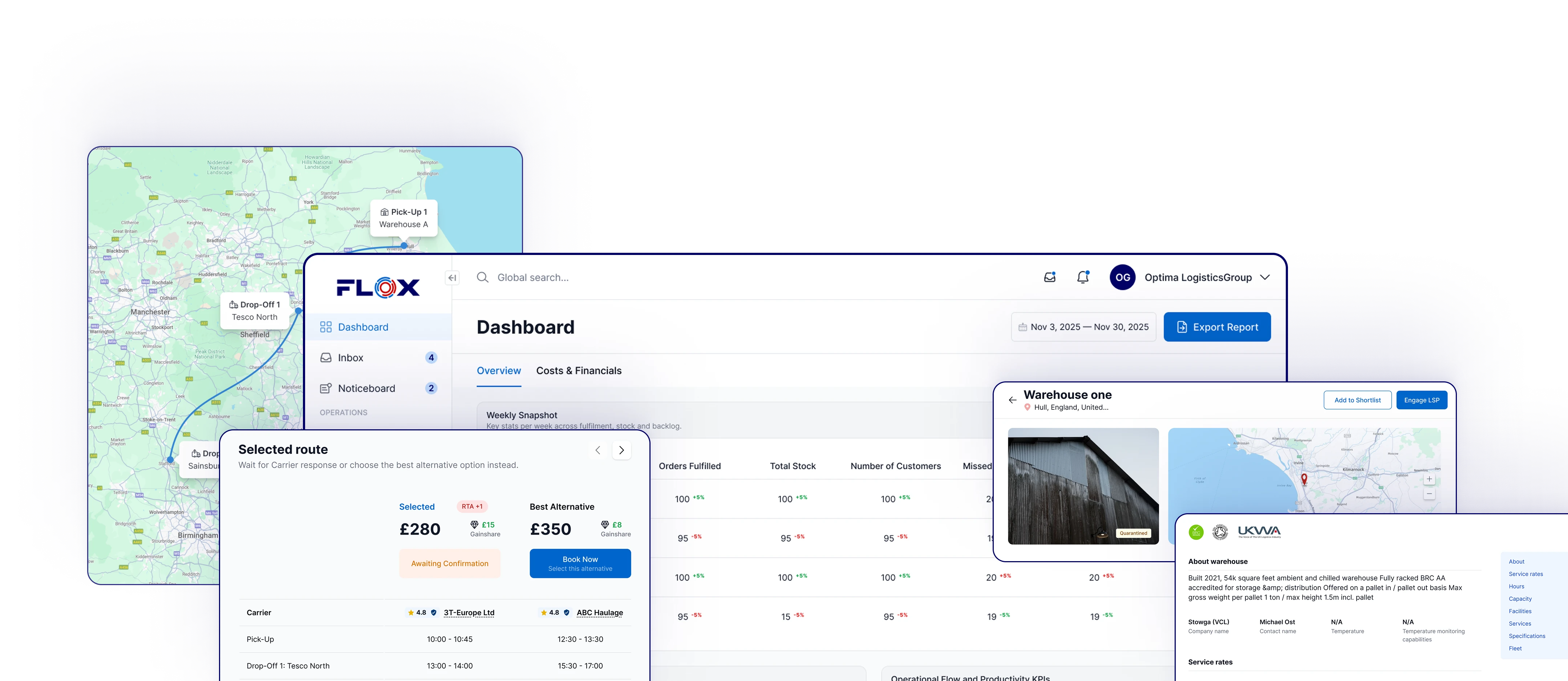
For shippers and providers navigating this, the decision quality question is practical: where does volume go, which partners can flex across re-routed lanes and which capacity positions need renegotiating now? Multi-party orchestration matters here because the answer is rarely a single swap. Contracting, fragmenting export map is an exception-management problem first and a visibility problem second. The decisions that hurt are the ones made late, with partial data, while capacity commitments run ahead of revised trade flows.