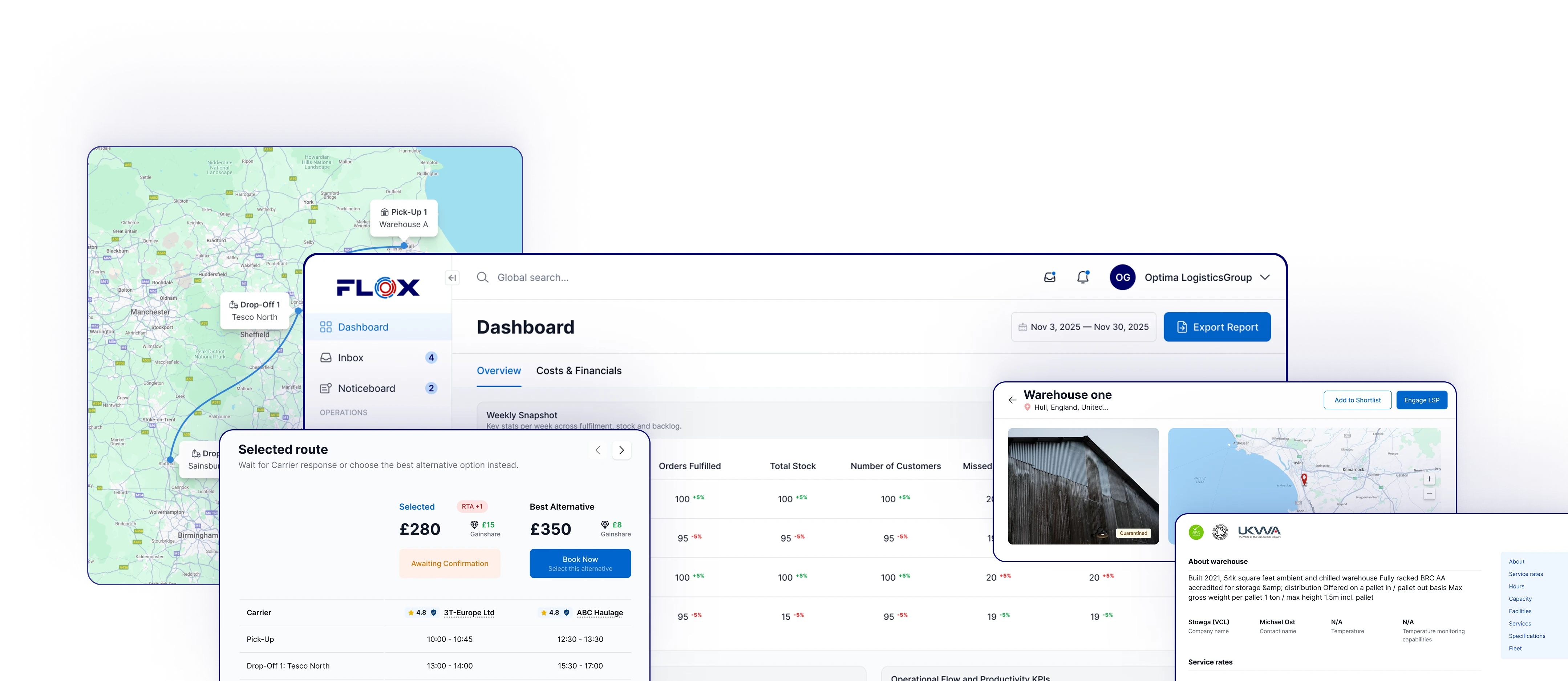
How FLOX Works


The Nobody's Child case makes the mechanism visible. Before any automation became possible, Fairly Made, Fabacus and Nobody's Child's own systems had to agree on who owned each data field, who could update it and in what order. The technology was available throughout. The governance was not.
Logistics operations hit the same wall constantly. A shipper, a warehouse provider and a haulier can each hold accurate records of the same shipment and still produce three conflicting statuses at exception time. The data is not wrong in isolation. It is ungoverned across the boundary between parties.
Sequencing matters here as much as it does at peak. Agreeing on a shared record before an exception occurs is fundamentally different from trying to reconcile after the fact. The decisions that hurt are the ones made late with partial data, not the ones made imperfectly but in time. Getting parties to agree on data ownership and update permissions is the prerequisite step that most multi-party operations skip.
For shippers coordinating warehousing, transport and fulfilment across several providers, the practical question is not which platform to use. It is which party sets the authoritative record for each data type and whether the operational agreements reflect that before the first order moves.