

Our piece in The Grocer this week puts a name to something most SME food founders already feel: the logistics penalty. Volume drives leverage in UK logistics and if your volumes are small, every line of your cost base reflects it. Higher per-unit rates, minimum order quantities that do not fit an emerging brand, inflexible contracts and cold-chain access that larger shippers treat as standard.
The consequences land in the market, not in the warehouse. A challenger brand that cannot afford reliable chilled distribution at scale either shrinks its ambition or exits the category. The product may be right. The logistics economics are not.
The structural cause is straightforward. UK logistics infrastructure was built around high-volume, repeatable flows for large FMCG shippers. SME food brands are served as a residual, squeezed into contracts and capacity that was not designed for them. That is not a complaint about individual carriers or 3PLs; it is how a volume-first market naturally stratifies.
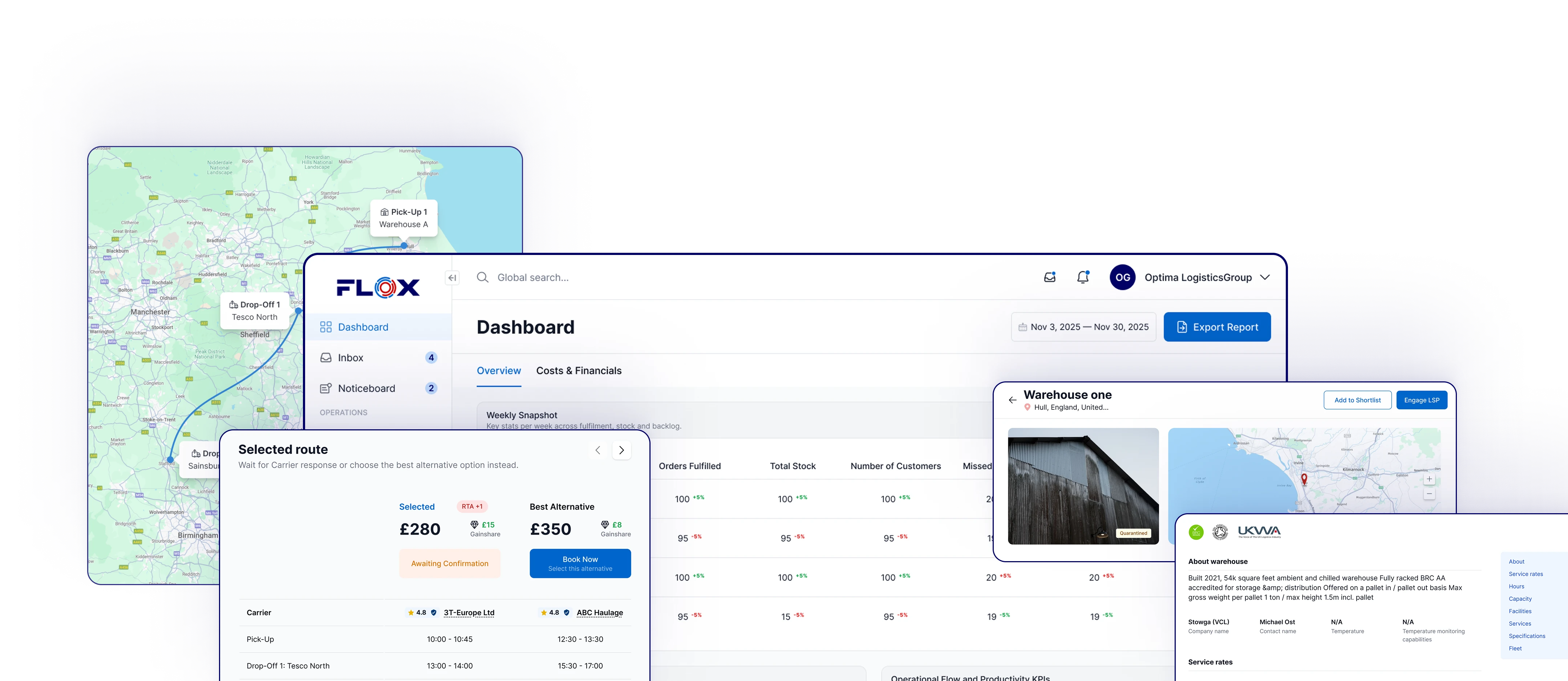
A marketplace and orchestration platform changes that equation by connecting smaller shippers to a network of warehouses, 3PLs and hauliers across UK corridors, letting them combine volume across providers and coordinate exceptions without needing the headcount of a large shipper's logistics team. The network depth does not have to be earned shipment by shipment.