

The Grocer's survey finding that suppliers are hitting a brick wall on cost recovery signals something specific about how that unabsorbed cost behaves. Retailers hold the terms; suppliers absorb what they cannot pass through; and the line items with the least contractual protection take the hit. Transport and warehousing sit near the bottom of that hierarchy.
Suppliers with locked carrier rates or annual fixed-price 3PL contracts have no mechanism to rebalance. Volume shrinks as promotional support is cut; fixed commitments remain. The unit cost of every pallet moved rises and the carrier or warehouse provider either absorbs it quietly or loses the account.
The commercial signal here is a capacity signal. Providers tied to struggling supplier accounts on thin margins start to prioritise better-priced lanes and slots. Suppliers that can only offer rigid, low-visibility briefs lose access to network capacity faster than their finance teams notice.
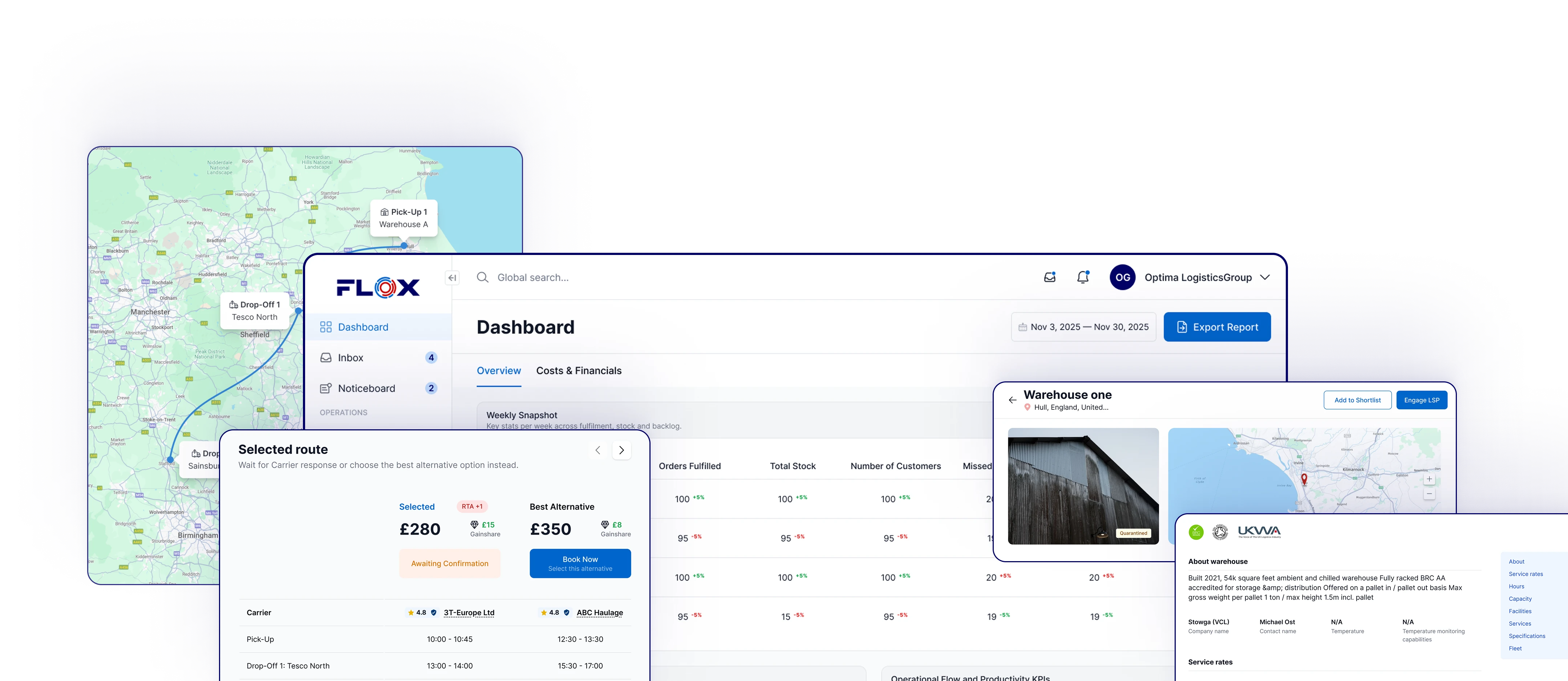
The operational response is to treat carrier and warehouse relationships as live markets rather than annual line items. Matching volume to providers on capability and lane fit, booking against real capacity and coordinating exceptions across every party involved gives a supplier the flexibility to rebalance without renegotiating every contract from scratch.