


The handoff is where strategy stops being a slide and becomes a phone call nobody anticipated. A shipper agrees a sustainability target, a 3PL prices a lane, a carrier accepts a booking and then conditions shift: volume drops, a slot is missed, a subcontractor swaps a vehicle. Each party acted on their own correct information. The outcome still fails the original intent.
This is the execution gap in practice. It is not caused by bad technology or poor strategy in isolation. It persists because each layer, planning, marketplace and physical movement, runs on different data at different latency. By the time a strategic decision reaches the driver, three handoffs have introduced drift that no one has visibility of in real time.
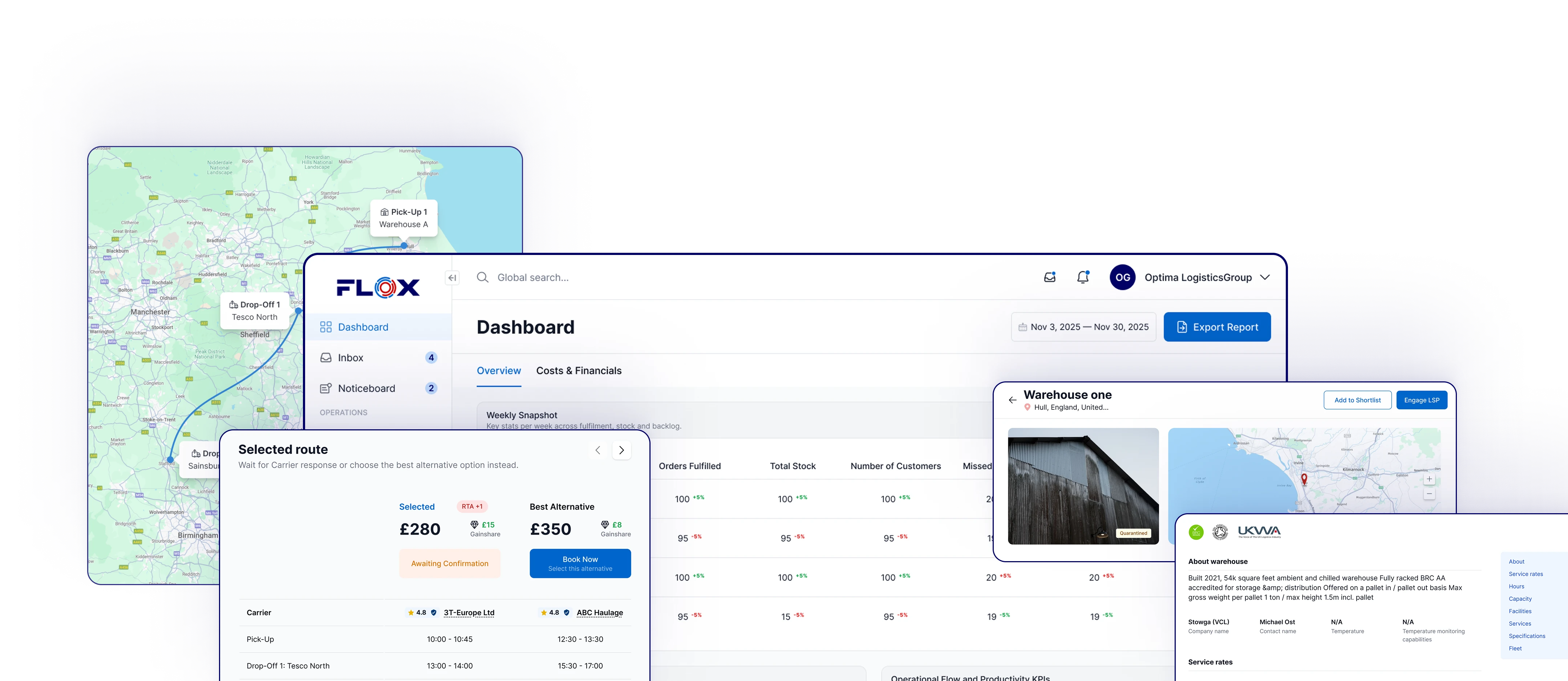
Building FLOX as both a multi-party marketplace and an orchestration layer made that gap impossible to ignore. The marketplace surfaces capacity, the orchestration layer holds the context across parties. Without both, the gap simply moves downstream and reappears as a failed delivery or a disputed invoice.
For operators preparing for that conversation, the honest starting point is locating exactly which handoff in your network is generating the most silent drift.