


The stock is still sitting somewhere. A single month of soft in-season demand means warehouse providers absorb extended dwell they didn't quote for, hauliers face rescheduled or cancelled collection slots and fulfilment operations get hit with returns volumes that weren't in any forecast.
Those costs don't consolidate neatly on the buyer's balance sheet. They fragment across every party in the chain: storage charges that compound weekly, rehandling fees billed at spot rates and collection rebooking that consumes carrier capacity that was already allocated elsewhere. Each provider absorbs a slice of the disruption and invoices for it separately.
The coordination problem is that no single party sees the full picture. The warehouse knows its own dwell. The haulier knows its missed slots. The buyer sees the markdown pressure. Nobody is watching the aggregate cost shifting across the network in real time.
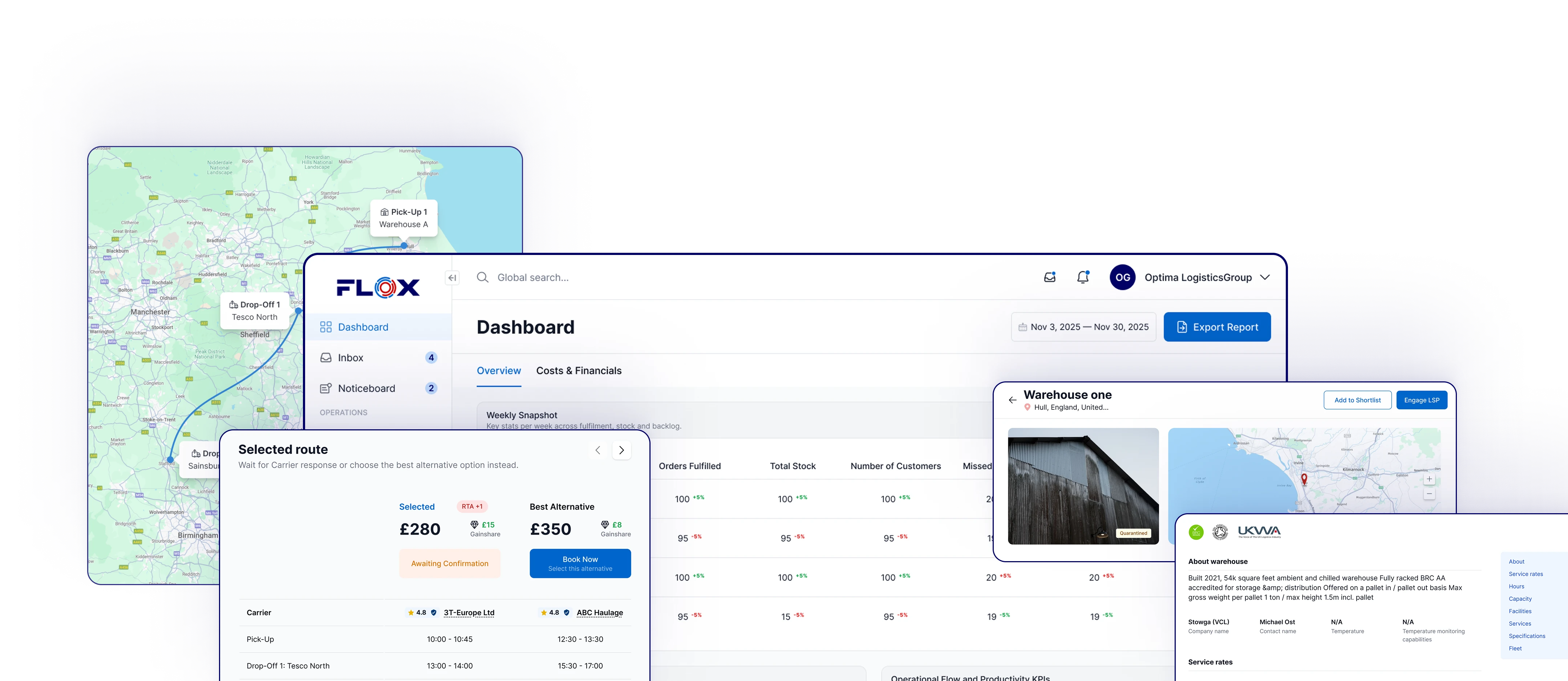
A marketplace and orchestration platform connects those views: one place where stock position, collection schedules and exception flags are visible to every party involved and where the financial consequences can be reconciled rather than discovered retrospectively. Slow sell-through is a commercial reality in fashion. Fragmenting its logistics cost across siloed providers is not inevitable.