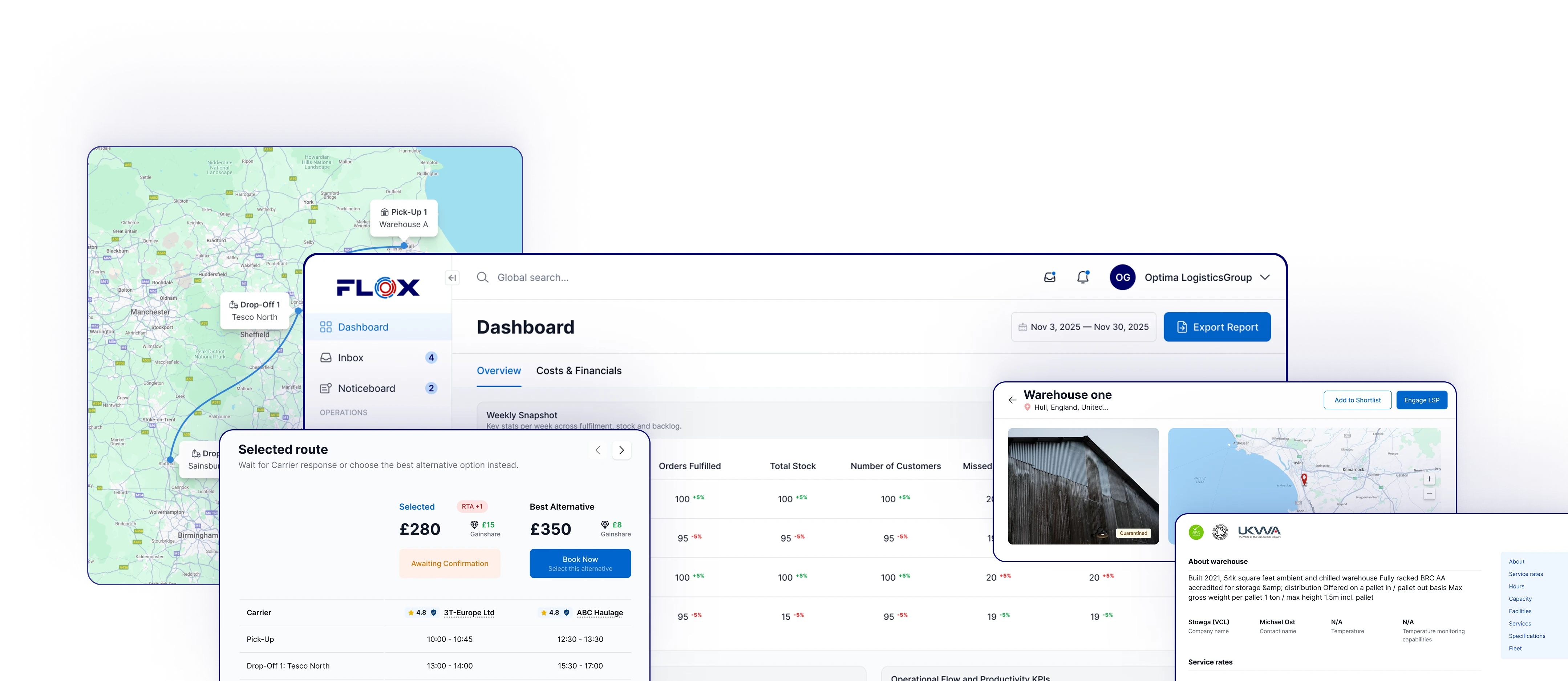
How FLOX Works



The BRC's latest shop price inflation reading, reported by Drapers as hitting a two-year high, compresses the gap between what retailers charge and what their supply chains cost. That gap is where logistics spend used to hide.
Carrier rates and warehousing charges do not fall in line with retail margin pressure. Contracts signed at last year's rates still run; spot capacity reprices faster when volumes tighten but does not automatically become cheaper. The result is a cost structure that was already difficult to justify line by line, now tested against thinner product margins.
The operational response is not to renegotiate every provider contract at once. It is to know, with precision, which lanes and which storage arrangements are generating cost relative to the volume they move. That requires visibility across the full provider set, not just the 3PL invoice at month end.
A marketplace and orchestration platform separates the sourcing question (which providers and at what rate) from the execution question (whether the work is actually running at the booked cost). Keeping those two layers in view is how shippers identify where freight cost absorption is happening before it becomes a margin problem that shows up too late to fix.