The warning landing in UK food and drink boardrooms is real: efficiency-first supply chains have shed the slack that used to absorb disruption. Buffer stock, dual sourcing and spare warehouse capacity were cut as costs. They are now being re-evaluated as insurance.
The problem is that the resilience argument is almost always made qualitatively. Operators are told to hold more stock, add a second supplier, book standby capacity. Rarely does anyone price the delta. Buffer stock carries holding costs, working capital drag and spoilage risk. Multi-sourcing fragments volume, which typically weakens rates and complicates exception management across more parties. Standby capacity is dead spend until it is not.
None of that means resilience is wrong. It means the trade-off needs a number, not a principle. The right buffer level for a chilled SKU with a 4-day shelf life is not the same as the right level for ambient ingredients with 18-month rotation. Treating them identically, in either direction, is where operators lose money.
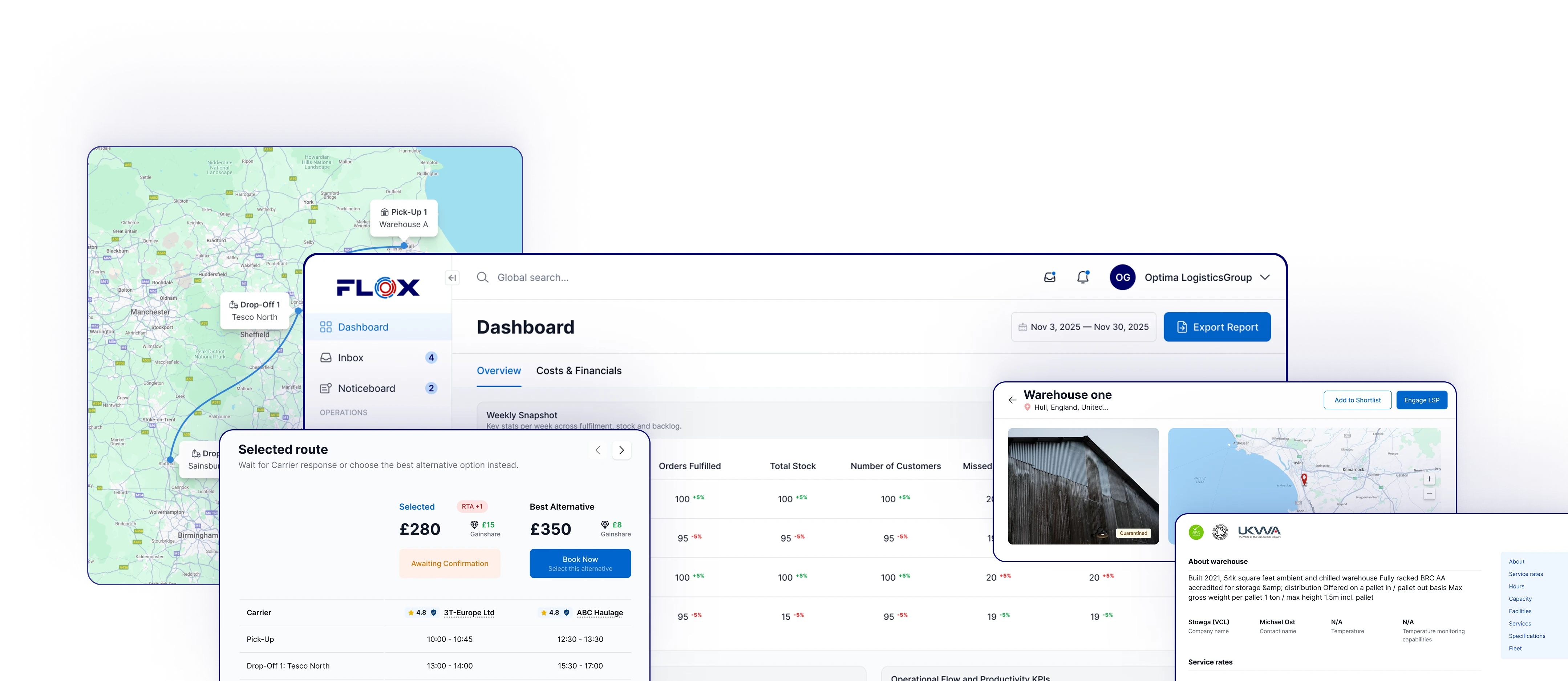
Finding and booking additional or contingency capacity quickly depends on knowing what is available, at what cost and on what lead time. That is a sourcing and coordination problem before it is a strategy problem.