


Those two criteria are easy to compare in a spreadsheet, which is precisely why they dominate shortlists. Operational fit is harder to quantify, so it gets treated as a secondary filter rather than the primary one.
The result is contracts awarded to providers with the right postcode and a competitive pallet rate, but without the process depth to absorb demand spikes, manage multi-SKU inbound flows or integrate reliably with a shipper's WMS. The gaps surface within the first quarter, usually as service failures rather than cost overruns, making them harder to attribute and slower to resolve.
The criteria that better predict whether a 3PL relationship holds up under pressure are system integration capability, labour scalability across a rolling 12-week horizon and documented experience with comparable product categories. None of these appears naturally on a rate card.
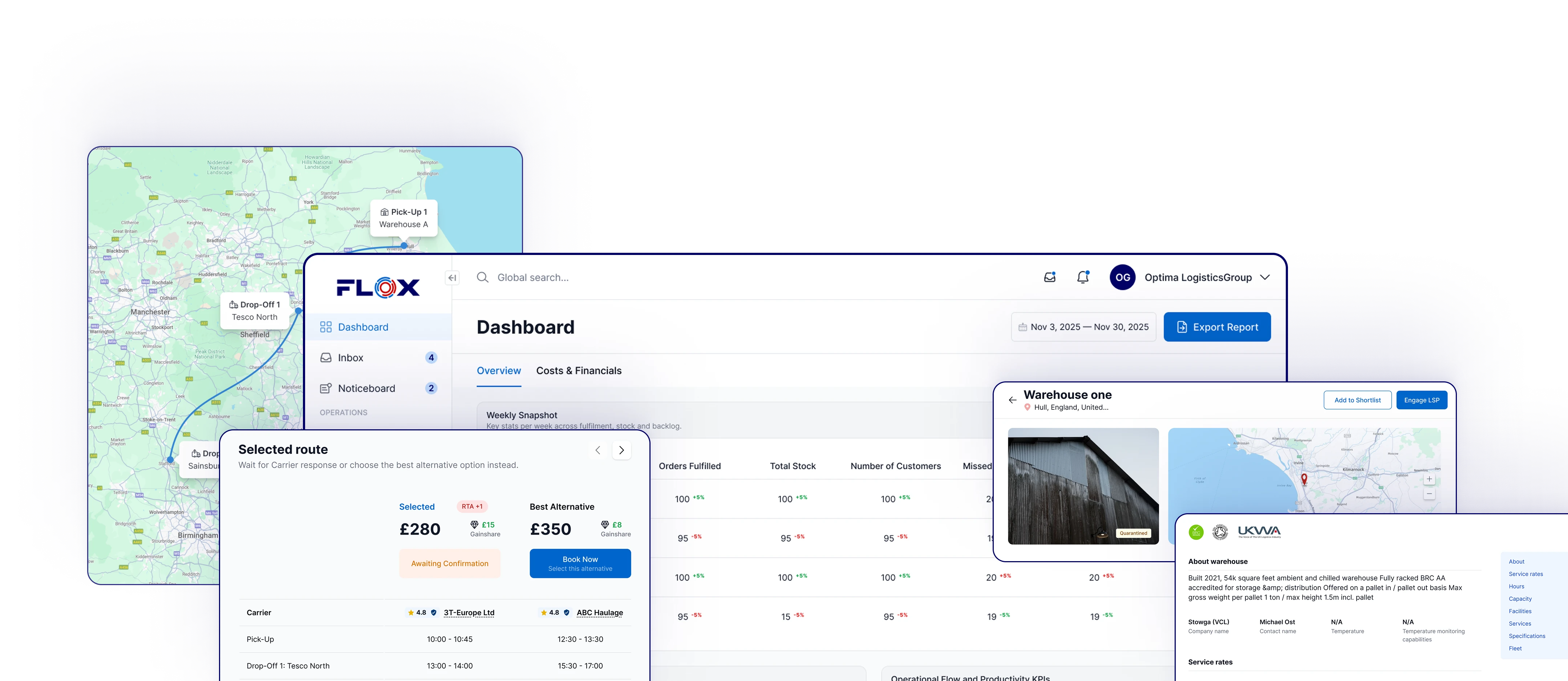
A marketplace that surfaces providers against operational requirements first changes what gets compared. Rate becomes a confirming variable rather than a ranking one and shortlists reflect compatibility rather than cheapest proximity. That is the selection logic FLOX is built around: matching shippers to providers on the factors that determine whether a contract works, not just whether it gets signed.