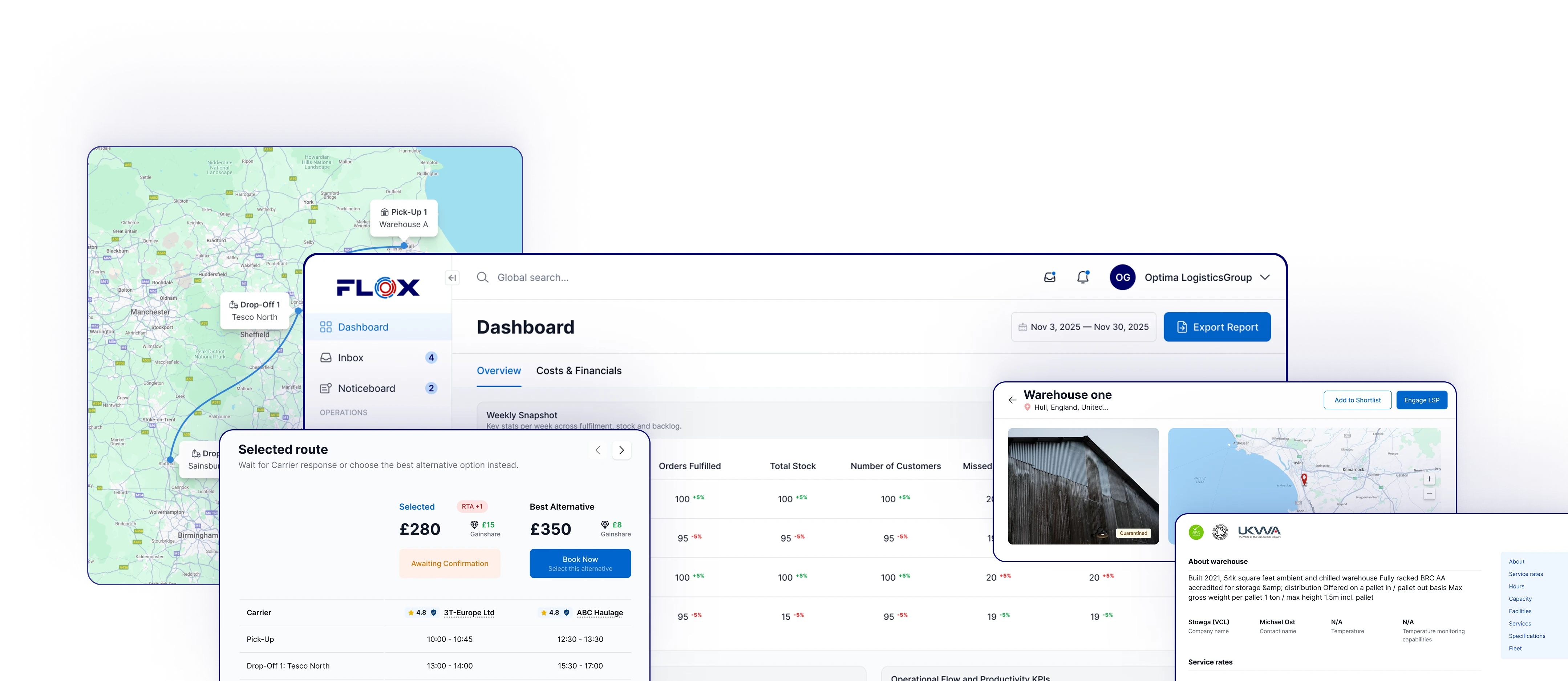
How FLOX Works



By the time finance flags excess stock, the warehouse has already been paying for it. Occupied bays constrain inbound receipts, slow pick paths and force carriers to plan around volumes that do not reflect real demand. The cost is operational long before it becomes a write-down.
Most businesses see the problem when space runs out, not when the buying or production decision is made. That gap between decision and consequence is where logistics absorbs cost invisibly: more handling touches, longer travel distances within the facility and carrier bookings that overstate actual shipment weight or volume.
Carrier planning is where the distortion compounds. When forecasted volumes carried by a 3PL or haulier diverge from real fulfilment demand, rate structures built on volume commitments stop reflecting actual flows. The provider either absorbs it or reprices at the next contract point. Either way, the shipper pays.
Matching inventory positioning to live capacity across warehouse and transport providers reduces the lag between a stock decision and its operational consequence. A marketplace and orchestration platform that holds stock, orders and exceptions in one view gives the shipper a chance to act on the signal before the warehouse absorbs it silently.