

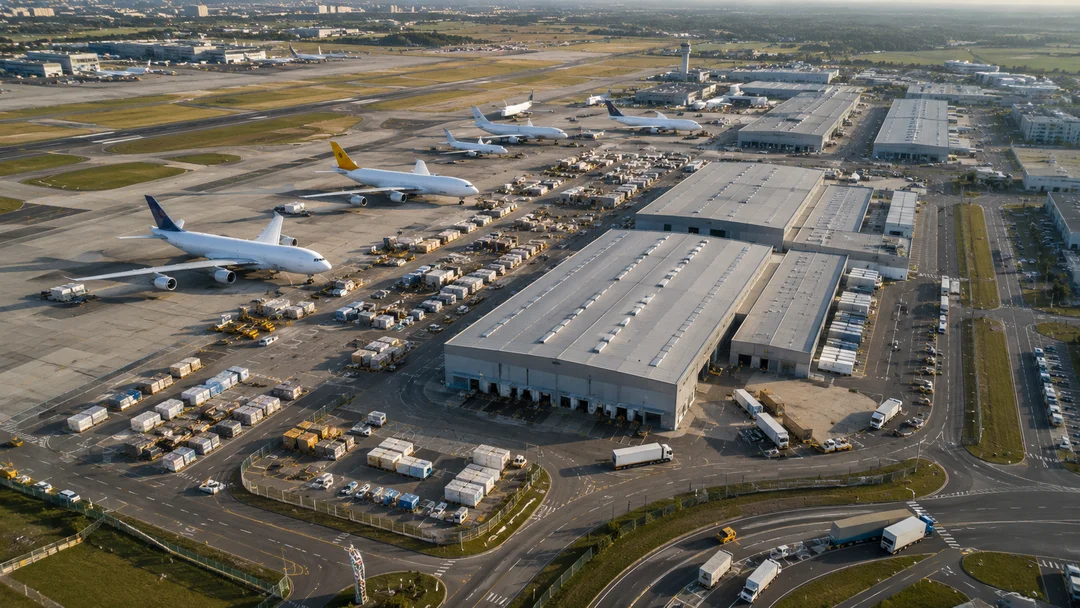
Leipzig/Halle handles a significant share of European express cargo and the device found there triggered partial operational disruption at precisely the moment operators assumed volume would flow normally. The security response was rapid. The routing contingency, for most shippers, did not exist.
That asymmetry is the operational problem. Security is largely a state and carrier responsibility. Rerouting is the shipper's. Yet most network reviews treat major hubs as fixed constants rather than potential single points of failure. When Leipzig pauses, freight bound for Central and Eastern Europe has limited express alternatives at comparable throughput. The detour cost and delay are not theoretical.
UK exporters using road-air combinations through German hubs are particularly exposed. A diversion to Frankfurt or Liege adds transit time and competes for capacity that other disrupted flows are simultaneously chasing. That repricing happens fast and spot rates reflect it before contingency plans are dusted off.
The practical step is straightforward: map your top three volume nodes, then work out what a 48-hour closure of each one means for lead times and carrier options. If the answer is unclear, the contingency plan is not a plan. The Load Star's reporting on Leipzig sets out why adversaries understand logistics infrastructure better than most logistics planners do.