

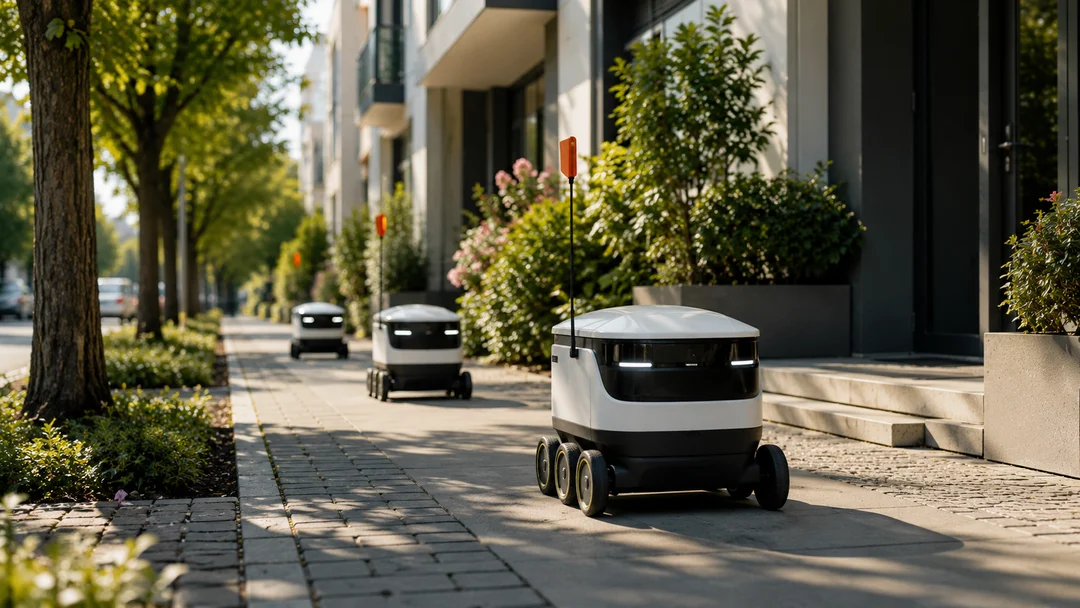
The Business Desk's analysis of robotic last-mile logistics in the East Midlands captures a familiar pattern: credible pilots, growing investor interest and genuine unit-cost potential. What it also captures, between the lines, is how few operators cross from proof-of-concept to anything that moves the needle on network economics.
The structural gap is data readiness. Autonomous delivery systems require clean address data, reliable stop sequencing and consistent exception-handling protocols. Most last-mile networks were not built to those tolerances. When the robot or drone encounters an unstructured drop point, a refused delivery or a real-time reroute, the workflow falls back to a human process that was never designed to receive that handoff. The pilot looks clean because pilots are controlled. The network is not.
Contractual architecture creates a second brake. Robotics deployments sit awkwardly across 3PL agreements, carrier SLAs and shipper expectations that were written around human-operated fleets. Liability for a failed autonomous delivery or a dwell-time breach caused by a charging cycle, does not map neatly onto existing terms. Operators are solving a technology problem inside a contract framework built for a different one.
Technology that cannot absorb an operational exception at scale is a pilot, not infrastructure. Providers serious about robotics need data standardisation and contract redesign before the hardware.