

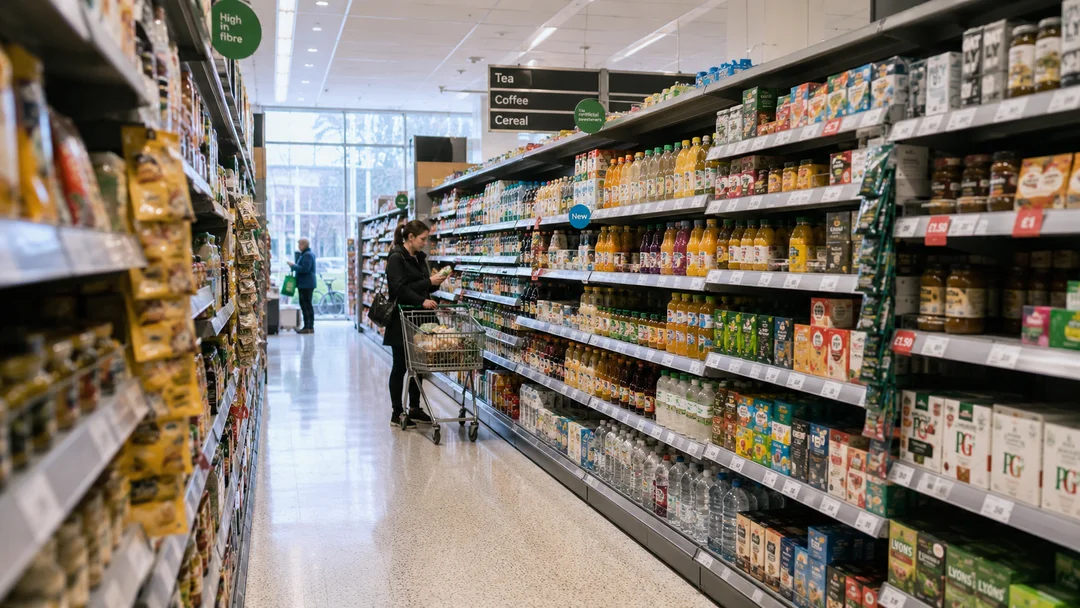
The Grocer reports that retail sales dipped in July after a two-month summer boost driven by warm weather and promotional activity. That sequence is not random. When demand is pulled forward into May and June, the trough that follows is a mechanical consequence, not an anomaly.
Rolling-average replenishment models are blind to this because they treat recent high volumes as a new baseline. They reorder into a slowdown and leave operators holding excess stock precisely when storage costs bite and promotional budgets are spent. The smarter read is to track what shaped the earlier uplift and adjust the forward position before the data turns.
For food and grocery supply chains, that means understanding whether a sales spike reflects genuine category growth or accelerated purchasing. If it is the latter, inventory positioning and 3PL call-off volumes should be revised down for the weeks that follow. That decision needs to be made at the point of the spike, not three weeks into the dip.
Predictable patterns only help if they reach the people setting replenishment parameters and capacity commitments in time. Visibility that arrives after the trough has already hit is just a post-mortem.