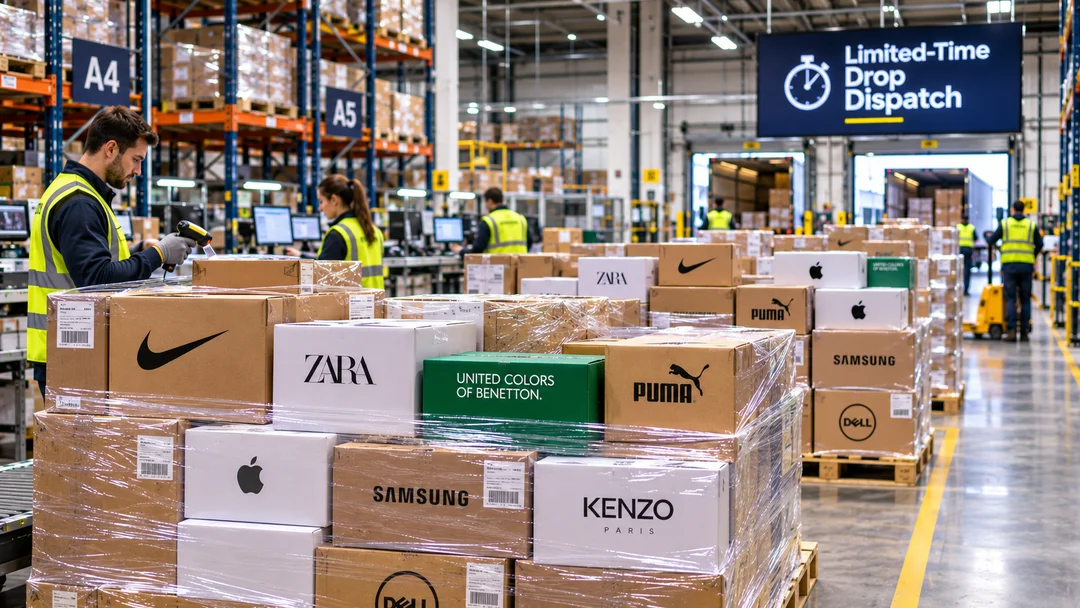
Replenishment logistics is built around continuity: forecast, restock, repeat. A drop model breaks every one of those assumptions. Stock is finite by design, the fulfilment window is tight and there is no second run to absorb a picking error or a delayed inbound.
The operational gap shows up quickly. Standard 3PL agreements price on throughput volume spread over time, with SLAs calibrated for predictable flow. A drop campaign concentrates pressure into hours, not weeks. Miss the window and the inventory does not wait: it is either sold out or it is a markdown problem. Neither outcome is built into a standard warehouse contract.
Location-specific drops add a further layer. Allocating finite units across sites, then holding those allocations firm against late-breaking demand signals, requires the kind of real-time stock visibility and exception routing that sits in the orchestration layer, not in a pick-and-pack SLA. Most shippers running drop-style campaigns find the coordination overhead falls between their WMS and their 3PL's portal, with no single view of what is committed where.
For brands watching the John Lewis campaign, the lesson is not whether drops work commercially. It is whether the logistics setup behind them can hold.