


The compression happens fast. Bank holidays, reduced haulier rosters and warehouse staff on staggered return mean that the three weeks after Christmas often yield fewer operational days than a standard fortnight. Returns volumes arrive in bulk, new-year promotional orders follow immediately and the network that just ran a Q4 peak is at its thinnest point.
Most annual logistics plans treat this window as tail-off. Capacity decisions made in October assume January is the exhale after Q4, so buffer stock is drawn down, flexible provider agreements lapse and haulage lanes go unconfirmed. When actual volumes land, there is no pre-positioned capacity to absorb them.
The structural fix is treating January as a named secondary peak in the same planning cycle as Q4, not as a footnote to it. That means confirming warehousing and transport capacity for the window before the Q4 contracts are signed, not after Christmas has passed and spot rates have moved.
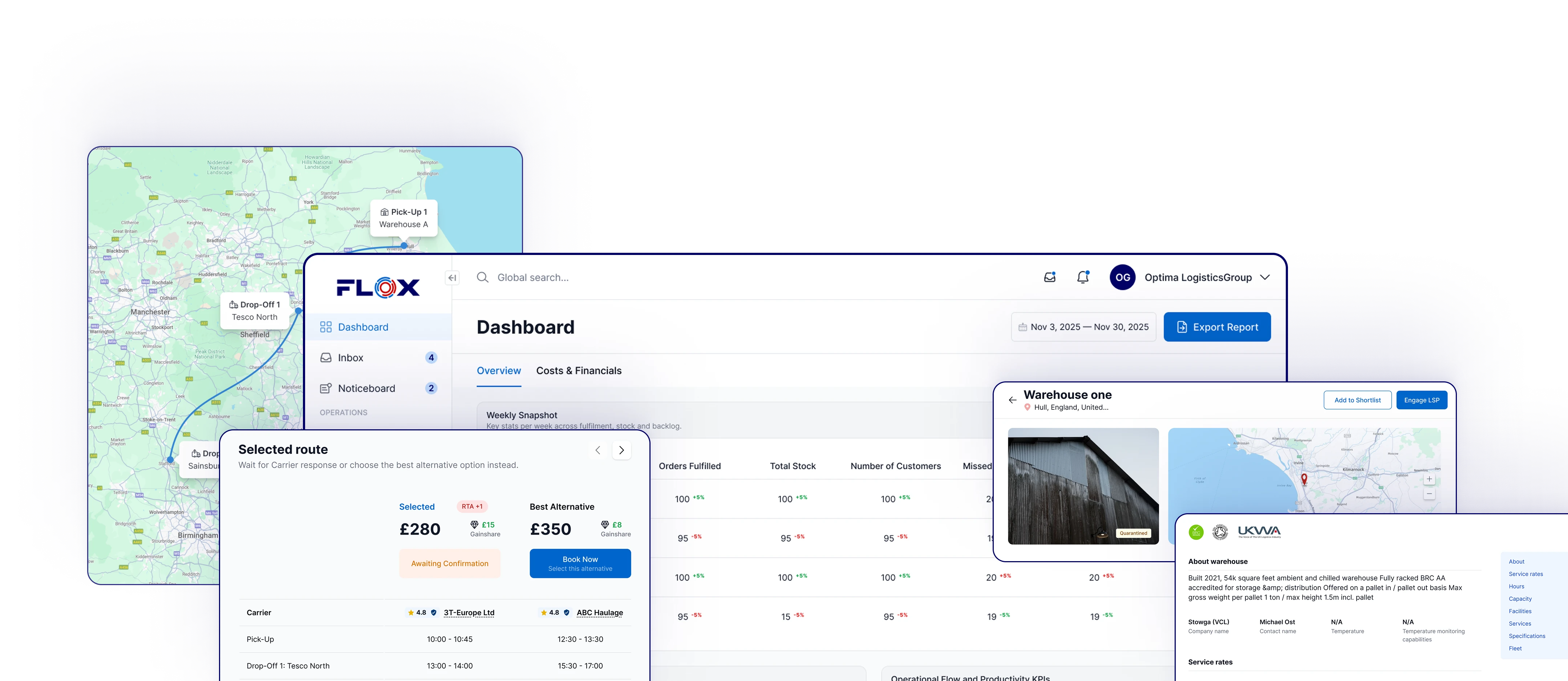
A marketplace and orchestration platform needs to show available provider capacity and coordinate exceptions across the buyer, warehouse and haulier in real time. January's crunch is short and sharp; the only way to navigate it without overpaying on spot is to have confirmed capacity and live visibility in place before it arrives.