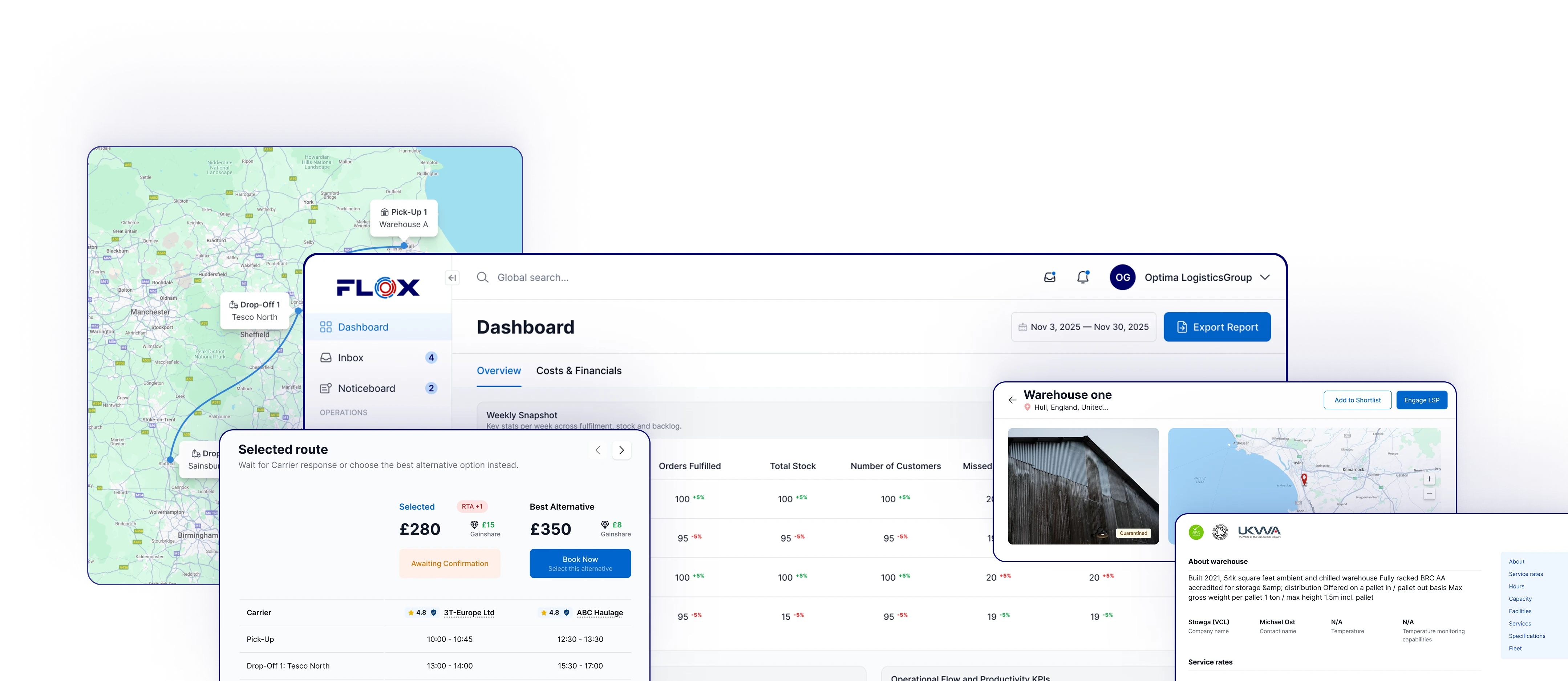
Each lever is well understood in theory. Part-loads consolidate volume that would otherwise move at full-vehicle cost with half the utilisation. Empty running reduction turns the return leg from a sunk cost into a revenue or saving opportunity. Fleet sharing opens capacity that sits idle across adjacent operators. Route optimisation sequences stops to reduce total kilometres driven. None of this is new.
What prevents action is not ignorance of the levers. It is the decision conditions required to use them. Part-load consolidation only works if you know, in advance, that another shipper's freight is compatible with yours in timing, lane and handling requirement. Empty running only shrinks if a haulier can see a backload opportunity before the vehicle departs. Fleet sharing requires contractual trust between operators who have no standing relationship. Route optimisation produces a plan, but that plan breaks the moment an exception lands and no one has authority to re-sequence.
The coordination failures are structural. Decisions sit with people who lack visibility across party boundaries and visibility sits in systems that do not connect across party boundaries. Fixing the lever without fixing the coordination produces a better plan that still cannot be executed.