

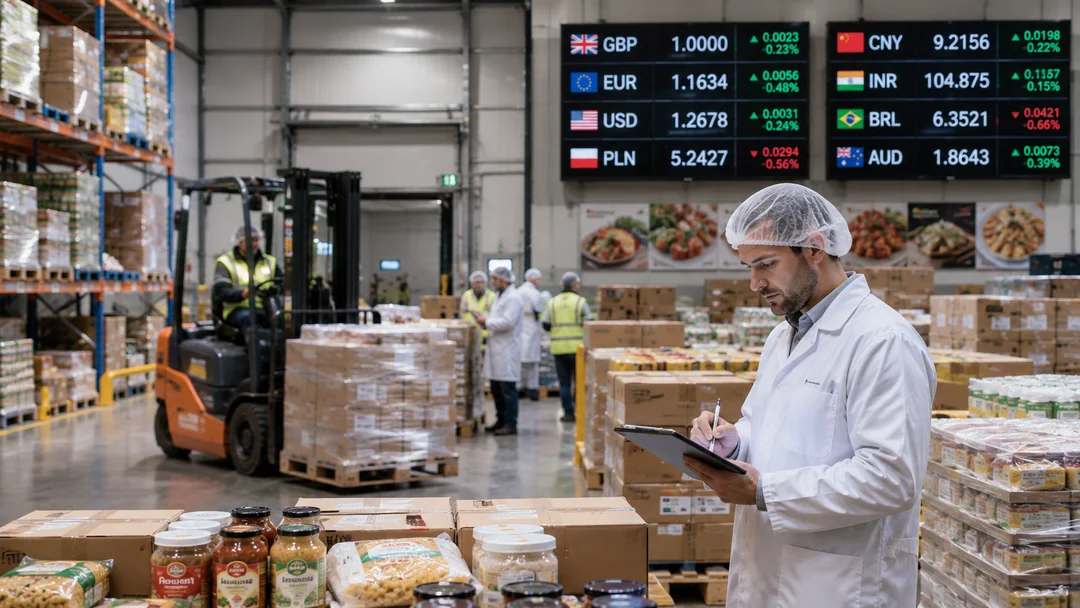
A new industry report finds that FX volatility sits at the top of UK food and drink manufacturers' cost worries, ahead of shipping delays, fuel costs and regulatory burden. That ranking belongs in the operations room, not just the treasury spreadsheet.
The problem is structural. Finance hedges currency exposure in one system while procurement and logistics teams price sourcing routes and carrier splits in another. The two rarely sync in real time. When sterling weakens against the euro or dollar, the landed cost of an imported ingredient shifts immediately, but the routing decision that locked in that supplier was made weeks earlier on stale assumptions.
Operational decisions carry FX exposure whether planners acknowledge it or not. A sourcing switch between a UK-based co-manufacturer and a continental supplier, a shift from road to sea for a heavyweight SKU or a buffer-stock call ahead of a rate movement: each of these absorbs or amplifies currency risk at the moment it is made. Waiting for finance to flag the exposure after the fact is too slow.
Supply chain teams need FX signals embedded in the same decision layer as lead times and capacity. That is not a treasury ask; it is a data architecture one. The manufacturers already know currency is their biggest cost threat.