

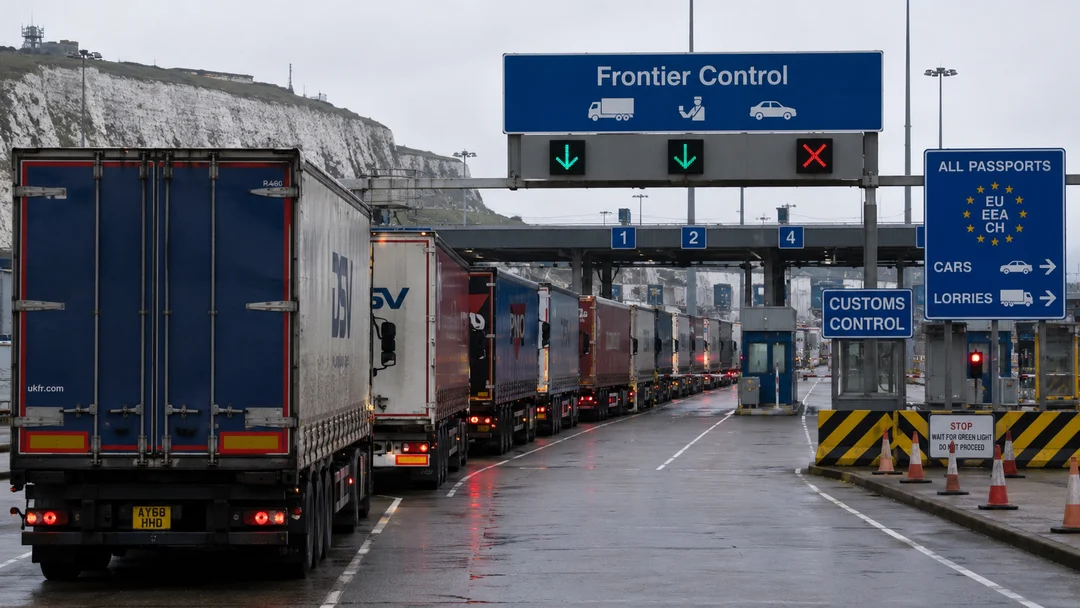
The real test arrives at the border, not in the pitch deck. A provider can quote competitive rates and warehouse coverage across the UK and EU while running customs processes that depend on a single experienced agent, a spreadsheet and good luck. That setup holds until volume spikes or a classification dispute lands.
The structural problem is how briefs get written. Shippers list services required, ask for references and compare rates. Cross-border compliance appears as a line item rather than a capability to interrogate. Nobody asks how many commodity codes the provider has active experience classifying, how they handle EORI discrepancies under time pressure or what their escalation path looks like when a shipment is held at Rotterdam.
Those questions matter because a delay at the frontier does not stay at the frontier. It ripples back through replenishment windows, retail commitments and carrier bookings. A provider with shallow customs capability will solve the visible problem slowly and miss the downstream knock-on entirely.
Matching to a provider with genuine cross-border process depth means testing that depth before signing. Fulfilment.com's overview of what to look for when scaling with a 3PL sets out a useful starting framework for the broader selection conversation.