Motor Transport reports that the majority of businesses anticipate a capacity crunch within the next two years. That expectation is not yet showing up in how shippers are structuring their logistics arrangements.
Contracts written at today's rates and today's provider availability lock in assumptions that will not hold. When capacity tightens, the provider holds the leverage. Shippers on fixed-volume, fixed-rate agreements find themselves either over-committed on lanes they no longer need or squeezed out of the capacity they do need. Both positions cost money.
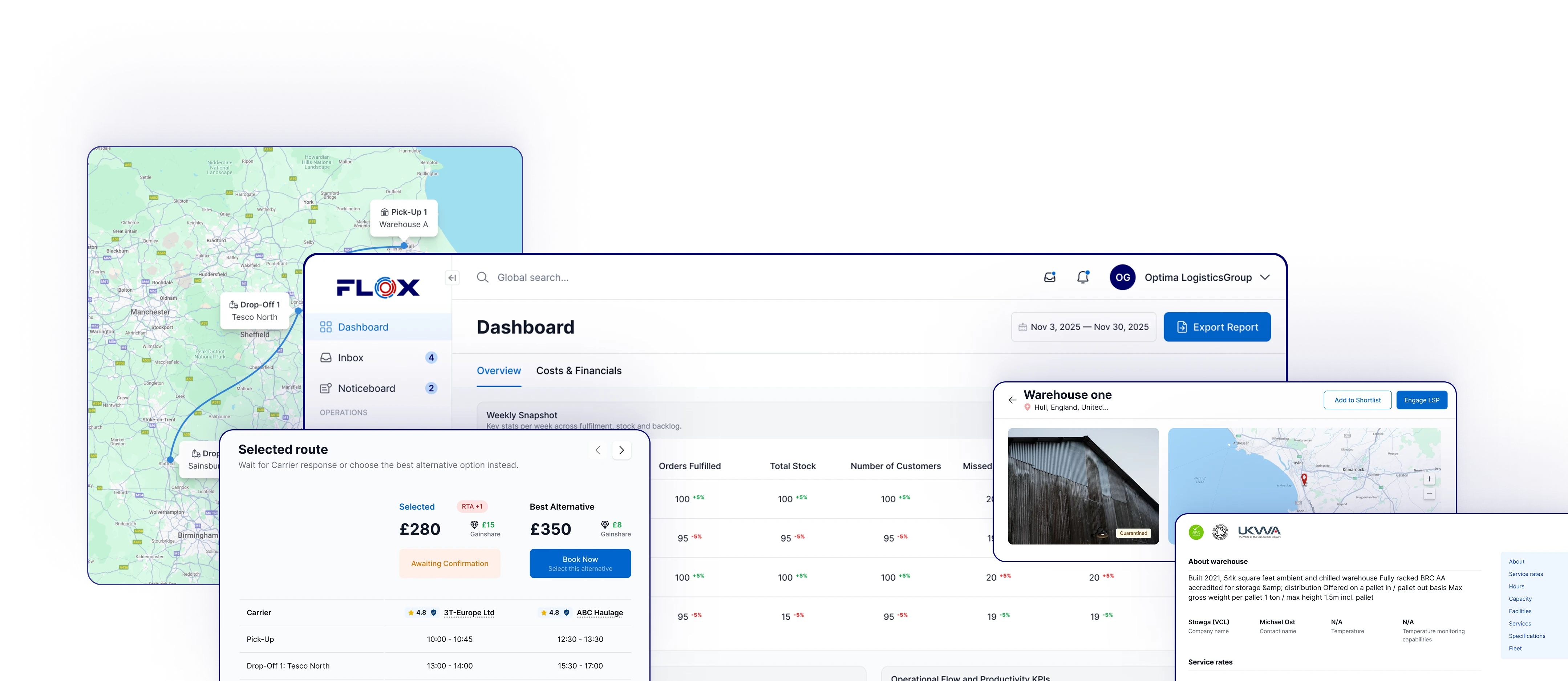
The operational implication is straightforward: a shipper that books only against current demand, through a marketplace layer that shows live capability and lane fit, keeps its options open as the market reprices. One that treats logistics as an annual contract negotiation is pricing in today's supply while inheriting tomorrow's risk.
The capacity crunch, if it arrives as forecast, will not affect all shippers equally. Those with multi-party visibility across warehouse, 3PL and haulier and with the orchestration in place to move volume between providers quickly, will reprice and reroute. Those locked into single-provider relationships without that visibility will absorb the cost.