

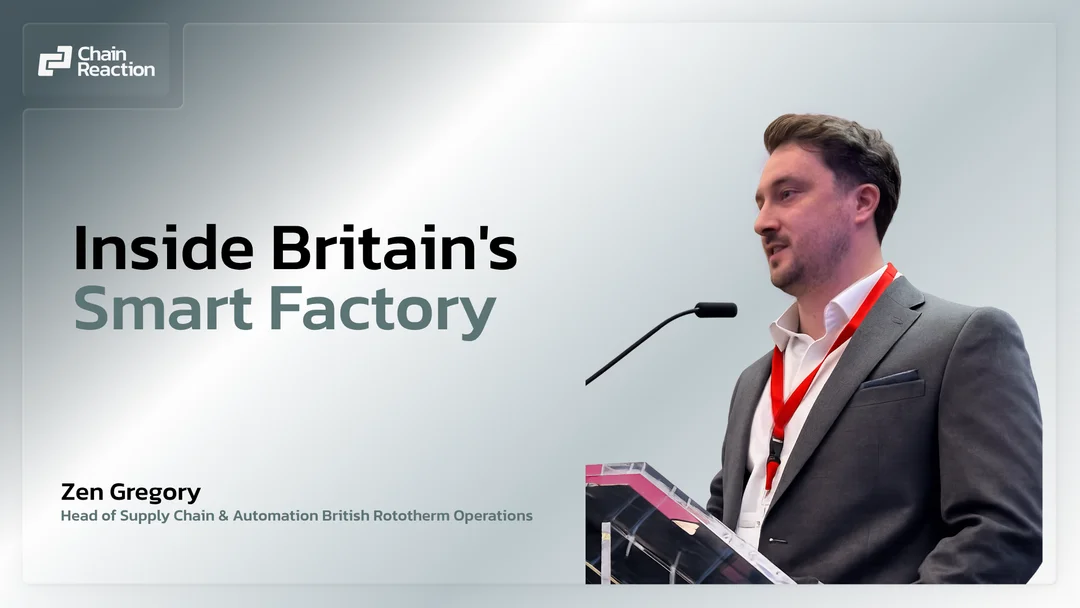
Technology alone does not make a factory intelligent. That is the central argument Zen Gregory, Head of Supply Chain and Automation at British Rototherm, makes in the latest Chain Reaction episode and it cuts through a lot of the noise around manufacturing AI.
Gregory introduces the Alien Dreadnought framework as a structured way to layer AI agents, autonomous robots and predictive analytics onto existing operations. The catch is that none of it works without clean data, continuous improvement disciplines and leadership willing to hold the cultural line. Automation applied to a broken process scales the problem, not the output.
For UK manufacturers and the logistics providers serving them, this matters directly. As smart factories push shorter, more dynamic production runs, supply chain partners need the flexibility to match. Fixed-volume contracts and rigid collection windows become friction points when a plant can reconfigure its output week to week. Capacity needs to move with the manufacturer, not against it.
The episode is a grounded, practitioner-level account of what digital transformation looks like inside a real British business. [Listen to the full conversation on the Chain Reaction podcast.](https://flox.is/podcast/inside-britain-s-smart-factory-44)
Listen to the episode: YouTube · Spotify · Apple Podcasts