

The mechanism is straightforward: a digital identifier on packaging signals where the material ends up after the consumer discards it. That closes a visibility gap retailers and producers have never been able to close at scale. The sustainability reporting benefit is real, but it is a secondary output of something more structurally interesting.
Post-sale visibility has always been the weak link in physical supply chains. Operators invest heavily in tracking goods to the customer and almost nothing in understanding what comes back, where it stalls or how much handling it accumulates before it is processed. Returns networks operate largely on assumptions rather than data, which makes capacity planning for those flows genuinely hard.
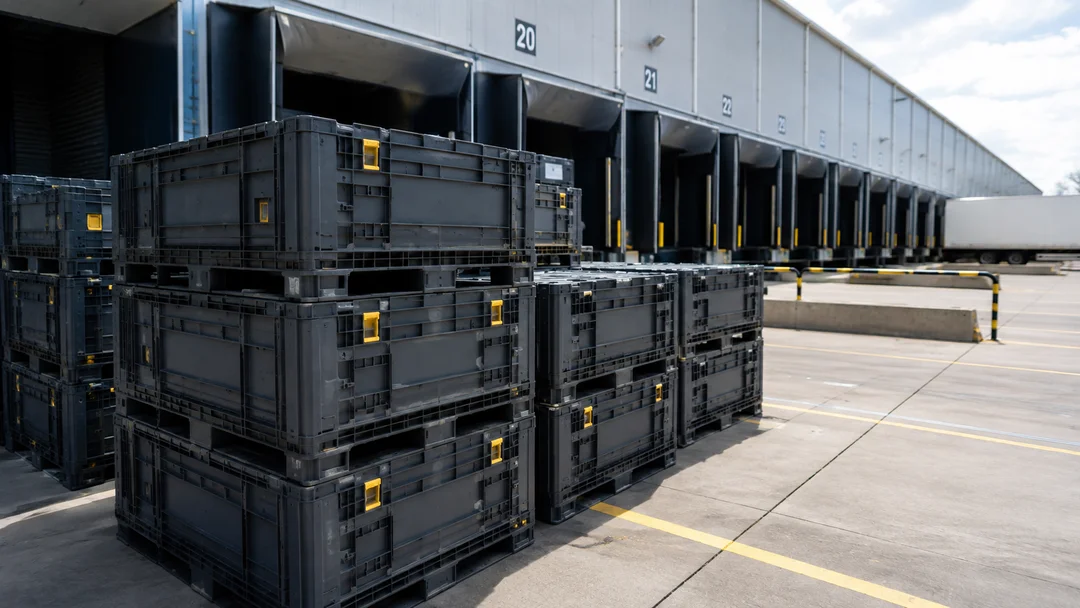
The Aldi/Arla logic maps directly onto closed-loop logistics. A pallet, a tote, a reusable transit container: each one disappears from operational view the moment it leaves the delivery point. Knowing where it is and how long it sits idle is not a sustainability metric, it is a utilisation problem with direct cost consequences.
Connecting that post-sale data layer to allocation decisions is where the gap becomes expensive. A multi-party network with orchestration across providers can absorb the signal and route accordingly. Without it, closed-loop assets are managed by exception rather than by design.